10 Best Altitude Test Chambers for Your Testing Needs?
In the realm of testing environments, the importance of an Altitude Test Chamber cannot be overstated. These chambers simulate high-altitude conditions for various applications, including aerospace and electronics. Dr. Emily Carter, an expert in environmental testing, once stated, "Understanding how materials behave at altitude is crucial for ensuring safety and reliability."
Choosing the right Altitude Test Chamber can be daunting. With numerous options available, it's essential to focus on efficiency and reliability. Factors such as size, temperature range, and altitude range play vital roles in selecting the best chamber. Each of these parameters influences the testing results and the validity of the data obtained.
While many manufacturers offer advanced features, not all provide the expected performance. Companies often grapple with maintenance issues, which can disrupt testing schedules. Addressing these concerns is necessary for improving reliability in real-world applications. As technology evolves, the market for Altitude Test Chambers continues to grow, pushing the boundaries of what's possible. It is crucial to find a balance between cost and quality for optimal performance.
Understanding Altitude Test Chambers and Their Importance
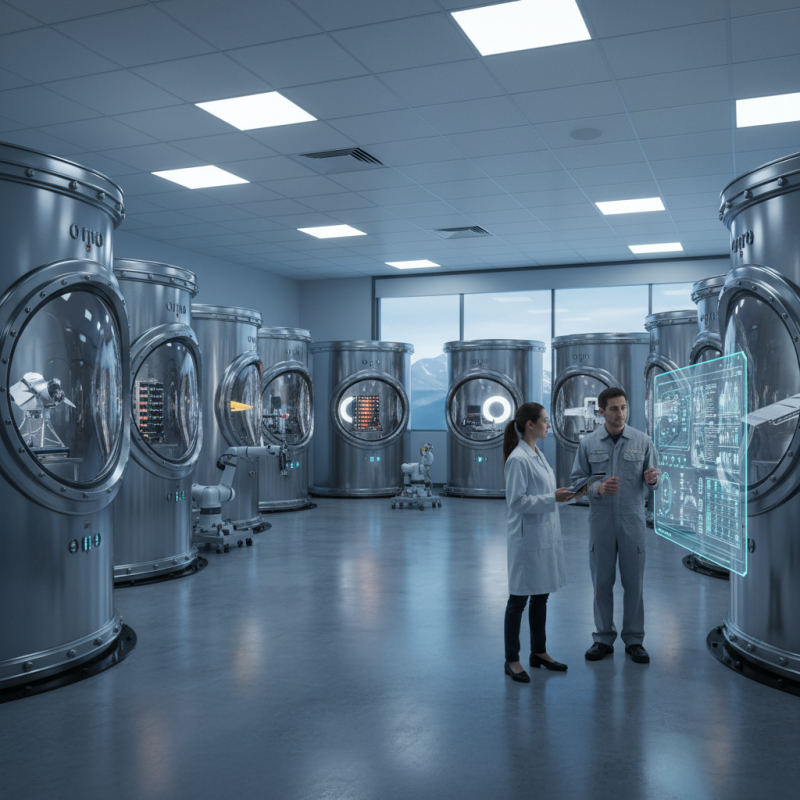
Altitude test chambers play a crucial role in simulating high-altitude conditions. These chambers help in testing products like aerospace components and electronics. By replicating low pressure and oxygen levels, engineers can assess how well their products perform in extreme conditions. This testing is vital for ensuring reliability and safety in the field.
Understanding altitude test chambers involves recognizing their importance in product development. These chambers create controlled environments that mimic various altitudes. Engineers use them to identify weaknesses in designs. Not all products withstand high elevation well. Some components might fail under stress, highlighting the need for thorough testing.
Choosing the right chamber can be daunting. Each chamber has different specifications, and understanding these is key. Consider the size, pressure ranges, and temperature controls. Each factor impacts the testing outcomes. Technical knowledge is essential for making informed decisions. Without it, projects risk delay or failure.
Key Features to Consider When Choosing an Altitude Test Chamber
When selecting an altitude test chamber, there are several key features to keep in mind. Chamber size is crucial for accommodating your specific testing needs. A compact chamber may save space, but larger chambers offer versatility for various experiments. Ensure the chamber can maintain desired altitude and temperature levels consistently. Stability is important for accurate results.
Another essential feature is control systems. Modern chambers come equipped with intuitive interfaces. These allow easy adjustments and monitoring. A programmable system can enhance workflow efficiency. Look for chambers with data logging capabilities. This feature helps track performance and simplifies analysis later.
Consider the materials and construction of the chamber. High-quality materials ensure durability and longevity. However, not all products offer the same reliability. Researching manufacturer specifications can reveal potential pitfalls. Finally, check for maintenance requirements. Regular upkeep is necessary to ensure optimal performance, but it can also be time-consuming. Balancing these elements will help you choose the right altitude test chamber for your needs.
Top 10 Altitude Test Chambers: A Comprehensive Overview
Altitude test chambers play a vital role in various industries. From aerospace to automotive, these chambers simulate high-altitude conditions. This helps in assessing the functionality and reliability of products under extreme pressure changes. According to a report by Research and Markets, the global altitude test chamber market is projected to reach $400 million by 2025, reflecting significant growth.
Many manufacturers face challenges when selecting appropriate chambers. Not all chambers maintain consistent pressure and temperature, which can lead to inaccurate test results. Furthermore, user experience varies widely across models. Some users report difficulties with calibration and maintenance. A consistent lack of data on long-term reliability is evident in user reviews, raising concerns about durability.
Selecting a chamber requires careful consideration of specific needs. Users should prioritize features such as temperature range, pressure limits, and control precision. Customization options can also enhance testing efficiency. According to a study in the "Journal of Engineering," optimizing chamber configurations can improve test outcomes significantly. Advanced monitoring and data logging features ensure transparency during testing phases, making them indispensable for reliable data analysis.
Altitude Test Chambers Comparison
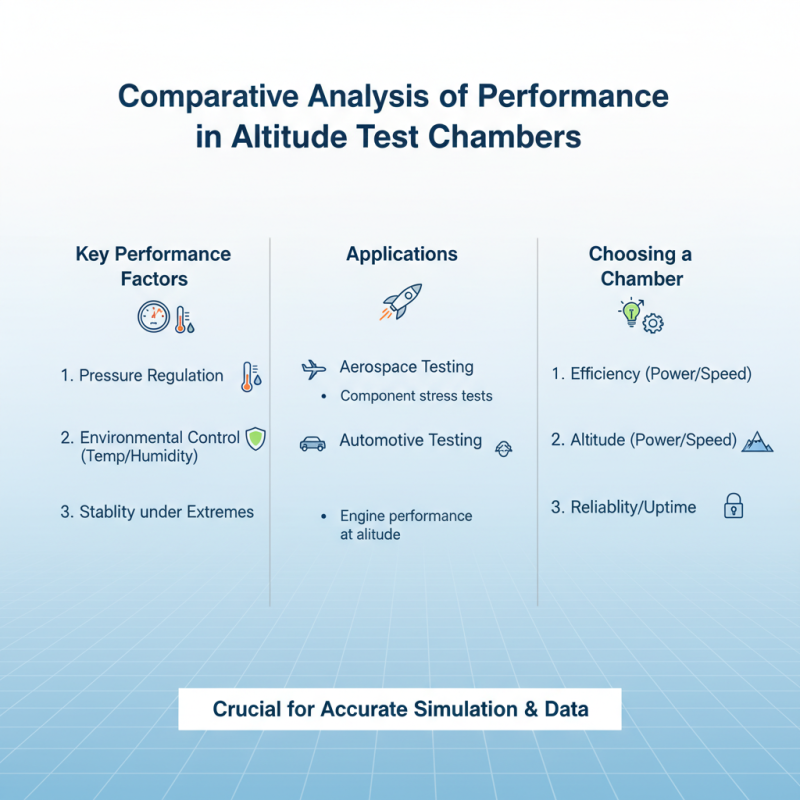
Comparative Analysis of Performance in Altitude Test Chambers
When selecting altitude test chambers, performance analysis is crucial. These chambers simulate high altitude conditions, crucial for aerospace and automotive testing. The efficiency of pressure regulation and environmental control defines their effectiveness. Many options offer a range of altitude variations, but not all maintain stability under extreme conditions.
While some chambers excel in rapid altitude changes, others struggle with temperature fluctuations. Each testing scenario is unique, which means one design may not fit all needs. Considerations such as chamber size and internal volume also impact results. A larger chamber may seem advantageous, but it can lead to longer stabilization times, which could skew test outcomes.
Monitoring and feedback features are also essential. Some chambers provide real-time data, helping engineers make informed decisions. Yet, not every model offers this feature, which can be a disadvantage during long tests. An unreliable chamber can lead to unexpected results, prompting a need for critical re-evaluation of testing processes. Choosing the right chamber involves assessing reliability and adaptability to each project’s specifications.
Maintaining and Calibrating Altitude Test Chambers for Accuracy
Altitude test chambers are critical for accurate testing in various fields. Maintaining and calibrating these chambers ensures their performance remains consistent. Regular checks on temperature, pressure, and humidity are essential. Any small deviations can lead to misleading results.
Calibration should follow specific protocols. These may vary depending on the equipment used. It's vital to use reliable reference standards for calibration. If the standards are outdated, this may cause errors. Regular maintenance involves cleaning, pressure checks, and ensuring all sensors function correctly.
Operators should document all maintenance activities. This creates a history of the chamber's performance. Inaccurate records can lead to misinterpretations during testing. Even minor issues, like a malfunctioning valve, can skew results. Reflections on past calibration efforts reveal areas for improvement, pushing for more rigorous standards.