How to Choose an Altitude Test Chamber for Your Needs?
Choosing the right Altitude Test Chamber is essential for various industries. This equipment simulates extreme conditions for testing durability and performance. However, selecting the appropriate model can be overwhelming.
Consider the specific requirements of your tests. The size, temperature range, and pressure capabilities of the Altitude Test Chamber are crucial factors. Different applications may demand different features. For instance, aerospace testing typically requires rigorous conditions.
Moreover, evaluate the reliability of the manufacturer. Not all companies provide high-quality chambers. Some may promise advanced features but fall short in performance. It is vital to review customer feedback and technical specifications carefully. Making a hasty choice can lead to setbacks in product development.
Understanding the Purpose of an Altitude Test Chamber
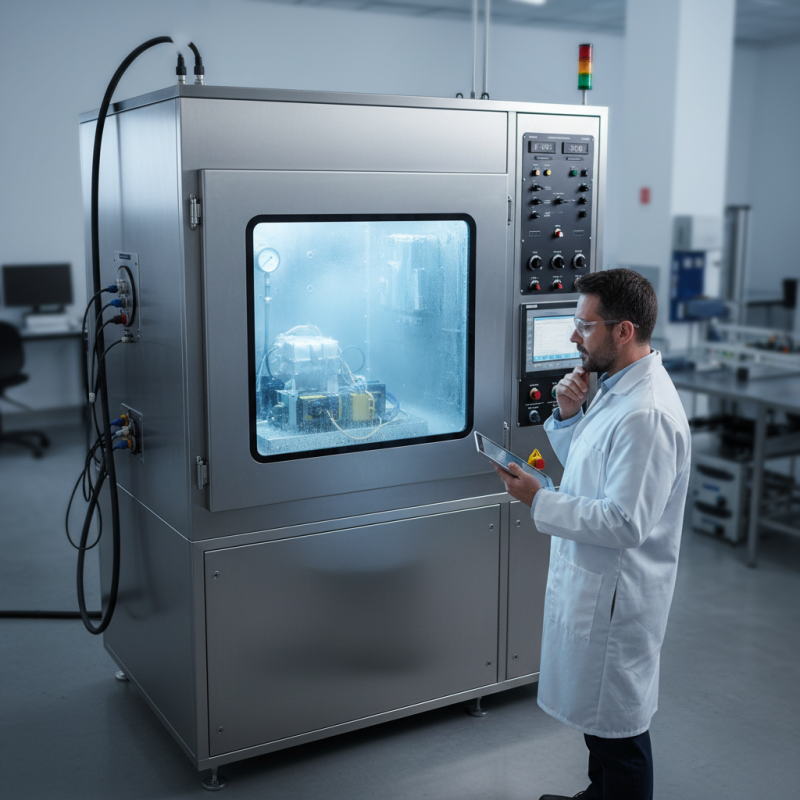
An altitude test chamber is essential for simulating high-altitude conditions. Understanding its purpose is key. These chambers replicate reduced atmospheric pressure and temperature variations. They help evaluate how products perform in extreme environments. This is crucial for aerospace, automotive, and electronics industries.
Products need to withstand high altitudes. Altitude can affect electronic performance and durability. Engineers use these tests to uncover vulnerabilities. For instance, a slight failure in pressure ratings can lead to catastrophic results in flight.
While choosing a chamber, consider size and capabilities. Not every test chamber fits every product. Think about what altitude range you need. Testing too high or low may yield irrelevant results. Take time to understand your specific needs. It’s important to engage with various options available.
Identifying Your Testing Requirements and Specifications
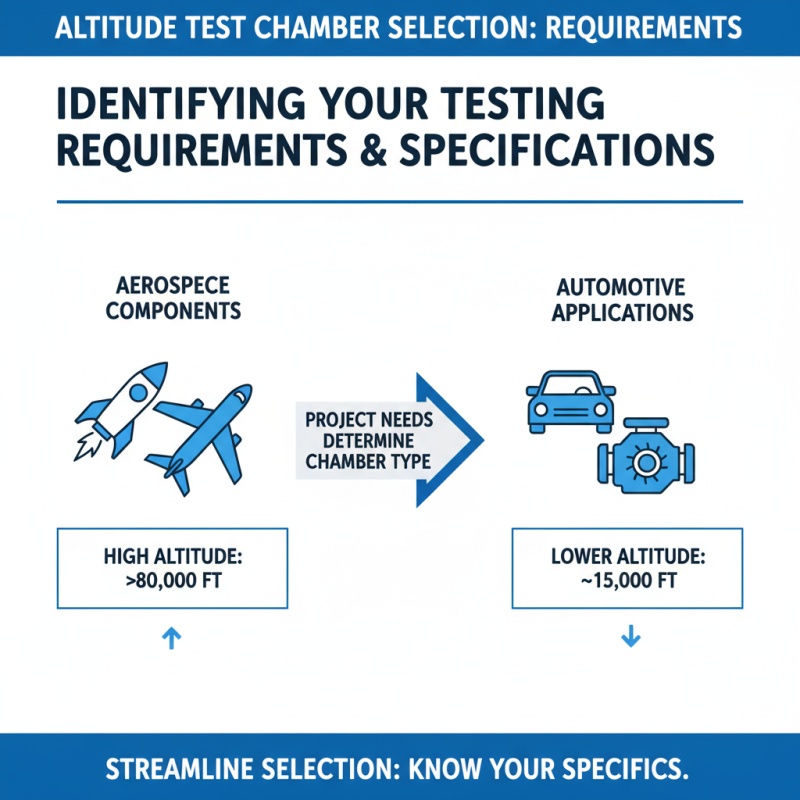
When selecting an altitude test chamber, it's crucial to identify your testing requirements and specifications. The needs of your project significantly determine the type of chamber you should choose. For instance, aerospace components often require testing at altitudes exceeding 80,000 feet. Meanwhile, automotive applications might only need lower altitudes, usually around 15,000 feet. Understanding these specifics will streamline your selection process.
Another key aspect involves temperature and humidity control. Many industry reports suggest that about 70% of failures in altitude tests arise from inadequate environmental conditions. Your chamber should mimic the precise conditions your product will face. Moreover, a detailed understanding of your sample size and test duration is essential. Larger samples may require a bigger chamber, while prolonged tests may necessitate enhanced stability features.
Reflecting on these factors can sometimes lead to challenges. You might find that existing chambers do not meet your advanced requirements. In these situations, adaptations or custom solutions might be necessary. Data indicates that about 30% of companies had to redesign their systems post-testing. This illustrates the importance of meticulous planning.
Evaluating Key Features and Capabilities of Test Chambers
When selecting an altitude test chamber, evaluating key features is essential.
Temperature range is a critical factor. Chambers should support a range
from -70°C to +100°C. This spectrum allows teams to conduct diverse experiments.
Additionally, pressure settings must fit specific testing needs. Most chambers
operate between 0.1 and 3 atmospheres. This flexibility lets manufacturers replicate various
altitudes accurately.
Another crucial capability is the chamber's control system. User-friendly interfaces
with real-time data tracking can enhance testing efficiency. Advanced models now support automation. This increases
reproducibility and reduces human error. For instance, the International Standards
Organization (ISO) suggests that proper environmental controls can yield results with a variance of less
than 5%. Without efficient control, results may be misleading.
Consider space constraints, too. Some chambers are large and
require significant floor space. Others are compact and tailored for small labs. Depending on the setting, this
choice can affect operational flow. A chamber’s power consumption is also important. Reports show
that energy-efficient models can reduce operational costs by 20% or more.
Evaluating these features can guide you toward the right choice for your specific applications.
Considering Budget and Operational Costs for Altitude Testing
When selecting an altitude test chamber, evaluating your budget and operational costs is crucial. These chambers can vary significantly in price. Initial costs may be tempting, but ongoing expenses can add up quickly. Consider energy consumption, maintenance costs, and calibration fees. Each of these factors can impact your long-term budget.
Operational efficiency is often overlooked. A lower-priced chamber may not be the most cost-effective in the end. Think about the chamber's energy requirements. Some models are designed to minimize energy use, which can save money over time. Servicing and replacing parts can also drive costs up. Make sure to investigate the availability and price of spare parts before making a decision.
Moreover, reflect on the test frequency and duration. If you conduct many tests, a robust chamber might be necessary. This could increase the initial investment but lower operational costs through reliability. However, balance this with your testing needs to avoid overspending. It’s essential to analyze current and future needs to choose wisely.
How to Choose an Altitude Test Chamber for Your Needs? - Considering Budget and Operational Costs for Altitude Testing
| Feature |
Description |
Budget Range |
Operational Cost (Annual) |
| Size |
Volume capacity to accommodate test samples |
$15,000 - $50,000 |
$1,200 |
| Altitude Range |
Maximum altitude capability for testing |
$20,000 - $70,000 |
$1,500 |
| Temperature Control |
Ability to simulate temperature conditions |
$10,000 - $30,000 |
$800 |
| Data Acquisition System |
Capabilities for data tracking and reporting |
$5,000 - $20,000 |
$500 |
| Maintenance |
Cost and schedule for regular upkeep |
N/A |
$2,000 |
Researching Manufacturers and Suppliers for Quality Assurance
When choosing an altitude test chamber, quality assurance is critical. Researching manufacturers and suppliers can be overwhelming. Start by identifying key features you need. Think about the size, pressure range, and temperature control. Don’t overlook after-sales support. A reliable partner can make a difference.
Tips: Look for manufacturers with a solid reputation. Reading reviews can highlight issues. Pay attention to those who share their experiences. Ask for references and follow up. This could save you from poor decisions.
Consider your budget but don’t compromise on quality. Sometimes, lower prices come with hidden costs. Make sure to ask about warranties and service agreements. It’s vital to ensure your investment is protected. Not researching enough now may lead to regrets later.