How to Choose the Right Corrosion Testing Chamber for Your Needs?
Choosing the right Corrosion Testing Chamber is crucial for accurate results. Various factors affect this decision. Consider the environment where the tests will be conducted. Temperature and humidity levels are vital. A chamber that can mimic real-world conditions will provide the most reliable data.
Think about the materials you need to test. Some chambers are better suited for certain materials than others. Pay attention to the size and capacity of the chamber. It should accommodate your samples comfortably. Check the chamber's features. Automatic controls and data logging can enhance your testing process.
Reflect on your budget as well. A high-quality Corrosion Testing Chamber may require a larger investment. However, it is essential for producing valid results. Make sure to compare different options. Reading reviews can provide insight into how well a chamber performs. Ultimately, the right choice will serve your specific testing needs effectively.

Understanding Corrosion Testing Chambers and Their Importance
Corrosion testing chambers play a crucial role in evaluating the durability of materials. They simulate harsh environments to predict how materials will react over time. Understanding these chambers can help you make informed decisions for your specific needs.
When selecting a corrosion testing chamber, consider the environment you want to simulate. Will it be salt spray, humidity, or perhaps another factor? Each test chamber is designed for different conditions. Your goals should guide your choice. For instance, if you need to test coastal exposure, a salt spray chamber is critical.
Tips to consider:
- Evaluate chamber capacity. Ensure it meets your sample size needs.
- Think about automation. Some models offer advanced features that can save time.
- Look for user reviews. Feedback can highlight potential drawbacks.
It's important to reflect on what matters most to your testing. Are you looking for speed over accuracy? Or do you prioritize detailed results instead? Understanding your priorities will help you assess options better. Corrosion testing is not just about numbers; it is about the right context. Choose wisely.
How to Choose the Right Corrosion Testing Chamber for Your Needs?
| Feature |
Description |
Importance |
| Chamber Size |
Varies from small to large, affecting the type and number of samples. |
Ensures compatibility with testing requirements. |
| Temperature Control |
Range of temperatures the chamber can maintain. |
Critical for simulating real-world conditions. |
| Humidity Control |
Ability to maintain specific humidity levels. |
Key for accurate corrosion testing. |
| Salinity Control |
Capability to simulate saltwater environments. |
Essential for marine applications. |
| Cycle Time |
Duration to complete a test cycle. |
Affects the turnaround time for testing. |
| Data Logging |
Capabilities to record and analyze data automatically. |
Vital for tracking and reporting results effectively. |
| Compliance Standards |
Adherence to industry testing standards. |
Ensures reliability and validity of test results. |
Key Factors to Consider When Selecting a Corrosion Testing Chamber
When selecting a corrosion testing chamber, consider the specific requirements of your materials. Different tests simulate various environments. Some chambers mimic salt spray conditions, while others recreate humidity or temperature extremes. Understand the focus of your testing. Will you evaluate metals, coatings, or plastics? Each material may require a different approach.
Another essential factor is chamber size. Larger samples need bigger spaces. Small chambers might limit sample size. It’s crucial to accommodate your testing needs without overcrowding. Think about accessibility too. Ensure easy loading and unloading of specimens. User-friendly interfaces help improve efficiency.
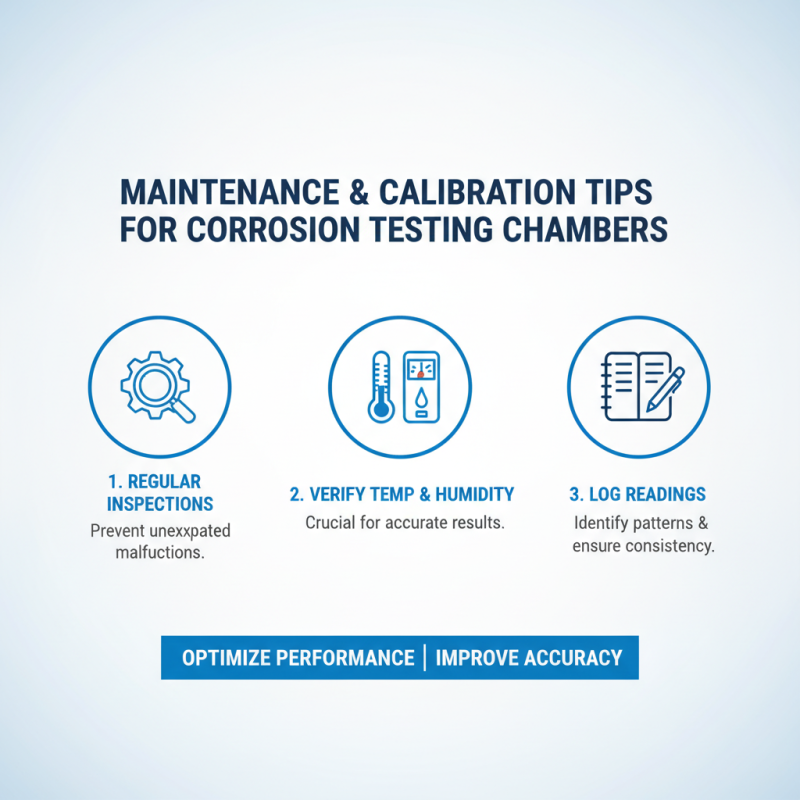
Don’t overlook the accuracy of results. Calibration and control systems can vary significantly. Regular checks on these systems are vital. Research shows that consistent monitoring can enhance reliability. However, even the best systems may fail or yield unexpected results. Be prepared for some trial and error. This will refine your testing process over time.
Types of Corrosion Testing Chambers and Their Applications
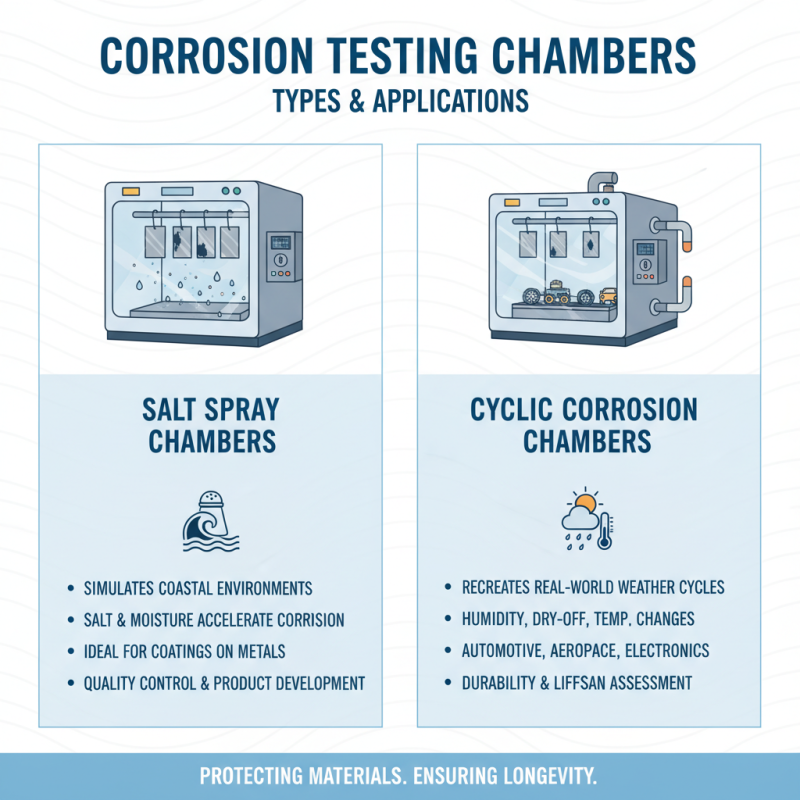
Corrosion testing chambers come in various types, each designed for specific applications. Salt spray chambers simulate coastal environments, where salt and moisture accelerate corrosion. These are ideal for testing coatings and finishes on metals. Many companies use these chambers for quality control and product development.
Another type is cyclic corrosion chambers. These units mimic the dynamic nature of environmental conditions. They expose samples to cycles of humidity, temperature changes, and salt spray. This provides a more accurate representation of real-world conditions. Engineers often use these to test automotive parts, industrial equipment, and household items.
However, not all chambers are created equal. Some might not meet testing standards, leading to inaccurate results. It's crucial to evaluate the chamber's specifications. Consider the size and material of your samples. Do they fit the chamber? Testing effectiveness depends on proper usage. Overlooking these details can lead to misinterpretations and financial loss.
Evaluating Cost-Effectiveness and ROI of Corrosion Testing Solutions
Choosing the right corrosion testing chamber involves careful consideration of
cost-effectiveness and return on investment (ROI). Many businesses overlook the true costs associated with these
testing solutions. Initial purchase prices can be misleading.
Maintenance and operation costs accumulate over time. You must account for these when considering your budget.
Analyzing cost-effectiveness also requires assessing the value of reliable data.
Inaccurate testing can lead to costly failures. A chamber that guarantees precision is worth the investment. Consider
your specific needs. If projects are short-term, a more affordable option may suffice. Long-term
projects need chambers that endure tough conditions.
Think about the ROI. A reliable testing chamber can save future expenses.
Unforeseen corrosion issues can lead to major setbacks. By investing wisely, you mitigate risks and enhance productivity.
However, price alone should not dictate your choice. Evaluate performance against price to ensure your investment pays off.