Explore Climate Chamber Innovations at the 2026 Canton Fair?
The 2026 Canton Fair promises exciting innovations, especially in climate chamber technologies. As the world confronts climate change, the demand for efficient climate chambers has surged. These chambers play a vital role in testing materials and products under controlled environmental conditions.
During this extensive event, from April 15 to May 5, attendees will witness advanced manufacturing techniques and cutting-edge innovations. The inclusion of AI tools will help buyers locate suppliers who meet specific quality certifications, such as ISO and CE. Efficient navigation through the vast exhibition space is essential, given its 1.55 million square meters.
However, despite these advancements, some challenges remain. Many exhibitors may not fully harness the potential of climate chambers. Without proper understanding of their functionality, businesses might miss out on optimizing their processes. This fair is a chance for reflection, improvement, and collaboration in developing better solutions for future climate challenges.
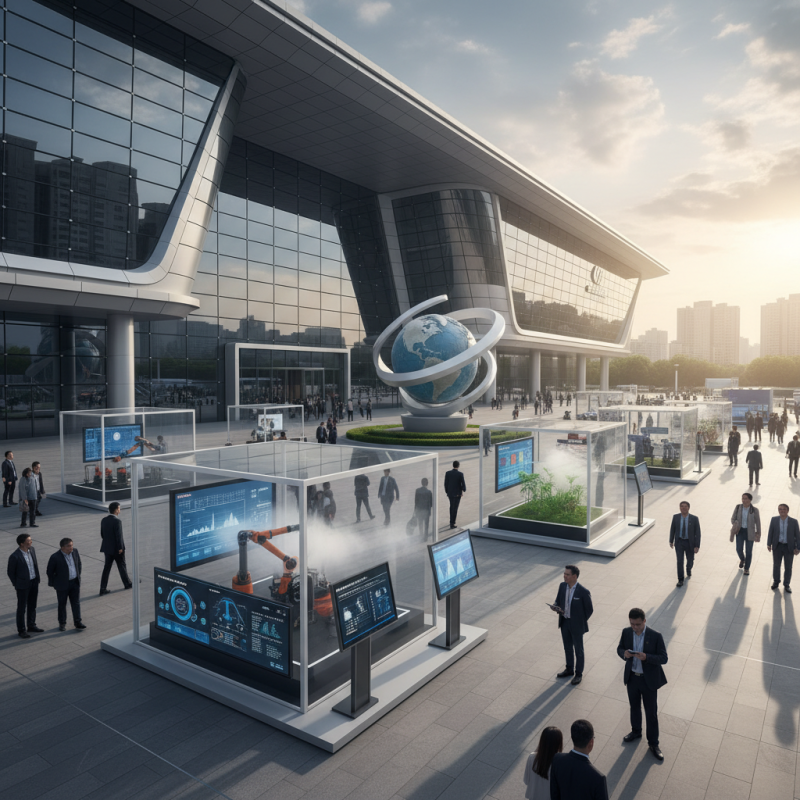
Innovative Climate Chamber Technologies Showcased at the Canton Fair
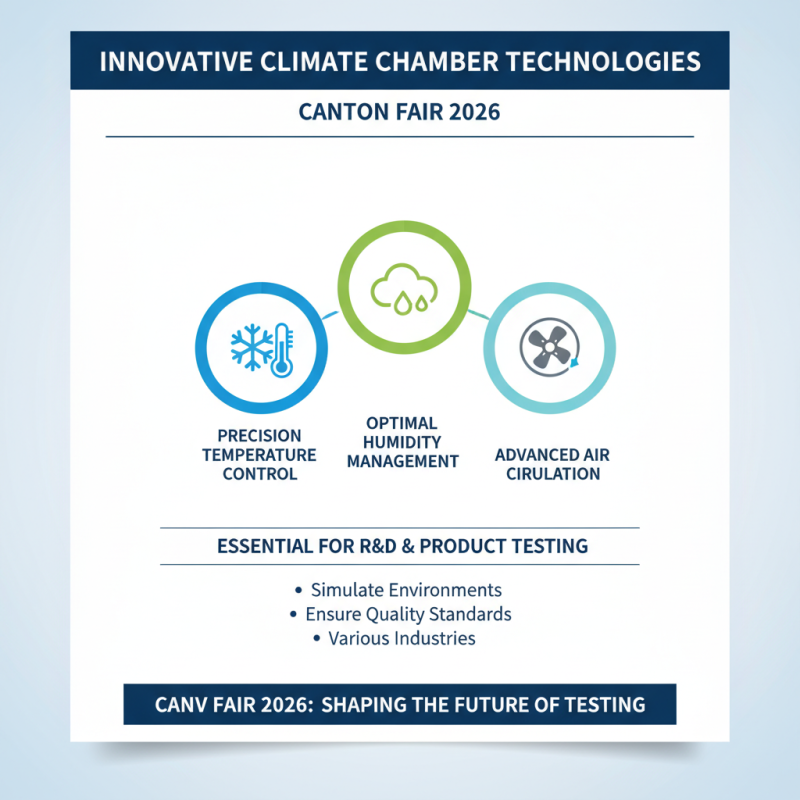
At the 2026 Canton Fair, visitors can expect a showcase of cutting-edge climate chamber technologies. These innovations are essential for research and testing in various industries. They simulate specific environments to help companies ensure their products meet rigorous standards. This year’s fair promises to highlight advancements in temperature control, humidity management, and air circulation systems.
Tips: When exploring these innovations, pay attention to the energy efficiency of each model. Sustainability is a key factor in today's technology landscape. Engage with the experts present to understand the practical applications of these systems.
Furthermore, the climate chambers displayed will offer insights into new materials and sensors. These developments can improve testing accuracy. However, it’s important to critically assess the adaptability of these technologies to different industries. Ask questions about the scalability of these innovations. Understanding limitations can lead to better decision-making in your investments.
Key Industry Players and Their Contributions to Climate Chamber Innovation
The 2026 Canton Fair will showcase significant innovations in climate chamber technology, attracting key industry players. Climate chambers simulate environmental conditions for testing product durability. According to a recent industry report, the global climate chamber market is expected to reach $1.2 billion by 2027. This growth is driven by the increasing demand for quality assurance in various sectors.
Leading companies are developing advanced climate chambers with enhanced features. These chambers offer precise temperature and humidity control, vital for testing materials and products. A recent study indicated that 30% of products fail quality tests due to inadequate environmental conditions during development. This highlights the need for robust climate testing solutions.
The contribution of industry players is notable. They are embracing sustainability while improving testing accuracy. Yet, challenges persist. Some innovations may increase costs, making them less accessible to smaller firms. This can create a disparity in testing capabilities across the market. Continuous feedback and improvements are essential for truly effective climate chamber innovations. The 2026 Canton Fair will be an ideal venue for addressing these issues and exploring collaborative solutions.
Sustainability and Energy Efficiency in Modern Climate Chambers
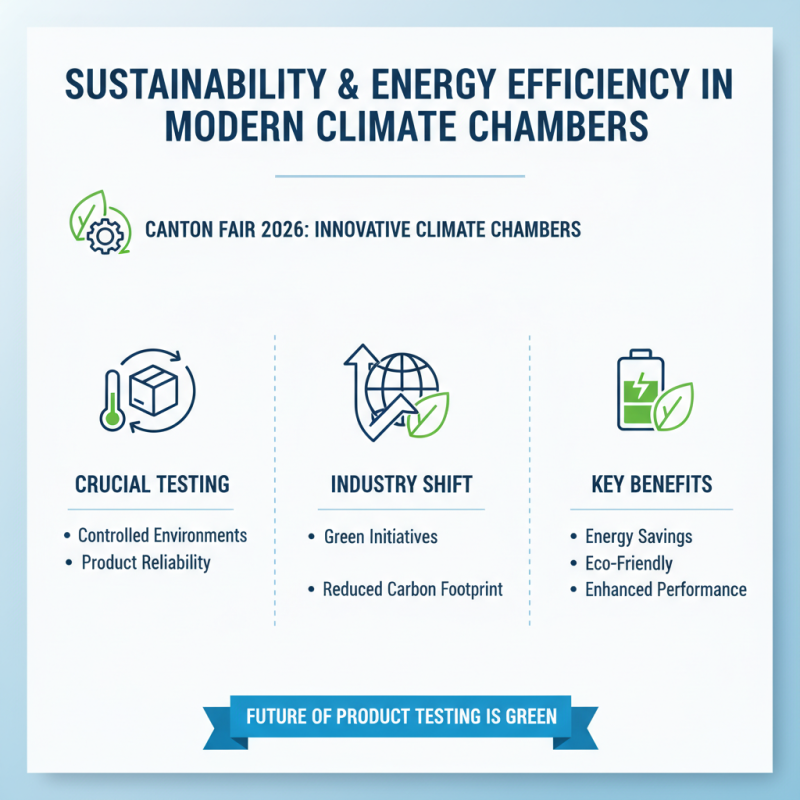
The Canton Fair in 2026 is set to showcase innovative climate chambers. These systems have become crucial for testing products in controlled environments. As industries push for sustainability, energy efficiency in climate chambers gains traction.
Recent studies show that energy-efficient climate chambers can reduce electricity consumption by over 30%. This potentially lowers operational costs while minimizing environmental impact. With advanced insulation and smart technology, these chambers offer precision in temperature control. However, not all designs are equally effective. Some still rely on outdated components that waste energy.
Tips: Consider systems with modular designs. They allow for easy upgrades, keeping your facility current. Regular maintenance is essential for optimal performance. Explore options that integrate renewable energy sources. This can enhance sustainability and reduce carbon footprints.
While innovations are promising, challenges remain. Transitioning to energy-efficient models can be costly upfront. Not all facilities can afford this transition seamlessly. Continuous learning and adaptation are necessary to realize the full potential of new technologies in climate chambers.
Comparative Analysis of Climate Chamber Designs from Leading Manufacturers
At the upcoming 2026 Canton Fair, the focus will be on climate chamber innovations. These chambers play a crucial role in testing products under controlled conditions. Examining various designs from leading manufacturers reveals significant differences. Some models are compact, while others offer expansive environments. Each design aims to meet unique testing requirements.
When analyzing climate chamber designs, consider their energy efficiency. A well-designed chamber uses insulation effectively. This can lead to lower operational costs. Furthermore, some models incorporate advanced monitoring technologies. These features enhance accuracy in testing and improve user experiences. However, not all chambers meet these standards. Some may have outdated technology or inadequate support systems.
Tips for choosing the right climate chamber include evaluating your specific needs. Know the types of tests you'll conduct. This helps in selecting the appropriate size and features. Look for chambers with user-friendly interfaces. It can save time in training personnel. Lastly, think about future needs. Will your testing requirements change? Flexibility in design may be worth considering. These factors can make or break your testing efficiency.
Climate Chamber Innovations Comparison
This chart illustrates a comparative analysis of various climate chamber designs focusing on key features such as temperature range, humidity control, capacity (liters), and energy efficiency. Each design has been evaluated based on these crucial parameters, helping you to make informed decisions at the 2026 Canton Fair.
Future Trends in Climate Chamber Development at the 2026 Canton Fair
At the 2026 Canton Fair, the spotlight will be on climate chamber innovations. These chambers are crucial in industries like pharmaceuticals, electronics, and agriculture. They test products under various environmental conditions. Recent studies show that the global climate chamber market is expected to grow at a CAGR of 4.5% from 2021 to 2028.
Innovations in climate chambers focus on energy efficiency and precision. Newer models use advanced sensors and smart technology. They can replicate extreme temperatures and humidity levels. A recent report highlighted that over 65% of companies prioritize sustainability in their testing processes. However, implementing these technologies can be challenging. Organizations must invest in training staff and updating infrastructure.
Reflecting on industry needs, many companies struggle with integration. Not all chambers meet specific testing standards, leading to inconsistency. The importance of user feedback cannot be understated. Ensuring that climate chambers are adaptable to various sectors is critical. The 2026 Canton Fair presents an opportunity to address these issues and promote forward-thinking solutions.
Explore Climate Chamber Innovations at the 2026 Canton Fair
| Feature |
Description |
Potential Applications |
Future Trends |
| Advanced Control Systems |
Integration of IoT for real-time monitoring and control. |
Research & Development, Educational Testing. |
Increased automation and data analytics. |
| Energy Efficiency |
Use of eco-friendly refrigerants and insulation techniques. |
Environmental testing, Quality assurance. |
Sustainability in manufacturing processes. |
| Modular Design |
Customizable chambers that can be modified based on user needs. |
Product testing, Automotive industries. |
Adaptability to diverse testing scenarios. |
| Integrated Data Systems |
Seamless integration with laboratory data management systems. |
Laboratory research, Product development. |
Enhanced collaboration and research accuracy. |
| User-Friendly Interfaces |
Touchscreen interfaces for easy operation. |
Field testing, Consumer product testing. |
Focus on user experience and accessibility. |