2026 Top Drop Test Equipment for Safety and Quality Assurance?
In the realm of safety and quality assurance, Drop Test Equipment plays a crucial role. As industry expert Dr. John Smith states, "The right tools can save lives." This highlights the importance of effective testing methods.
As we head toward 2026, the demand for reliable drop test solutions is growing. High-quality equipment ensures that products withstand the rigors of daily use. It measures how items react to sudden forces, preventing potential failures. Companies need to remain vigilant. They must continually evaluate their testing processes to avoid costly mistakes.
There are many options available in the market today. Each piece of Drop Test Equipment offers unique features. However, not all equipment meets the high standards required. Some tools may lack precision or durability, which can lead to inaccurate results. Thus, selecting the right equipment requires careful consideration. The journey for perfecting quality assurance is ongoing. Experts must reflect on their choices and seek continuous improvement.

Understanding Drop Test Equipment and Its Importance
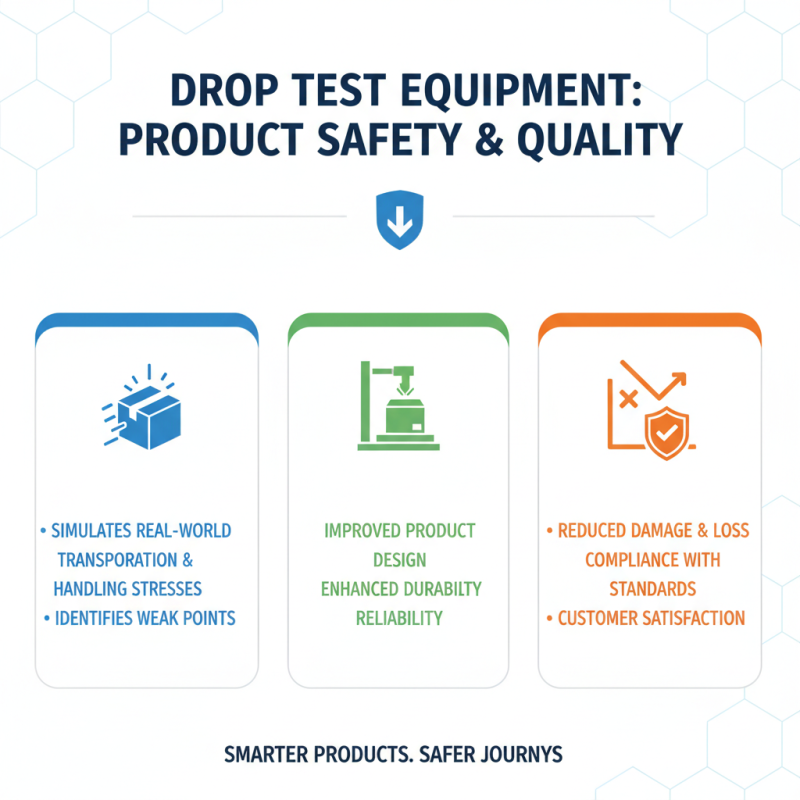
Drop test equipment plays a crucial role in ensuring the safety and quality of products. This equipment simulates real-world impacts that items may experience during transportation and handling. Understanding its importance can lead to better product design and risk reduction.
When selecting drop test equipment, consider factors like weight limits and drop height. Not all equipment is suitable for every product. Evaluate your specific needs carefully. Regular testing can identify weaknesses in design. Many manufacturers overlook this step, leading to potential failures in the field.
Tips: Always keep your testing environment consistent. A slight change can affect results. Document every test meticulously. It provides data for future improvements. Don't forget, even minor defects can lead to significant issues later on. Stay proactive in your quality assurance processes to save time and resources.
Key Features of Top Drop Test Equipment in 2026
In 2026, drop test equipment plays a crucial role in ensuring product safety and quality. These devices simulate real-world impacts, allowing companies to assess how their products will perform under stress. Recent industry data indicates that nearly 70% of product failures are related to structural integrity. Thus, investing in effective drop testing tools is vital. The ability to replicate various environmental conditions enhances the accuracy of tests.
Key features of top drop test equipment include adjustable drop heights and weights. This variability helps manufacturers tailor tests to their specific products. Additionally, advanced data analytics capabilities provide insights into performance across multiple trials. A report from the International Standards Organization highlights that improved testing processes can reduce warranty claims by approximately 30%. However, not all companies effectively utilize this technology, risking safety and consumer trust.
Despite advancements, some areas still need attention. Many manufacturers rely solely on standard tests, overlooking unique product qualities. By failing to customize testing parameters, companies may not fully assess risks. This gap can lead to unfortunate product recalls and financial losses. As the industry evolves, a focus on comprehensive testing methodologies is essential for quality assurance.
Applications of Drop Test Equipment in Various Industries
Drop test equipment plays a crucial role across various industries. Its applications enhance safety and quality assurance processes. In the packaging sector, for instance, a recent industry report highlights that over 60% of product damage occurs during shipping. To mitigate this, companies invest in rigorous drop testing. By simulating impacts, they identify weaknesses. This helps in designing packaging solutions that can withstand rough handling.
In the electronics industry, drop testing is vital for product durability. Research indicates that around 30% of consumer electronics face return issues due to damage. With robust drop test equipment, manufacturers can ensure their products meet stringent quality standards. Testing replicates real-world scenarios, helping prevent costly recalls. However, some businesses still neglect this critical testing phase, leading to unnecessary losses.
Moreover, the automotive sector also benefits from drop testing. Components must endure significant stress during transportation. Studies show that about 20% of automotive parts fail quality checks due to inadequate testing. Using advanced drop test equipment allows manufacturers to refine their designs. Yet, there remains a gap in awareness. Many companies fail to implement a comprehensive drop testing strategy, risking not only financial loss but also customer trust.
Innovations and Advancements in Drop Test Technology
Innovations in drop test technology are rapidly transforming safety and quality assurance processes. Advanced materials are now incorporated into testing equipment. This enhances durability, allowing tests to be more rigorous without damaging devices. Robust sensors capture a wealth of data during each drop, offering insights into product resilience. These developments enable manufacturers to ensure that their products meet safety standards more efficiently.
Moreover, recent advancements focus on automation. Automated drop tests reduce human error and increase consistency. Machines operate with precise timing and angles, ensuring that each test is uniform. Real-time data analysis provides immediate feedback, allowing for quicker iterations in design. However, there’s still room for improvement. Devices can struggle with more complex shapes or materials, often leading to unexpected failures.
As industries adapt to these innovations, they must also reflect on the limitations. While technology advances, understanding its boundaries is crucial. Investing in research can bridge these gaps. The pursuit of safer, higher-quality products relies on continual reflection and adaptive strategies in drop test methodologies.
2026 Top Drop Test Equipment for Safety and Quality Assurance
| Model |
Drop Height (m) |
Weight Capacity (kg) |
Control System |
Key Features |
| Model A |
1.2 |
100 |
Digital |
Automated Release, Real-time Data Logging |
| Model B |
2.5 |
200 |
Manual |
Adjustable Drop Heights, Safety Sensors |
| Model C |
1.0 |
75 |
Hybrid |
Compact Design, User-Friendly Interface |
| Model D |
3.0 |
150 |
Automated |
Data Analysis Software, Extended Warranty |
Best Practices for Safety and Quality Assurance with Drop Tests
In 2026, drop tests will remain crucial for product safety and quality. Companies must prioritize these tests to ensure the reliability of their products. A well-structured drop testing plan includes regular assessments. This often reveals issues that require immediate attention. Flaws in design or materials can lead to serious failures.
It's vital to train teams effectively on drop testing methods. Understanding the equipment enhances accuracy in results. Sometimes, the results may not meet expectations. This indicates a need for further evaluation and improvement. Regular reviews of test protocols can prevent oversights. Testing, in practice, sometimes feels rushed.
Implementing clear standards is beneficial. However, strict adherence to these standards can sometimes stifle innovation. Flexibility in testing processes can lead to better products. A balance is necessary between compliance and creativity. Companies should embrace a culture of reflection and learning. This encourages constant improvement in product safety and quality.