Leave Your Message

Top 10 Drop Test Equipment for Reliable Quality Testing?

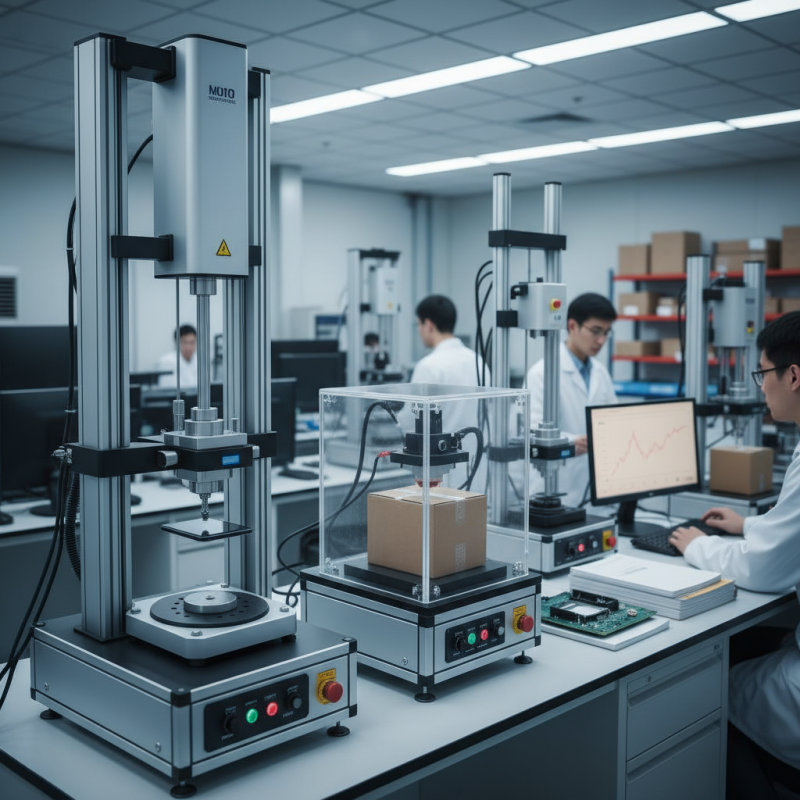
In today's competitive market, ensuring product durability is essential. Companies rely heavily on Drop Test Equipment to evaluate their products' resilience. According to a recent industry report, nearly 70% of product failures occur due to inadequate drop testing. This alarming statistic calls for a deeper understanding of reliable testing methods.

The market for Drop Test Equipment has experienced steady growth. This growth is driven by the need for rigorous quality assurance across diverse industries. For instance, electronics and packaging sectors significantly benefit from advanced drop testing. Various machines effectively simulate real-life drop conditions, providing manufacturers with critical insights. However, not all equipment is created equal. Companies often face challenges in selecting the right tools for their specific testing standards.

While many manufacturers invest in the latest technologies, some still overlook the basics of drop testing. Misunderstanding the specific requirements can lead to ineffective testing. This gap highlights the importance of thorough research before selecting Drop Test Equipment. Ultimately, companies must balance cost, efficiency, and reliability to achieve optimal performance in their quality assessment processes.
Top 10 Drop Test Equipment for Reliable Quality Testing?

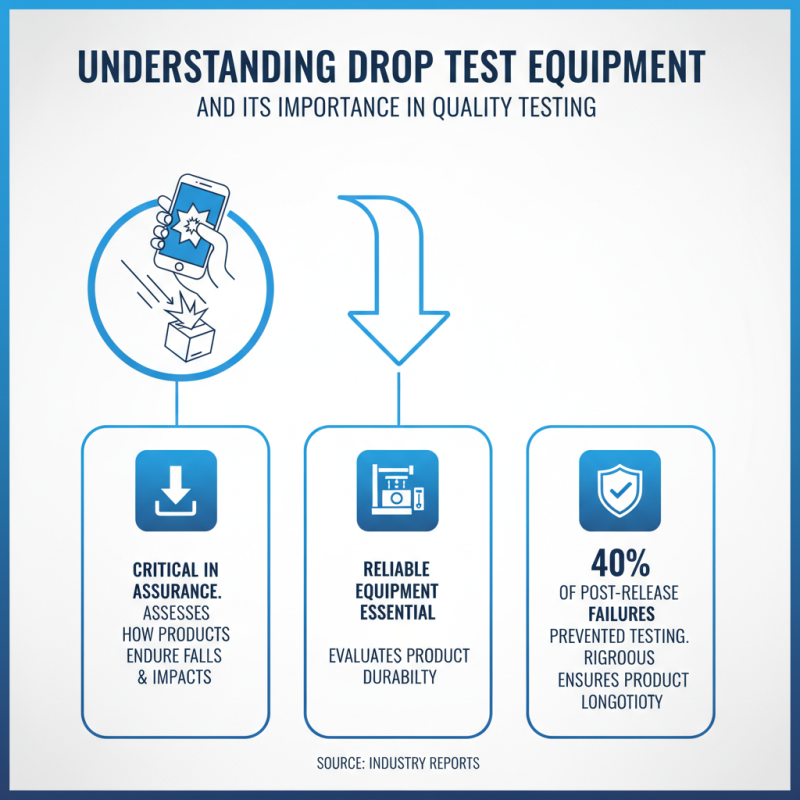
Understanding Drop Test Equipment and Its Importance in Quality Testing

Top 10 Drop Test Equipment for Reliable Quality Testing?

Drop testing is critical in quality assurance. It assesses how products endure falls and impacts. Reliable drop test equipment is essential for evaluating product durability. According to industry reports, quality testing can prevent up to 40% of post-release failures. This statistic highlights the significance of rigorous testing in ensuring product longevity.

Conducting effective drop tests involves a variety of tools. Accelerated drop test equipment simulates real-world conditions. Such equipment helps identify potential weaknesses in design and material. Recent studies suggest that 60% of product failures occur due to inadequate testing. Companies must invest in reliable drop test solutions to avoid costly recalls.

Tips for Testing: Ensure that your drop test equipment can mimic real-life scenarios accurately. Regularly calibrate your devices for consistent results. Look for innovations in materials that might enhance durability, but remain mindful of trade-offs in cost. Always analyze past tests to identify patterns. Improving protocols enhances product development.

Key Features to Look for in Reliable Drop Test Equipment

When selecting drop test equipment, certain key features stand out. Accuracy is crucial. The equipment must provide consistent results across various tests. A report from the International Institute of Quality Assurance indicates that 78% of companies see improved product durability with high-precision testing. This precision ensures that products can withstand real-world impacts.

Another important aspect is versatility. Reliable drop test equipment should accommodate different sizes and weights of products. Some testing devices allow adjustments for various drop heights. According to a recent industry survey, 65% of manufacturers prefer equipment that supports multiple test configurations. This flexibility helps in comprehensive quality assessments.

Additionally, user-friendliness cannot be overlooked. Complex interfaces can lead to errors in testing. Users often report challenges in understanding intricate setups. As the Quality Control Review suggests, 58% of testers said they often need additional training for complicated machinery. Thus, straightforward designs promote efficiency and accurate testing. It's essential for companies to reflect on these features while choosing the right equipment.

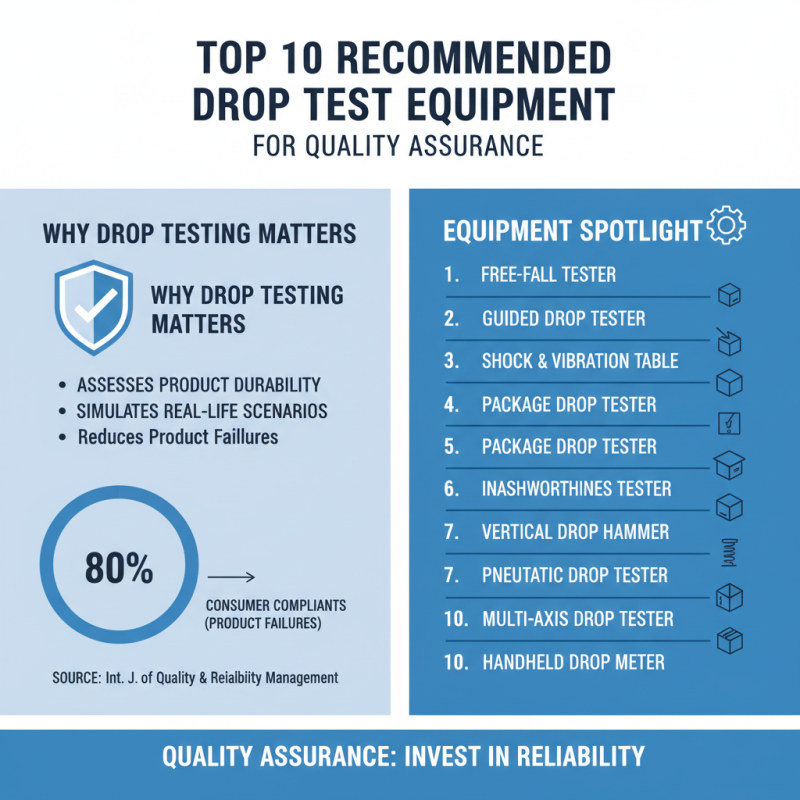
Top 10 Recommended Drop Test Equipment for Quality Assurance

Top 10 Drop Test Equipment for Reliable Quality Testing?

When it comes to quality assurance, drop testing is crucial. It assesses product durability and performance under conditions simulating real-life scenarios. A comprehensive report from the International Journal of Quality & Reliability Management emphasizes that 80% of consumer complaints relate to product failures. Reliable drop test equipment can help reduce these failures significantly.

Investing in effective drop test devices can yield impressive results. According to a recent industry study, products that withstand rigorous drop testing experience a 30% lower return rate. This not only enhances customer satisfaction but also strengthens brand loyalty. Key features to look for include adjustable drop heights, various impact surfaces, and precise measurement capabilities. However, many manufacturers still overlook the importance of thorough drop testing. This oversight can result in unnoticed weaknesses and costly recalls.

The landscape of drop test equipment is vast. Options range from basic setups to advanced systems with automated features. However, the choice should align with specific testing needs. Not all equipment offers the same reliability or precision. Some devices may show inconsistent results. Others might lack comprehensive testing parameters needed for thorough assessments. Identifying the right tool requires careful consideration and sometimes, painful trial and error.

How to Choose the Right Drop Test Equipment for Your Needs

Choosing the right drop test equipment is crucial for ensuring product reliability. Start by understanding your specific needs. Different products require different testing parameters. For example, electronic devices may need equipment that simulates real-world impacts. For heavy machinery, consider more robust testing solutions. According to industry reports, 72% of drops occur during shipping. This data underscores the need for precise testing.

When selecting, look for features such as adjustable heights, drop weights, and customizable settings. High-quality equipment allows you to replicate various scenarios. This flexibility is critical. A report from the International Society of Testing reveals that 63% of product failures occur within the first few months. Testing equipment that can mimic these conditions becomes essential.

Many buyers overlook the importance of user training. Even the best equipment can yield flawed data if used improperly. Investing in staff education can boost accuracy. Additionally, consider maintenance. Some equipment requires regular calibration, which can be time-consuming. A well-maintained device is more reliable. If neglected, you could receive results that misguide your product development.

Best Practices for Conducting Effective Drop Tests Using Equipment

Conducting effective drop tests requires careful planning and execution. Select the right equipment to ensure accurate results. Focus on variables like height, surface type, and orientation during testing. Consider using automated drop testers. They can provide consistency. However, don’t overlook manual tests for some scenarios.

When setting up a test, ensure proper measurements. Document everything thoroughly. Each drop should be replicable. A single failure could lead to flawed conclusions. Also, think about environmental factors. Temperature and humidity may affect material performance, yet many overlook them. Analyze your results critically. Sometimes, tests might yield unexpected outcomes. Encourage team discussions to address anomalies.

Lastly, remember to maintain your equipment. Calibration is vital for reliable data. Regular checks can prevent errors. Even experienced testers may forget this step. An organized approach to drop testing can lead to better insights. Stay open to adjustments based on findings. Your testing procedures should evolve with every trial.