













Analysis of Battery Puncture Test Machine: Key Technology to Ensure Battery Safety
With the rapid advancement of battery technology, battery safety remains a key concern. As an essential device for evaluating battery safety performance, the battery penetration tester provides a critical testing method for ensuring battery reliability in various complex environments.
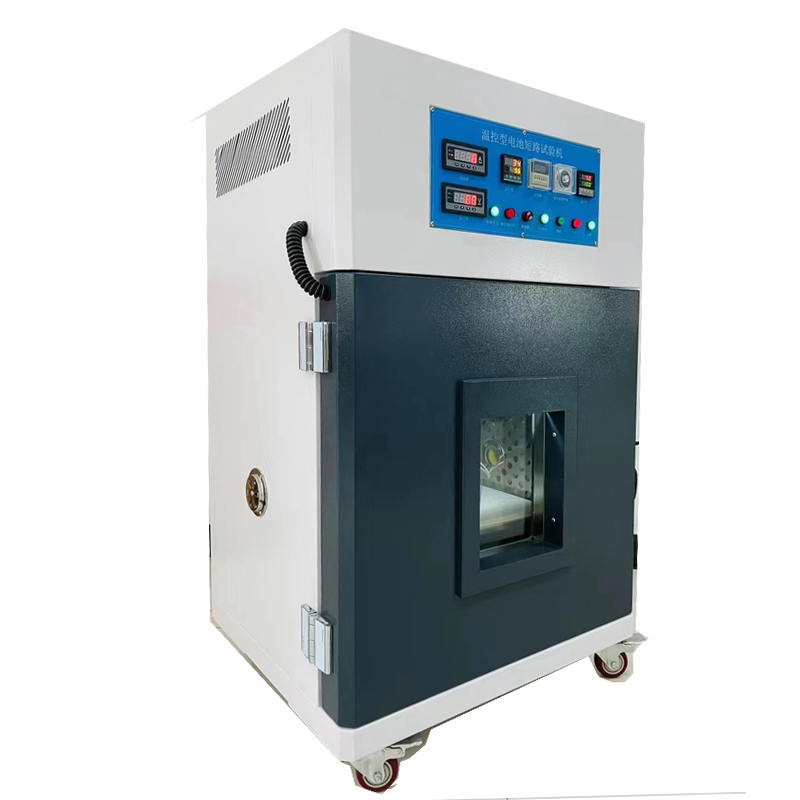
I. Operating Principle and Core Components
The operating principle of the battery penetration tester is based on simulating an internal short circuit in a battery. A sharp needle is inserted into the battery at a specific speed and force, inducing an internal short circuit and observing the battery's response.
The core components include the penetration device, drive system, control system, and data acquisition system. The penetration device typically consists of high-strength metal needles that precisely penetrate the battery. The drive system controls the speed and force of the penetration to ensure test accuracy and repeatability. The control system sets test parameters such as penetration speed and depth and monitors the test process in real time. The data acquisition system collects key battery data such as temperature, voltage, and current during the penetration process.
II. Technical Parameters and Performance Indicators
1. Penetration Speed: Common penetration speeds range from 10 to 100 mm/s and can be adjusted based on different test standards and battery types.
2. Penetration Force: Generally, sufficient force is provided to ensure penetration of the battery, typically ranging from several hundred Newtons to several thousand Newtons.
3. Temperature Measurement Accuracy: A high-precision temperature sensor accurately measures battery temperature changes during the penetration process, with an accuracy of ±0.1°C.
4. Data Acquisition Frequency: High-frequency data acquisition helps capture instantaneous battery changes, typically reaching thousands of times per second.
III. Test Standards and Methods
During the test, the battery must first be preconditioned, such as by charging it to a specified state. The battery is then secured to the tester's workbench, and the penetration position and angle are adjusted. The penetration test is initiated according to the set parameters, and changes in the battery's appearance, temperature, and voltage are observed and recorded throughout the test.
IV. Results Analysis and Evaluation
After the test, the collected data is analyzed. Focus on whether the battery catches fire, explodes, experiences a sharp temperature rise, or experiences a momentary voltage drop. These results can be used to assess the battery's safety performance and determine whether it complies with relevant standards and requirements. For batteries that fail to meet these requirements, further analysis will be conducted to provide a basis for design and production improvements.
V. Equipment Maintenance and Care
Regular maintenance and care are crucial to ensure the long-term stable operation and test accuracy of the battery penetration tester. Regular inspection of the penetration device for wear and timely replacement of damaged components are essential; the drive and control systems must be calibrated and debugged; and the equipment must be kept clean to prevent dust and debris from affecting test results.
VI. Development Trends and Outlook
With the continuous advancement of battery technology and the expansion of its application areas, the requirements for battery penetration testers are also increasing. In the future, testing machines will develop towards higher levels of automation, more precise test parameter control, and more comprehensive data collection and analysis. Furthermore, integration and collaboration with other testing equipment will provide stronger support for comprehensive battery safety performance assessments.