






Experimental Study on Signal Control Products in Low Temperature and Low Pressure Environment Chamber
Low-pressure environments can significantly impact the performance, reliability, and lifespan of signal control products. The following example, using a low-pressure test of a rail transit signaling electronic device, illustrates the crucial role of low-pressure testing in product reliability assessment.
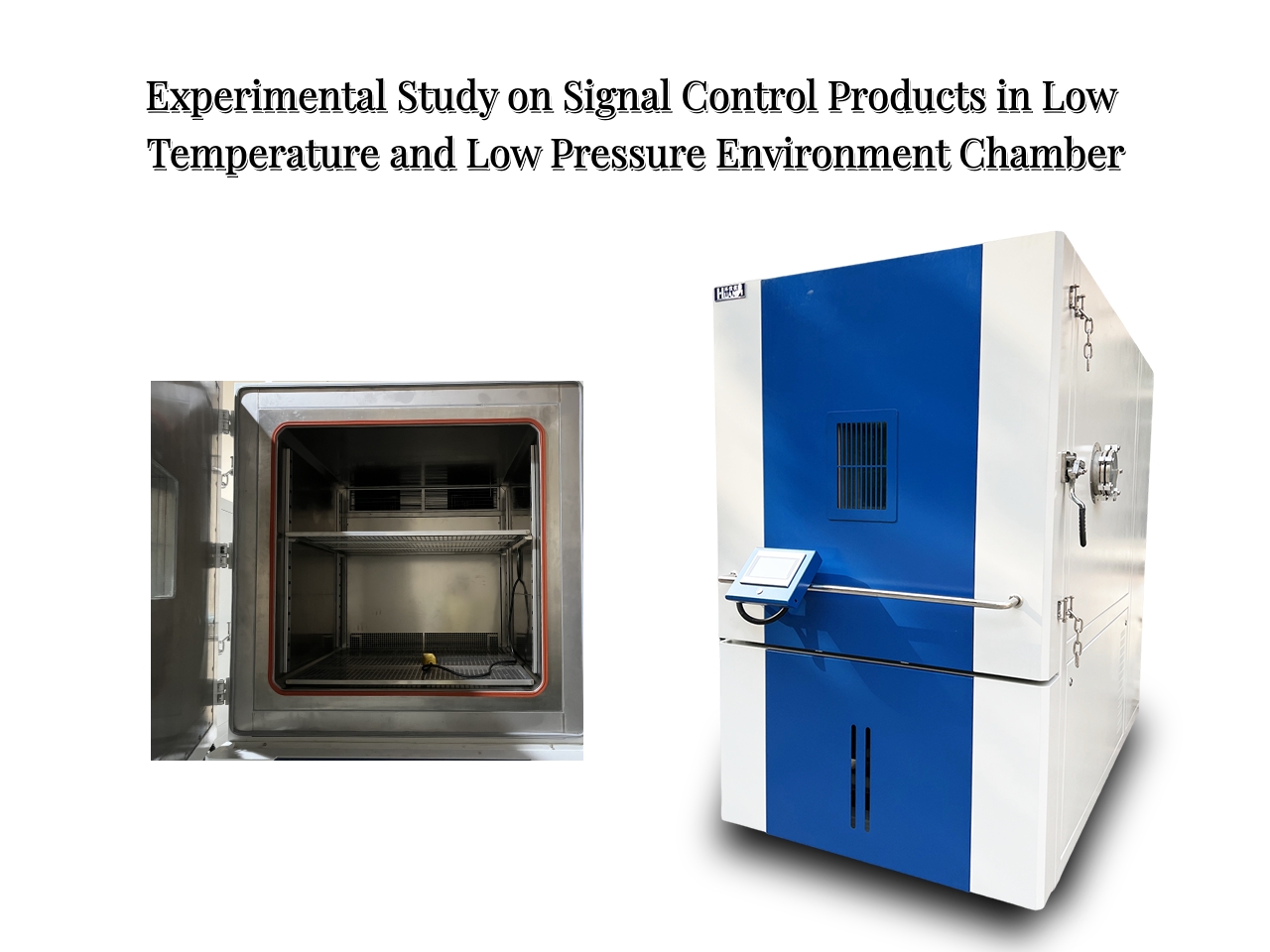
Test Equipment Requirements: To verify its adaptability to low-pressure environments, a low-pressure test was conducted according to the standard GB/T 2423.21-2008. The test was carried out in a non-standard low-pressure test chamber manufactured by Youhuan Instruments (as shown in the figure below).
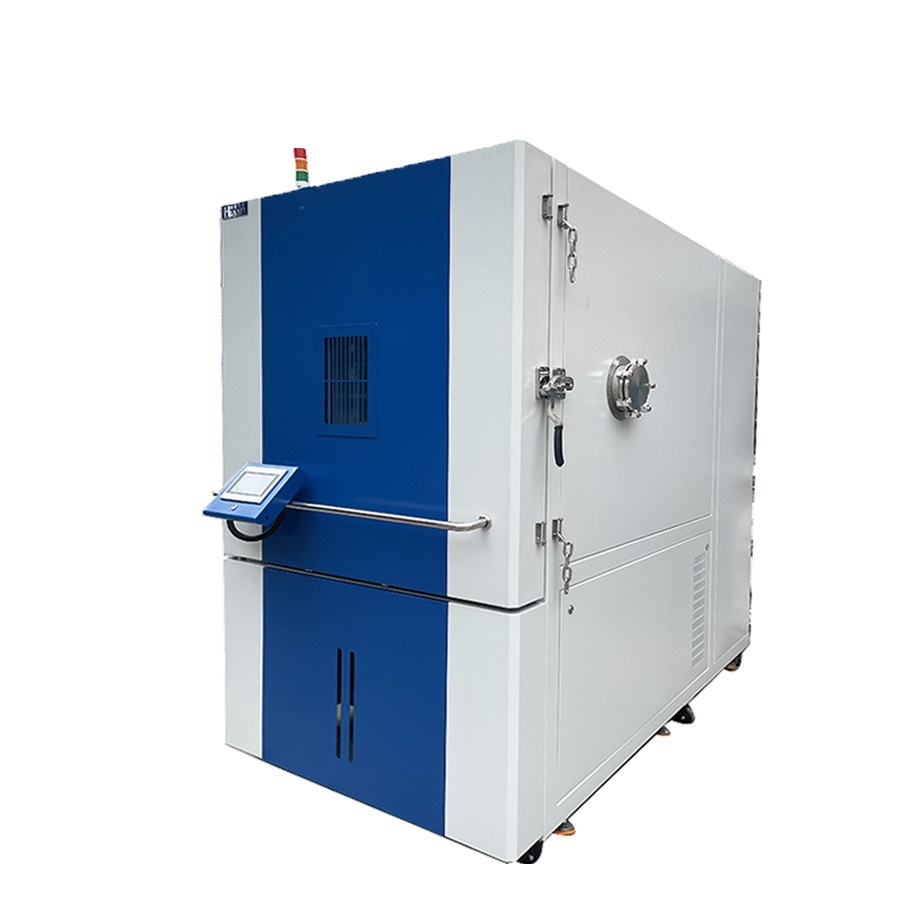
The test chamber provides a continuously adjustable air pressure range of 20 kPa to 101 kPa with a pressure deviation of no more than ±0.5 kPa. It is also equipped with a precision temperature control system with temperature fluctuations of less than ±2℃.
Experimental Procedure:
Phase 1: At room temperature (25°C), the air pressure was reduced from 101 kPa to 70 kPa at a rate of 1 kPa/min, held for 1 hour, and then increased back to 101 kPa at the same rate. This process was repeated three times. All functional performance parameters of the equipment were monitored, and their changes were recorded.
Phase 2: The air pressure was kept constant at 54 kPa for 16 hours, while the equipment was powered on. Its functional performance parameters were monitored, and their changes were recorded.
During the testing, several abnormal parameters of the equipment were observed:
In the first phase of the test, when the air pressure dropped to approximately 70 kPa, the operating current of the equipment suddenly increased by 10%, and the device temperature also rose rapidly by 5°C. The output signals of some sensitive components became distorted.
In the fifth hour of the second phase of the test, the equipment suddenly experienced a shutdown. After restarting, everything returned to normal, but the same fault occurred again after 10 hours. Two more shutdowns occurred within the following six hours. A thorough investigation of the malfunctioning components revealed that the main problem lay with the power module.
Anomaly Analysis:
The abnormal current rise in the first stage of the test was caused by partial discharge of the power transformer leads under critical air pressure. During the discharge, air is broken down to form plasma, generating a large number of high-energy particles that bombard the lead surface, leading to an increase in instantaneous short-circuit current. The high temperature accompanying the discharge also caused local overheating, while the drop in air pressure resulted in thinner air, affecting heat dissipation efficiency.
The interruption in the second stage of the test was due to a decrease in the reliability of the power control circuit. Under prolonged low air pressure, the circuit board expanded, causing cracks in small solder joints, resulting in intermittent and poor connections, distorting the control signal, and causing frequent abnormal power shutdowns.
Test Structure and Failure Analysis:
Through low-pressure testing and subsequent failure analysis, the research and development unit promptly identified design and manufacturing defects:
First, the lead layout of the primary winding of the power transformer was unreasonable, with excessively small spacing, making it highly susceptible to partial discharge under low-pressure conditions;
Second, the power supply's heat dissipation capacity was insufficient;
Third, the moisture-proof measures for the control circuit were inadequate, the PCB (Printed Circuit Board) material was improperly selected, and there was a risk of leakage in the component packaging.
This concludes the experimental research on the low-temperature and low-pressure Environment Chamber. For any questions regarding product testing, please consult the relevant technical personnel at Huanyi Instruments.