

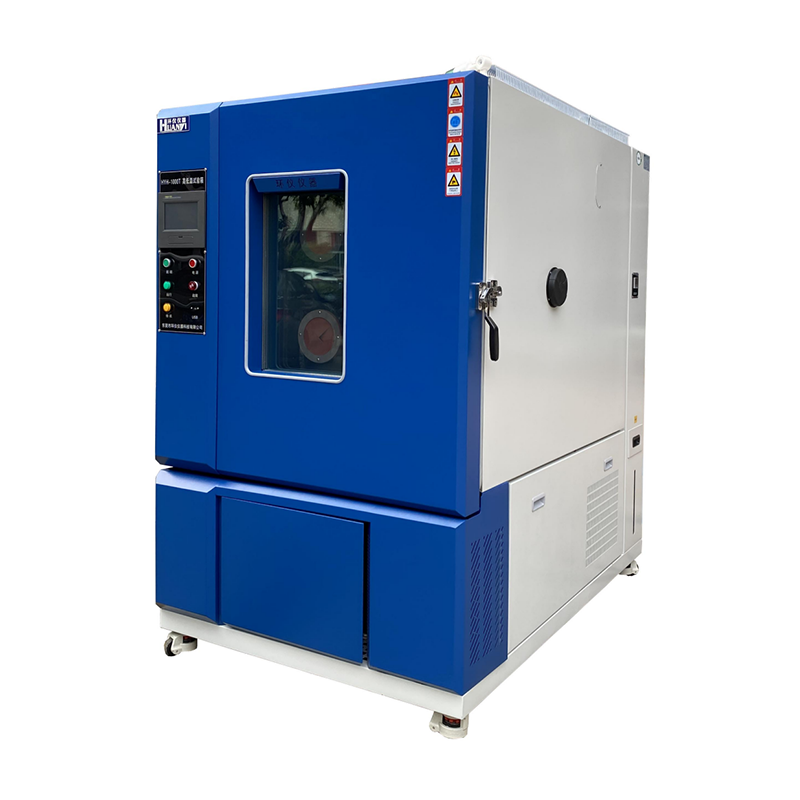
Fault Analysis of Slow Cooling in Constant Temperature and Humidity Test Chambers
Abstract:
Reduced cooling rates or failure to achieve set low temperatures are common operational issues in constant temperature and Humidity Test Chambers. This paper thoroughly examines the multifaceted causes of cooling failures—including refrigeration system efficiency degradation, obstructed heat exchange, and control system anomalies—and proposes a hierarchical diagnostic process with repair solutions. Covering measures from basic maintenance to core component repairs, it aims to provide equipment engineers with a systematic troubleshooting framework.
I. Problem Manifestations and Impacts
Typical Symptoms:
- Cooling rate significantly below rated specifications (e.g., time to reach -40°C from +25°C far exceeds technical parameters)
- Persistent overshoot and instability in low-temperature zones (e.g., below -20°C)
- Compressor operating at sustained high loads with abnormal power consumption increases
Consequences:
Extended test cycles and reduced efficiency
Failure of temperature-sensitive tests (e.g., thermal shock tests)
Accelerated equipment aging from prolonged overload operation, triggering cascading failures
II. Core Cause Analysis and Diagnostic Pathways
(1) Refrigeration System Performance Degradation
1. Refrigerant Leakage
Diagnosis: Observe bubbles in sight glass, detect abnormally low readings on high/low pressure gauges, or excessively high compressor discharge temperature.
Impact: Insufficient circulating refrigerant directly reduces cooling capacity.
Case Study: A laboratory unit experienced a 50% increase in cooling time. Leak detection revealed a minor evaporator leak; performance restored after leak repair and recharge.
2. Compressor Failure
Diagnosis: Abnormal noise (damaged valve plates), abnormal oil pressure, decreased winding insulation resistance.
Causes: Prolonged high-load operation, inadequate lubrication, voltage fluctuations.
3. Expansion Valve Malfunction
Diagnosis: Abnormal valve body frosting, superheat deviating from set range (normal: 3-8°C).
Impact: Improper flow reduces evaporator efficiency or risks liquid hammer.
(II) Heat Exchange System Impediments
1. Condenser Heat Dissipation Failure
Causes: Fins clogged with dust (especially air-cooled types), cooling water flow/temperature exceeding specifications (water-cooled types), fan failure.
Data: 10% increase in condensing pressure may reduce refrigeration capacity by 15%-20%.
2. Evaporator Abnormalities
Excessive frost buildup: Defrost function failure or improper cycle settings create insulating frost layers.
Airflow obstruction: Filter clogging, sample obstructions, or reduced centrifugal fan speed.
(III) Control System and Sensor Failures
1. Temperature Sensor Drift
Diagnosis: Compare with standard thermometer readings; calibrate if error exceeds ±0.5°C.
Impact: Incorrect feedback causes premature compressor shutdown.
2. Electrical Component Aging
Sticky contacts: AC contactor contacts welded shut, preventing compressor shutdown.
Relay failure: Control signal transmission interrupted.
(IV) Environmental Conditions and Design Factors
Excessive ambient temperature: Condensing efficiency of air-cooled units plummets when operating room temperature exceeds 25°C.
Overload Operation:
High heat generation from test samples or total heat load exceeding equipment design limits.
III. Systematic Solutions
(I) Basic Maintenance and Rapid Troubleshooting
1. Cleaning and Maintenance:
Clean condenser fins with compressed air (monthly; increase frequency in dusty environments)
Replace primary/intermediate filters (as indicated by differential pressure gauge)
2. Inspect Operating Environment:
Ensure ≥50cm clearance around equipment for ventilation; maintain ambient temperature between 10-25°C
For water-cooled units: Verify cooling water temperature ≤28°C and adequate flow rate
3. Sensor Calibration:
Perform multi-point calibration using NIST-traceable standard thermometers
(II) Ductwork and Defrost System Optimization
Airflow Reconfiguration:
Adjust sample placement to ensure ≥10cm distance from inner walls
Verify fan speed (using tachometer); repair motor or inverter if abnormal
Defrost Strategy Upgrade:
Add pre-low-temperature-test active defrost program
Change “time control” to “temperature + time” dual-condition triggering
(III) Control Logic Enhancement
Add delay protection: Enforce 3-5 minute restart delay after compressor shutdown
Install voltage monitor: Automatically cut power during voltage fluctuations >±10%
IV. Preventive Maintenance System Recommendations
1. Establish Maintenance Calendar:
Daily: Record cooling curves, inspect for abnormal noise
Quarterly: Clean condenser, calibrate sensors
Annually: Professional manufacturer's comprehensive maintenance, including refrigerant charge inspection
2. Digitize operation logs:
Use IoT sensors for real-time monitoring of critical parameters (condensing pressure, current, air velocity)
Set automatic threshold alarms (e.g., condensing pressure > 15% of rated value)
V. Conclusion
Cooling failure in constant temperature and humidity chambers results from multiple interacting factors, requiring a stepwise diagnostic strategy: “from external to internal, from simple to complex.” Maintenance's essence lies not in waiting for failures, but in anticipating every system cycle. Establishing scientific preventive maintenance mechanisms and rapid response protocols significantly enhances equipment reliability, ensuring the authority and continuity of environmental test data.
> Appendix: Fault Diagnosis Flowchart
> Cooling Abnormality → Check Ambient Temperature/Ventilation → Clean Condenser → Verify Fan Operation → Calibrate Sensors →
> Inspect High/Low Pressure → Observe Sight Glass → Analyze Compressor Current → Test Defrost Function → Professional Refrigeration Repair