


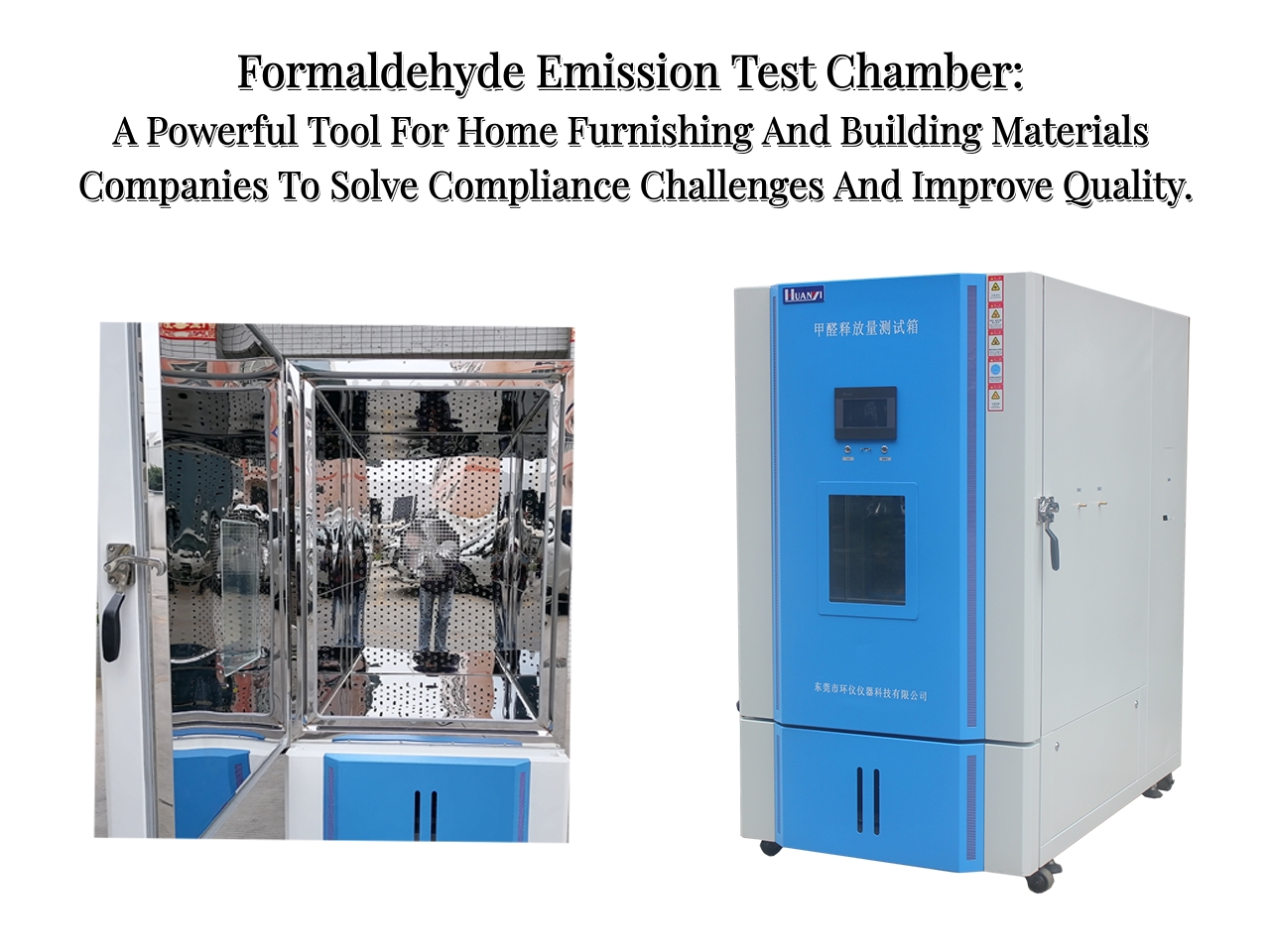
Formaldehyde Emission Test Chamber to Detect Formaldehyde Emission of Artificial Boards
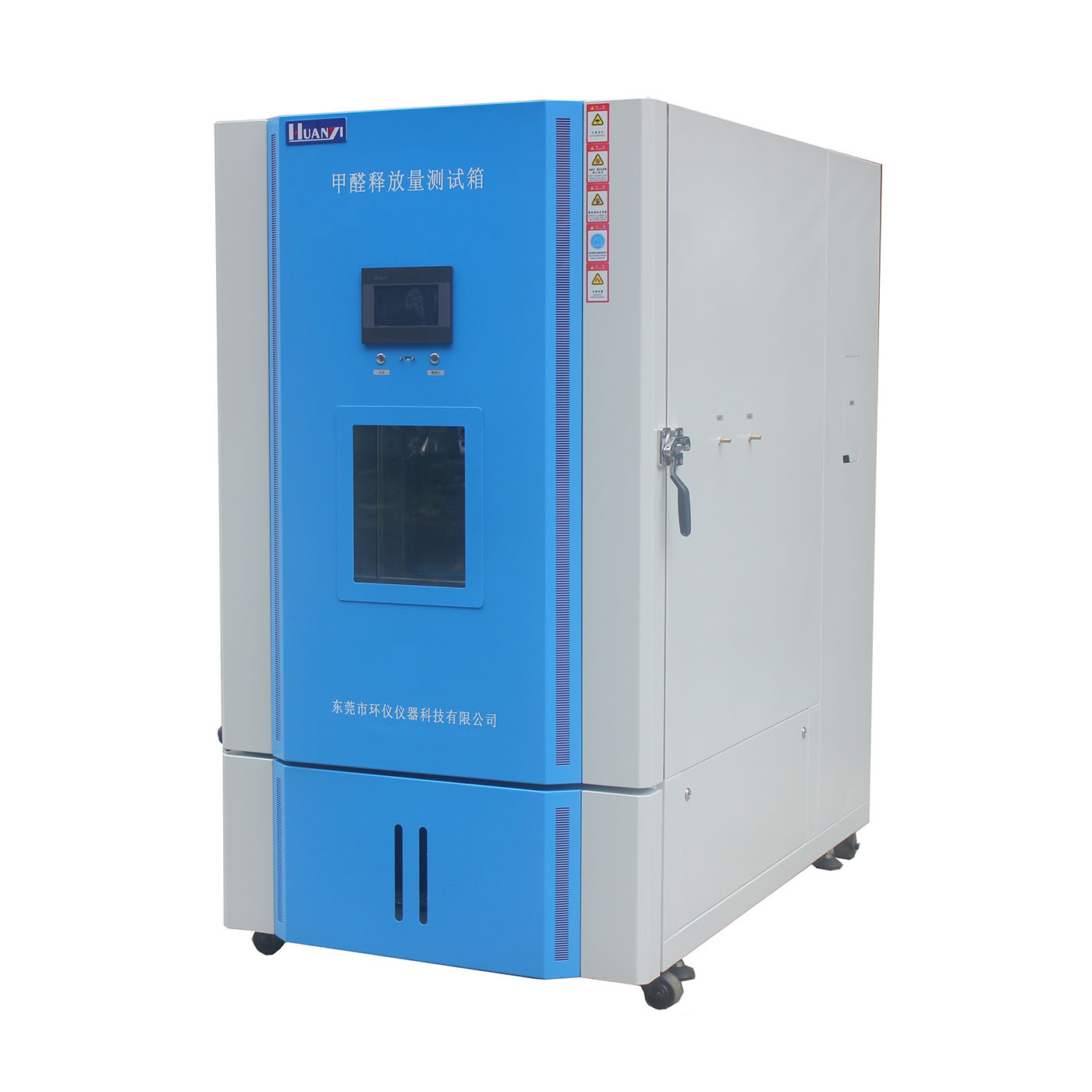
According to the latest GB 18580-2017 "Formaldehyde emission in artificial boards and their products for interior decoration and renovation materials" standard, and the "Implementation Rules for the Production License of Artificial Board Products", artificial boards need to be tested for formaldehyde emission. The formaldehyde emission can be tested using a 1 cubic formaldehyde Climate Chamber. Next, let's take a look at how the formaldehyde emission of artificial boards is tested.
Determination of formaldehyde emission of artificial boards:
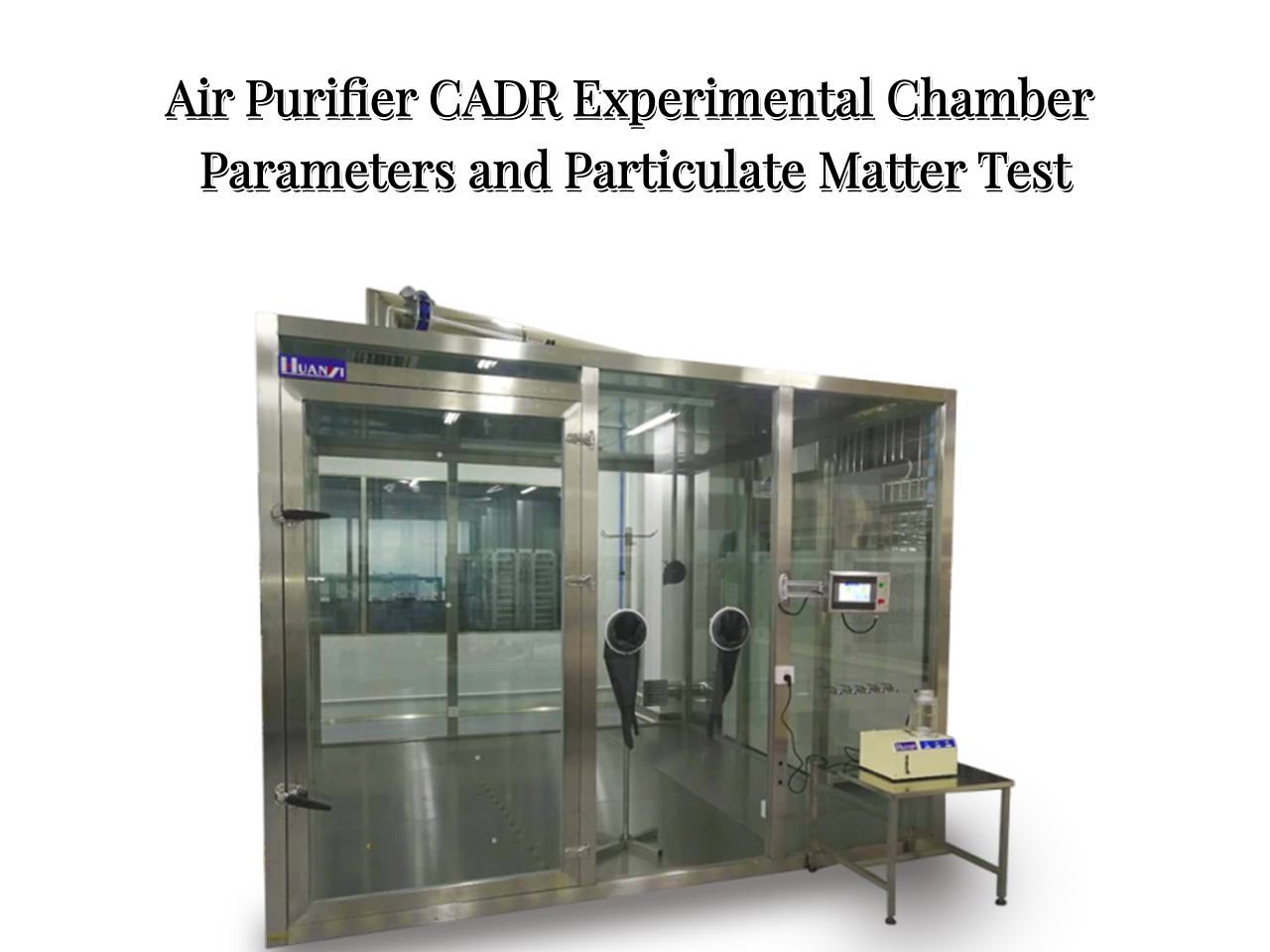
Test equipment: Environmental instrument 1 cubic formaldehyde climate chamber
Test reagents: Take 400ml of acetylacetone and dilute it to the scale in a 1000ml volumetric flask. Dissolve 200g of acetyl ammonium in water and transfer it to a 1000ml volumetric flask and dilute it to the scale.
Test condition error: temperature ±0.1℃, air replacement rate ±3%, relative humidity ±1%, air flow rate ±0.05 m/s
Start the test:
1. Put the test piece into the test box, in the vertical position at the center of the test box, with the surface parallel to the air flow, and the spacing is not less than 200mm. The first gas sampling is carried out at least 3 hours after the specimen is placed in the test box and the test procedure is started.
2. Add 25 ml of water to each of the two scrubbing bottles, connect them to the device, and regularly extract air samples from the box, passing through the scrubbing bottles at a rate of about 2 L/min, with a minimum of 120 L. The mass of the absorption liquid is measured after each sampling. Take 10 ml of each bottle of absorption liquid and transfer it to a 50 ml volumetric flask, and add 10 ml of acetylacetone solution and 10 ml of ammonium acetate solution. Cover the volumetric flask and determine the formaldehyde content in the absorption liquid.
3. The volume of the extracted air sample is determined according to the formaldehyde concentration. If the concentration exceeds 0.005 mg/m³, it is measured with the previous photometer; for samples with lower concentrations, increase the sampled air volume or reduce the volume of the solution of the absorption sample. Using a fluorometer instead of a spectrophotometer to measure the reaction product (diacetyldihydrodimethylpyridine) can improve the sensitivity of the analysis. In addition, the mass loss of the absorption solution can be measured by weighing. It should be ensured that there is enough water in the washing bottle and the water level should be higher than the outlet.
Note: The sampling step is twice a day until there is enough data to calculate the steady state.
The formaldehyde release is calculated according to the method in the standard.