







How to Choose a Drop Tester for Heavy-Duty Packages
Heavy packages are exposed to various risks during transportation: drops during manual handling, sudden movements during transport, impacts in sorting centers, and accidental drops in automated systems. The heavier the shipment, the greater the energy generated during a drop, increasing the risk of significant product damage.
Drop testing can simulate these scenarios under controlled laboratory conditions. Specialized machines can accurately reproduce drops on flat surfaces, edges, or corners, providing essential insights to improve packaging design and reduce costly damage or customer returns.
International Standards for Drop Testing
Drop Testing Machines must be selected in accordance with recognized international standards that define the testing protocols, validation methods, and performance levels required for packaging systems. Key standards to consider include:
ASTM D4169: Defines procedures for evaluating the performance of shipping containers under simulated distribution conditions, including handling, stacking, and impact testing.
ASTM D7386: Focuses on performance testing of packaging used in single-package delivery systems. ISTA (International Safe Transit Association): Offers a variety of test protocols widely used across various industries for real-world traffic simulations.
ISO 4180: Develops a common method for evaluating the performance of transport packaging.
MIL-STD-810G and MIL-STD 202: Used in military and aerospace applications, they place extremely stringent demands on impact resistance.
The selected Drop Tester must fully comply with these standards to ensure that test results are globally recognized and relevant for certification or regulatory purposes.
Key Technical Considerations When Selecting Equipment
Not all drop testersare designed the same. Various configurations exist, depending on load capacity, package size, type of drop simulated, and level of automation. The following technical criteria are crucial when evaluating Drop Test Equipment:
Maximum load capacity: Heavy-duty packaging machines must be able to handle weights exceeding 100 kg without compromising safety or measurement accuracy.
Maximum package size: Some systems allow for an adjustable impact platform to accommodate large or oversized packages.
Drop release mechanism and control: A high-precision release system ensures accurate and repeatable impact placement. Drop Type Diversity: Advanced machines should simulate flat drops, edge drops, corner drops, and even rotational shocks for a comprehensive assessment.
Integrated Measurement Systems: Sensors, accelerometers, high-speed cameras, and analytical software provide detailed data to support packaging design decisions.
Certification Compliance: Manufacturers must provide documented calibration and certification in accordance with international standards.
Selecting a drop tester without thoroughly analyzing these factors can result in unreliable test data and inadequate packaging validation.
The Advantages of Huanyi's Safe Load Testing Technology
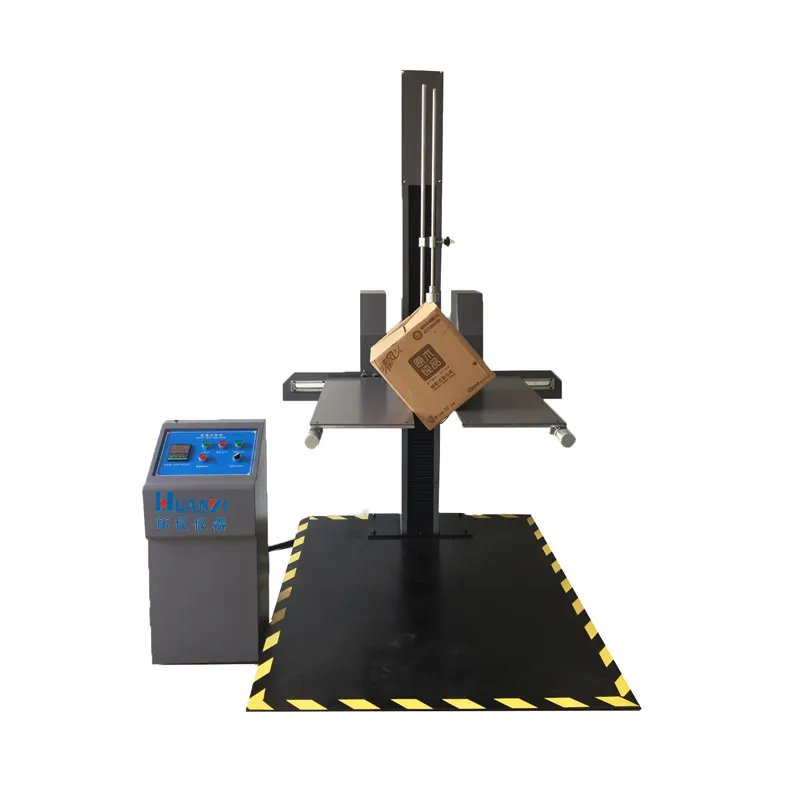
In the field of transport simulation, Huanyi's drop testers offer highly specialized solutions for drop testing of heavy packages. These machines are meticulously designed to accommodate a wide range of package weights and sizes, providing precise drop simulation for comprehensive performance evaluation.
Key features of Huanyi's drop testers include:
Advanced drop control systems ensure precision during every test cycle.
Capable of performing flat, edge, and corner drop tests according to multiple standards.
Specialized models are available for both light and heavy packages, covering a wide weight range, including large unit loads.
Fully compliant with international standards such as ASTM, ISTA, ISO, and EN 15552, as well as military standards such as MIL-STD-810G.
The modern, ergonomic design seamlessly integrates into packaging labs.
These features enable manufacturers, logistics providers, and packaging engineers to verify packaging for industrial products and complex supply chains with a high degree of confidence.
Common Mistakes When Selecting a Drop Tester
Choosing the wrong drop test equipment can lead to inaccurate test results or even damage to the product during testing. Some of the most common mistakes during the selection process include:
Underestimating the maximum package weight to be tested.
Ignoring the most common drop types encountered in real-world logistics.
Disregarding specific regulatory or certification requirements for the target market.
Selecting a low-precision system or a machine lacking advanced measurement capabilities.
Failing to ensure adequate after-sales service, regular calibration, or spare parts availability.
A thorough technical evaluation and consultation with the equipment manufacturer are strongly recommended before making a final purchase decision.