









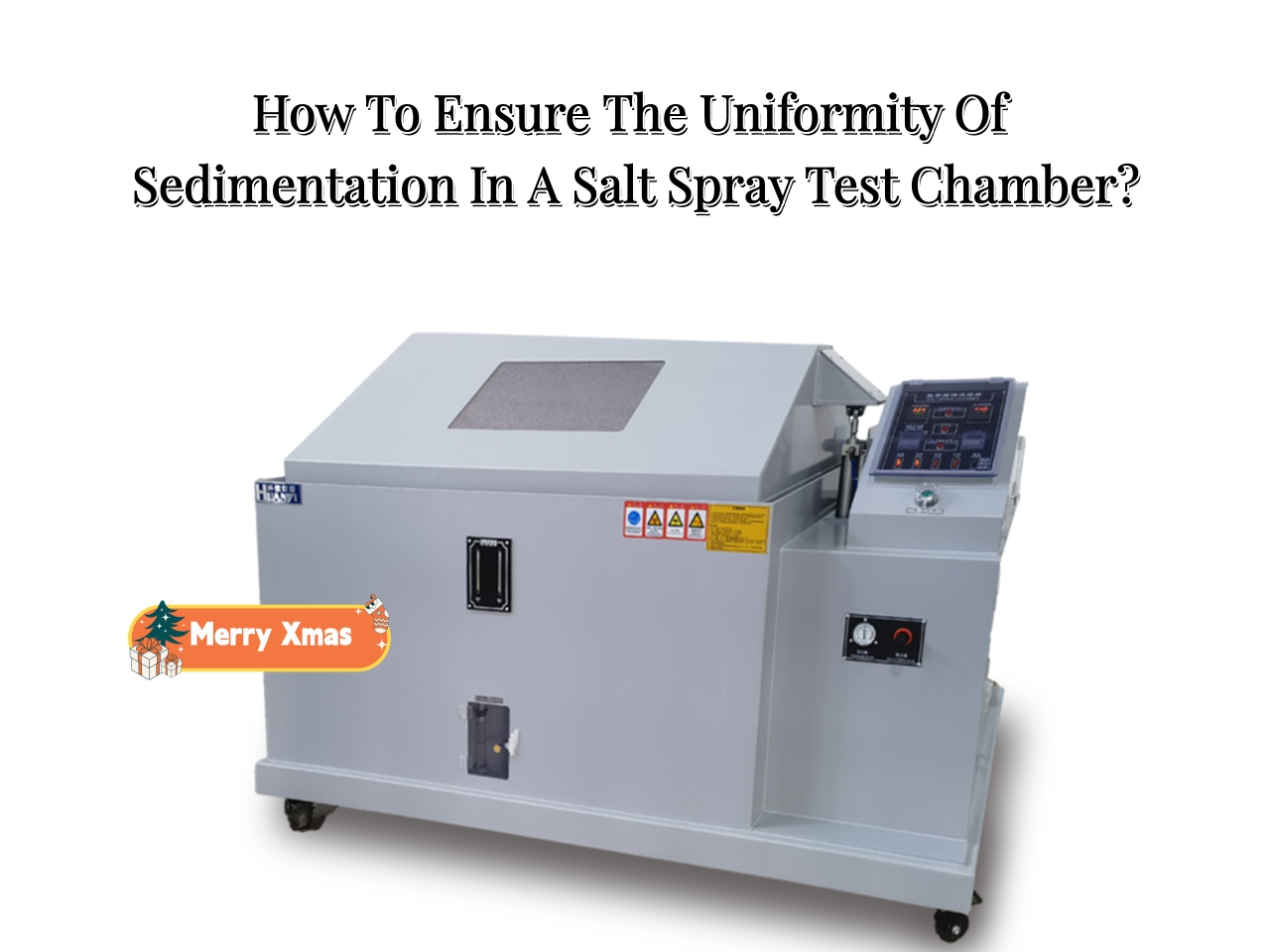



How To Ensure The Uniformity Of Sedimentation In The Salt Spray Test Chamber?
In Salt Spray Test chambers, the uniformity of salt spray deposition is a key factor in ensuring the reliability of test results. The salt spray test chamber ensures uniform deposition through system hardware design and rigorous, standardized maintenance measures, specifically as follows:

I. System Hardware Design Guarantee
1. Optimized Chamber Material: High-performance fiberglass is used as the chamber material, with the inner cavity integrally molded. This material is not only highly corrosion-resistant but also has a smooth surface, effectively reducing salt spray adhesion and residue on the inner wall of the chamber, minimizing the impact of secondary deposition on deposition uniformity.
2. Precision Spray System: The parts of the nozzles that directly contact the salt solution are made of all-plastic, avoiding interference from metal parts. The nozzles also feature a spherical mounting design, facilitating operator fixation and angle adjustment. The system is equipped with a flow meter to precisely distribute the flow rate of each nozzle, ensuring uniform distribution of the total salt spray volume. When the spray volume exceeds the set value by ±10%, the equipment will automatically issue an alarm (the test will not stop), promptly reminding the operator to check the equipment status.
3. Airflow Guidance and Control: Vertical guide plates or horizontal baffles are installed inside the chamber to guide the salt mist along a preset path, effectively reducing turbulence and eddies and avoiding localized sedimentation differences caused by airflow disturbances. By optimizing fan power and duct structure, the overall airflow velocity within the chamber is precisely controlled, preventing excessively fast or slow local airflow from disrupting the uniform distribution of the salt mist.
4. Sealing and Protection Design: A triple-safety sealing design is employed, utilizing spring clips, double locking at the front of the chamber cover, and a dry sealing strip. This design minimizes external air interference, stabilizes the internal air pressure environment, and prevents salt mist escape or external airflow infiltration, providing a stable internal environment for uniform salt mist sedimentation.
5. Regular Inspection and Calibration: Equipped with calibration corrosion plates, regular inspection of salt mist sedimentation in specific areas allows for real-time monitoring of the equipment's operating status, ensuring the stability of sedimentation uniformity during long-term operation.
- Clean Nozzles: Clean the nozzles regularly to prevent clogging, which can lead to uneven spray volume and affect salt spray settling.
- Maintain Bubble Tower: Regularly inspect and maintain the bubble tower to prevent impurities from entering the spray system, ensuring the purity of the salt solution and the stability of the spray.
- Check Sealing Rings: Regularly check the condition of the sealing strips and replace aged sealing rings promptly to prevent salt spray leakage or intrusion of external humid air due to seal failure.
- Standardize Parameter Settings: Strictly follow the manufacturer's recommended standards to set test parameters (such as pump speed, air pressure, etc.) to avoid human error affecting salt spray uniformity.
III. Practical Application Recommendations In practical applications, it is recommended to select an appropriate equipment model based on specific testing needs (such as sample type, reference standards, etc.) and regularly verify the equipment's operating status to ensure the reliability of test data.