


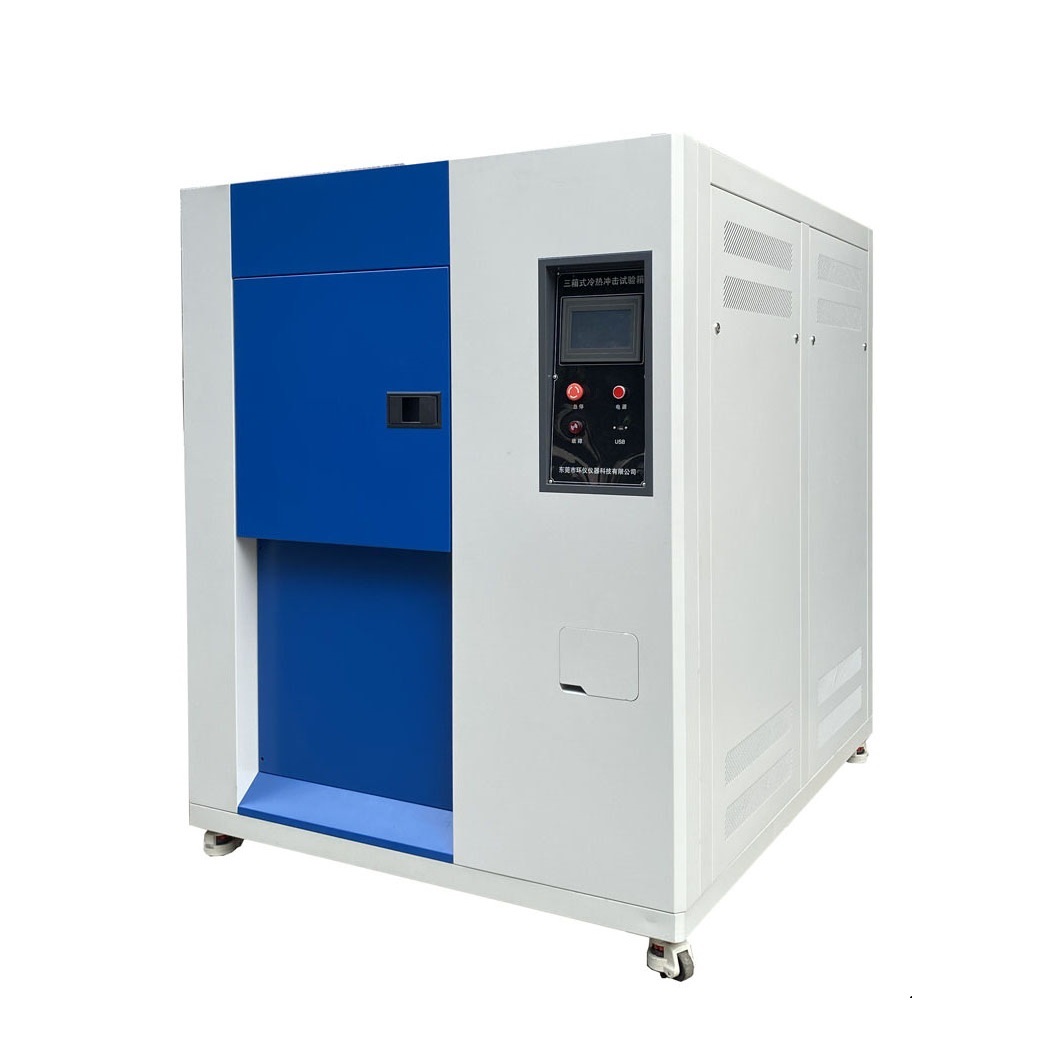
Poor Condenser Heat Dissipation in Thermal Shock Test Chambers: Causes, Dangers, and Solutions
In the refrigeration system of a thermal shock test chamber, the condenser plays a key role in dissipating heat and reducing pressure. Its heat dissipation efficiency directly determines the stability of the refrigeration cycle. In actual operation and maintenance, poor heat dissipation in the condenser is often caused by dust accumulation and fan failure. This leads to excessively high condensing pressure, reduced refrigeration efficiency, and ultimately, poor performance in the low-temperature range of the equipment. This requires special attention and prompt resolution. The following is an analysis of this type of failure by Dongguan Huanyi Instrument Technology Co., Ltd.:
I. Causes of Thermal Shock Test Chamber Failures:
1. Dust Accumulation in the Condenser: Over long-term operation, dust, fibers, and other impurities in the environment adhere to the condenser fins, gradually forming a dense layer of dirt. This layer of dirt blocks heat exchange between the fins and the air, preventing heat that would otherwise be dissipated through the fins from being effectively dissipated. This results in an increase in condensing temperature and, consequently, in condensing pressure exceeding the normal range.
2. Fan Failure: If the condenser's cooling fan suffers from motor aging, broken blades, or stuck bearings, insufficient airflow or fan stalling can occur. Even if the condenser fins are clean, the air cannot quickly remove the heat, causing a sharp drop in heat dissipation efficiency and an abnormally high condensing pressure.
II. Harms of Poor Heat Dissipation:
1. Excessively high condensing pressure directly increases the compressor's operating load, leading to difficulty starting the compressor and increased noise. Long-term overload operation can also accelerate compressor aging and shorten its service life.
2. Reduced cooling efficiency can slow the cooling rate in the low-temperature zone, or even prevent the set low-temperature value from being reached, affecting test progress and data accuracy.
3. Excessively high condensing pressure can trigger high-pressure protection in some equipment, causing frequent refrigeration system shutdowns and preventing continuous testing.
III. This type of failure can be addressed through a dual approach of "daily prevention + timely maintenance":
1. During daily use, it is recommended to clean the condenser fins with compressed air every one to two months to prevent dust accumulation.
2. Regularly check the fan's operating status, listening for any abnormal noise and observing whether the blades are rotating smoothly. If poor heat dissipation is occurring, first check the fan:
3. Use a multimeter to measure the resistance of the fan motor winding to determine if the motor is damaged. If the motor is normal, inspect the fan blades and bearings and replace the fan assembly if necessary.
4. Check the condenser for dust accumulation. If the dirt is thick, soak the fins in a neutral detergent for about 10-15 minutes, then rinse with clean water and allow to dry to ensure unobstructed heat dissipation.
5.For air-cooled refrigeration systems, the condenser fan should be regularly maintained, and the condenser should be cleaned and dusted to ensure good ventilation and heat exchange performance. For water-cooled refrigeration systems, in addition to ensuring the basic water inlet pressure, the water inlet temperature must be within the specified range (no higher than 30°C), the corresponding flow rate must be maintained, and the inside of the condenser must be cleaned regularly to ensure its continued stable heat exchange performance.
Targeted treatment can quickly restore the condenser's heat dissipation performance and ensure stable operation of the refrigeration system.