



Simulating Severe Rainfall Environment-Why Do Companies Need to Purchase Rain Test Chambers?
In today's highly competitive market environment, product quality has become the foundation of an enterprise. For many industries, the waterproof performance of a product is directly related to its reliability and service life. As a professional testing equipment that simulates natural rainfall environment, the Rain Test Chamber has become an important part of the enterprise's quality control system. This article will explore the use value of therain test chamber in depth, analyze its application scenarios in different industries, and provide professional advice for enterprises to purchase suitable equipment.
The use function and test standards of the rain test chamber
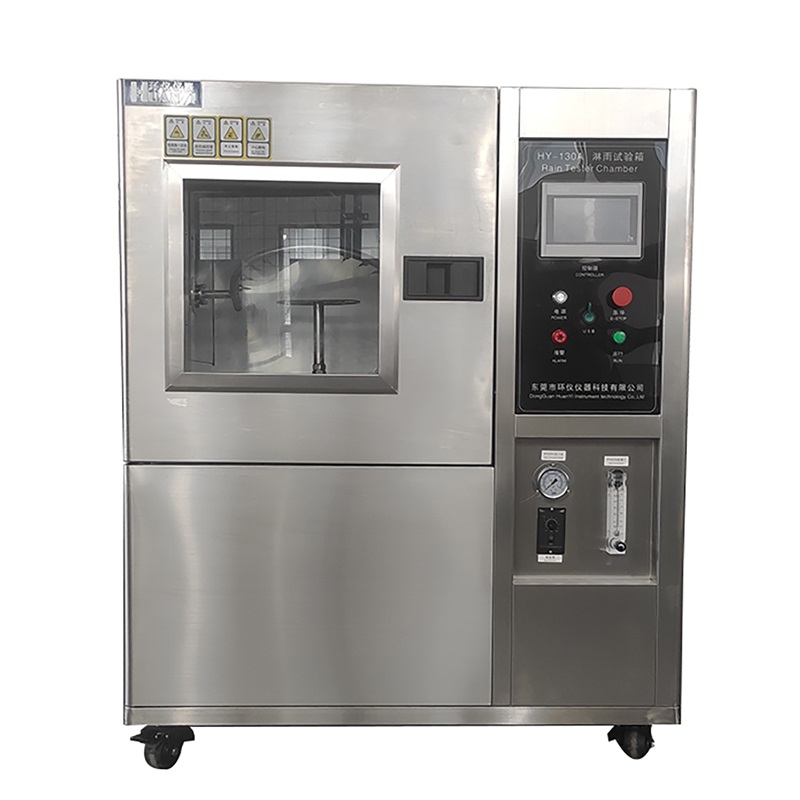
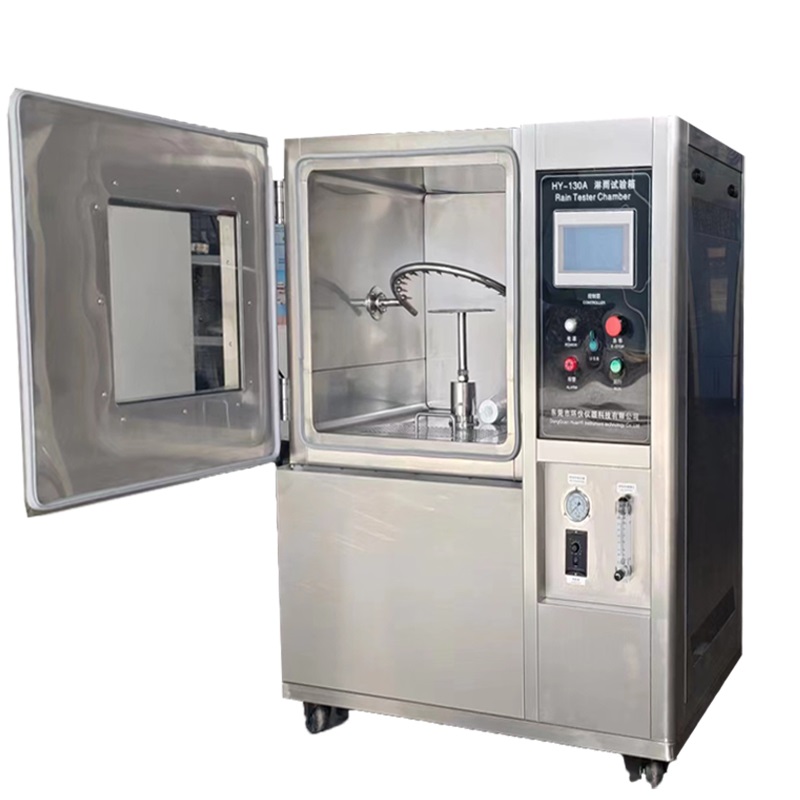
The rain test chamber is a professional equipment that tests the protection level of the product shell by artificially simulating the natural rainfall environment. Its technology lies in controlling the pressure, flow, angle and duration of the water flow to simulate different precipitation conditions from drizzle to heavy rain. Modern rain Test Chambers are usually equipped with intelligent control systems, which can program test parameters and record test data in real time to ensure the accuracy and traceability of the test results.
In terms of test standards, the rain test is mainly based on the internationally accepted IP protection level system. IPX1 to IPX4 grade tests mainly evaluate the product's ability to protect against vertical dripping, tilted dripping and splashing water; IPX5 and IPX6 verify protection against water spray and strong water spray; and IPX7 to IPX9K involve harsh conditions such as immersion and high temperature and high pressure spray. These standards provide clear performance indicators and test methods for the waterproof design of corporate products.
Industry application value of rain test chamber
Electronic product manufacturing industry: improving product reliability
In the field of consumer electronics, devices such as smartphones and smart watches need to pass rain tests to verify their daily waterproof performance. Professional rain test chambers can simulate water splash environments at different angles to help manufacturers find weak links in product sealing designs. Electronic products that have undergone rigorous rain tests can reduce their after-sales problems caused by water ingress.
Automotive industry: ensuring driving safety
Key components such as automotive lamps, ECU control units, and wiring harness connectors need to pass rain tests to verify their sealing performance. Modern rain test chambers can simulate the impact of heavy rain encountered by vehicles at high speeds and test the waterproof performance of components under dynamic conditions. By introducing an automated rain test line, the waterproof failure rate of its vehicles can be reduced.
Photovoltaic new energy industry: ensuring long-term power generation efficiency
Photovoltaic modules usually need to be exposed outdoors for more than 25 years, and their waterproof performance directly affects the power generation efficiency and service life. Professional photovoltaic module rain test chambers can simulate rainstorm conditions while monitoring the changes in the electrical performance of the modules, helping manufacturers optimize the frame seal and junction box design.
Key considerations for companies to purchase rain test chambers
Clear test requirements
Companies should determine the required IP protection level based on product characteristics and industry standards. For example, consumer electronics products usually require an IPX4 splashproof level, while industrial equipment may require an IPX6 strong water spray level. At the same time, the sample size should be considered, and photovoltaic companies need to choose a large-size test chamber to meet the needs of module testing.
Pay attention to equipment performance parameters
Parameters include: water spray pressure (usually 80-150kpa), flow accuracy (such as IPX5 requires 12.5±0.625L/min), swing pipe angle adjustment range (IPX3 is 60°, IPX4 is 180°), etc. In addition, whether the control system supports functions such as data recording and remote operation is also worth paying attention to.
Pay attention to after-sales service and standard compliance
Choose manufacturers that have passed ISO9001 certification, and the equipment complies with international and domestic standards such as IEC60529 and GB4208. At the same time, the manufacturer's after-sales service network should be considered, especially for production line testing equipment that requires long-term stable operation.
Development trend of rain test technology
With the popularization of Internet of Things technology, the new generation of rain test chambers is moving towards intelligence. Through cloud data management, enterprises can realize remote monitoring and analysis of test data; and combined with AI algorithms, the equipment can also automatically identify product seepage points and improve detection efficiency. In addition, the comprehensive environmental testing solution that combines rain testing with multiple factors such as temperature, humidity, and UV aging is also increasingly favored by the manufacturing industry.
For companies that pursue product quality, investing in professional rain test equipment is not only a measure to meet industry standards, but also a strategic choice to enhance product competitiveness and reduce after-sales risks. In the purchase process, companies should combine their own product characteristics and testing needs, select equipment suppliers with mature technology and perfect services, and build a comprehensive product quality assurance system.