



What is the PCT Test?
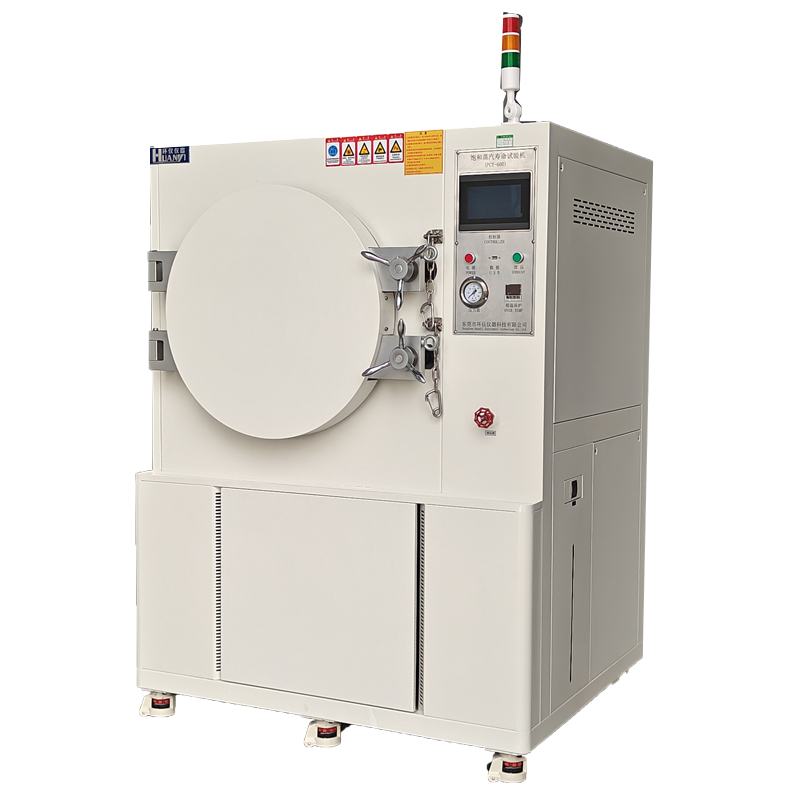
Definition of PCT Testing
PCT (pressure cooker testing), also known as saturated steam testing, is a reliability testing method that simulates extreme high-temperature, high-humidity, and high-pressure environmental conditions. This test subjects samples to harsh environments (e.g., 121°C, 100% RH, and 2 atmospheres of pressure) to evaluate their performance. Its core goal is to replicate the high-humidity conditions a product might encounter in real-world applications, thereby identifying potential defects early, optimizing design and manufacturing processes, and ensuring product reliability and market competitiveness.
Purpose and Significance of PCT Testing
- Main Objectives:
- Defect Identification:Rapidly detect potential failures caused by humid environments, such as moisture absorption, seal degradation, and corrosion.
- Reliability Verification:Quantitatively evaluate the durability of products (e.g., semiconductor packages and electronic components) under extreme conditions.
- Cost-Effectiveness:Compared to natural exposure, PCT accelerates aging effects, reducing R&D time and the risk of market failure.
How PCT Testing Works
PCT testing subjects products to extreme conditions (typically 121°C, 100% RH, and 2 atmospheres of pressure) to rapidly expose product defects. Saturated steam environments can penetrate microscopic defects and accelerate failure mechanisms such as:
- Popcorning effect—moisture absorption by IC packages can lead to cracking during reflow soldering.
- Metal corrosion—causing open circuits in wire bonds and conductive traces.
- Leakage—ionic contamination can cause shorts between pins.
By intensively applying thermal and humidity stress, PCT testing can predict field failures faster than natural aging, helping manufacturers improve reliability and reduce warranty costs. PCT testing is crucial to product reliability.
Why PCT Testing is Important
PCT (pressure cooker testing) is crucial for ensuring product reliability under real-world conditions. By simulating extreme humidity, temperature, and pressure, PCT testing can detect hidden defects early, helping manufacturers improve product quality and gain a competitive advantage in the market. This is particularly important for printed circuit boards (PCBs) and semiconductors, as moisture resistance directly impacts product performance and lifespan.
Key Benefits of PCT Testing
- Assessing Moisture Resistance
In industries like electronics, products are often exposed to high humidity environments. PCT testing exposes samples to saturated steam (100% RH), high temperature (121°C+), and high pressure (2 atmospheres) to assess:
- PCB reliability—preventing corrosion, short circuits, and insulation failures in humid environments.
- Long-term durability—ensuring that devices (e.g., smartphones, automotive electronics) can withstand tropical climates or condensation.
- Quality control—providing data to optimize moisture-resistant materials and coatings.
- Measuring Material Moisture Absorption
Moisture-sensitive materials (e.g., semiconductor packaging materials, adhesives) can degrade if they absorb excessive moisture. PCT testing quantifies absorption under controlled conditions, helping to:
- Select better materials—avoiding hygroscopic polymers that weaken over time.
- Improving sealing—preventing moisture from entering IC packages and reducing "popcorn effect" cracks during soldering.
- Extending product life—critical for medical implants, aerospace components, and high-end electronics.
- Testing Semiconductor Moisture Resistance
Semiconductor packaging defects can lead to catastrophic failure in humid environments. PCT testing can detect:
- Delamination—moisture penetration at the epoxy/leadframe interface.
- Corrosion—metallization degradation leading to open circuits.
- Leakage—ionic contamination causing shorts between pins.
By identifying weaknesses early, manufacturers can improve packaging processes and meet JEDEC and IPC moisture resistance standards.
PCT Testing in PCB Applications
Core Applications in the PCB Industry
PCT (Autoclave Testing) is a key evaluation method for printed circuit boards (PCBs), specifically designed to:
- Evaluate moisture resistance durability in high humidity conditions
- Verify long-term reliability through accelerated aging
- Optimize material selection and manufacturing processes
Key Test Focus Areas
- Moisture Absorption Analysis
- Precisely measure water absorption of PCB/FPC materials
- Determine the optimal substrate material for high-reliability applications
- Ensure signal integrity in humid environments (critical for 5G/high-frequency PCBs)
- Comply with IPC-TM-650 2.6.16 moisture resistance standard
High-pressure steam testing
- Simulates extreme operating conditions (121°C/100% RH/2 atm)
- Detects critical failures
- Delamination and blistering
- Conductive anodic filament (CAF) formation
- Solder mask degradation
- Essential for automotive electronics verification (AEC-Q100 compliant)
Semiconductor Industry Applications
- Package Reliability Verification
- Evaluate the moisture barrier properties of packaging materials
- Prevent catastrophic failures
- Popcorning during reflow soldering
- Corrosion-induced shorts
- Ionic contamination shorts
- Mandatory requirements for JEDEC JESD22-A104 certification
- Advanced Materials Research
- Compare the performance of different molding compounds
- Generate life prediction data (85°C/85%RH equivalent)
- Support lead-free package development
Overview
In quality control, PCT testing can serve as an important pre-shipment inspection tool to ensure product quality meets standard requirements. In reliability assessment, PCT testing provides reliability data under harsh environmental conditions, providing a basis for predicting product life and formulating maintenance strategies. In accelerated life testing, PCT testing can accelerate the testing process by increasing environmental stress (such as temperature) and operational stress (applied voltage, load, etc.), thereby shortening the product or system life test time. PCT test results can be used for product development, quality control, reliability assessment, and accelerated life testing. During the product development phase, PCT testing can help engineers quickly identify design flaws in products, enable timely improvements, and shorten product development cycles.
Definition of PCT Testing
PCT (pressure cooker testing), also known as saturated steam testing, is a reliability testing method that simulates extreme high-temperature, high-humidity, and high-pressure environmental conditions. This test subjects samples to harsh environments (e.g., 121°C, 100% RH, and 2 atmospheres of pressure) to evaluate their performance. Its core goal is to replicate the high-humidity conditions a product might encounter in real-world applications, thereby identifying potential defects early, optimizing design and manufacturing processes, and ensuring product reliability and market competitiveness.
Purpose and Significance of PCT Testing
- Main Objectives:
- Defect Identification:Rapidly detect potential failures caused by humid environments, such as moisture absorption, seal degradation, and corrosion.
- Reliability Verification:Quantitatively evaluate the durability of products (e.g., semiconductor packages and electronic components) under extreme conditions.
- Cost-Effectiveness:Compared to natural exposure, PCT accelerates aging effects, reducing R&D time and the risk of market failure.
How PCT Testing Works
PCT testing subjects products to extreme conditions (typically 121°C, 100% RH, and 2 atmospheres of pressure) to rapidly expose product defects. Saturated steam environments can penetrate microscopic defects and accelerate failure mechanisms such as:
- Popcorning effect—moisture absorption by IC packages can lead to cracking during reflow soldering.
- Metal corrosion—causing open circuits in wire bonds and conductive traces.
- Leakage—ionic contamination can cause shorts between pins.
By intensively applying thermal and humidity stress, PCT testing can predict field failures faster than natural aging, helping manufacturers improve reliability and reduce warranty costs. PCT testing is crucial to product reliability.
Why PCT Testing is Important
PCT (pressure cooker testing) is crucial for ensuring product reliability under real-world conditions. By simulating extreme humidity, temperature, and pressure, PCT testing can detect hidden defects early, helping manufacturers improve product quality and gain a competitive advantage in the market. This is particularly important for printed circuit boards (PCBs) and semiconductors, as moisture resistance directly impacts product performance and lifespan.
Key Benefits of PCT Testing
- Assessing Moisture Resistance
In industries like electronics, products are often exposed to high humidity environments. PCT testing exposes samples to saturated steam (100% RH), high temperature (121°C+), and high pressure (2 atmospheres) to assess:
- PCB reliability—preventing corrosion, short circuits, and insulation failures in humid environments.
- Long-term durability—ensuring that devices (e.g., smartphones, automotive electronics) can withstand tropical climates or condensation.
- Quality control—providing data to optimize moisture-resistant materials and coatings.
- Measuring Material Moisture Absorption
Moisture-sensitive materials (e.g., semiconductor packaging materials, adhesives) can degrade if they absorb excessive moisture. PCT testing quantifies absorption under controlled conditions, helping to:
- Select better materials—avoiding hygroscopic polymers that weaken over time.
- Improving sealing—preventing moisture from entering IC packages and reducing "popcorn effect" cracks during soldering.
- Extending product life—critical for medical implants, aerospace components, and high-end electronics.
- Testing Semiconductor Moisture Resistance
Semiconductor packaging defects can lead to catastrophic failure in humid environments. PCT testing can detect:
- Delamination—moisture penetration at the epoxy/leadframe interface.
- Corrosion—metallization degradation leading to open circuits.
- Leakage—ionic contamination causing shorts between pins.
By identifying weaknesses early, manufacturers can improve packaging processes and meet JEDEC and IPC moisture resistance standards.
PCT Testing in PCB Applications
Core Applications in the PCB Industry
PCT (Autoclave Testing) is a key evaluation method for printed circuit boards (PCBs), specifically designed to:
- Evaluate moisture resistance durability in high humidity conditions
- Verify long-term reliability through accelerated aging
- Optimize material selection and manufacturing processes
Key Test Focus Areas
- Moisture Absorption Analysis
- Precisely measure water absorption of PCB/FPC materials
- Determine the optimal substrate material for high-reliability applications
- Ensure signal integrity in humid environments (critical for 5G/high-frequency PCBs)
- Comply with IPC-TM-650 2.6.16 moisture resistance standard
High-pressure steam testing
- Simulates extreme operating conditions (121°C/100% RH/2 atm)
- Detects critical failures
- Delamination and blistering
- Conductive anodic filament (CAF) formation
- Solder mask degradation
- Essential for automotive electronics verification (AEC-Q100 compliant)
Semiconductor Industry Applications
- Package Reliability Verification
- Evaluate the moisture barrier properties of packaging materials
- Prevent catastrophic failures
- Popcorning during reflow soldering
- Corrosion-induced shorts
- Ionic contamination shorts
- Mandatory requirements for JEDEC JESD22-A104 certification
- Advanced Materials Research
- Compare the performance of different molding compounds
- Generate life prediction data (85°C/85%RH equivalent)
- Support lead-free package development
Overview
In quality control, PCT testing can serve as an important pre-shipment inspection tool to ensure product quality meets standard requirements. In reliability assessment, PCT testing provides reliability data under harsh environmental conditions, providing a basis for predicting product life and formulating maintenance strategies. In accelerated life testing, PCT testing can accelerate the testing process by increasing environmental stress (such as temperature) and operational stress (applied voltage, load, etc.), thereby shortening the product or system life test time. PCT test results can be used for product development, quality control, reliability assessment, and accelerated life testing. During the product development phase, PCT testing can help engineers quickly identify design flaws in products, enable timely improvements, and shorten product development cycles.