2026 Top Battery Test Chamber Innovations and Applications Explained?
In 2026, the landscape of battery testing is evolving significantly. Industry expert Dr. Jane Thornton, a leading researcher in battery technologies, states, "Innovation in Battery Test Chambers is essential for advancing energy solutions." As manufacturers strive for efficiency, the need for precise and reliable testing has never been greater.
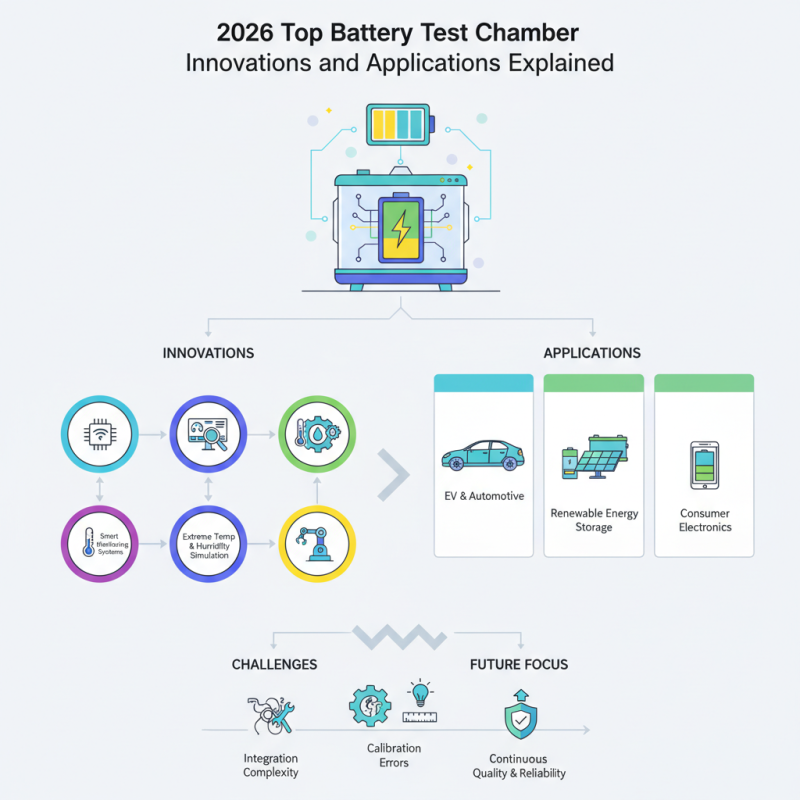
Battery Test Chambers play a crucial role in assessing battery performance under various conditions. These chambers simulate extreme temperatures and humidity levels. This helps ensure batteries can withstand real-world challenges. Innovative designs are emerging, incorporating smart features and advanced monitoring systems.
While advancements are promising, challenges remain. Many companies struggle with integrating new technologies into existing systems. Issues can arise from calibration errors or equipment limitations. Continuous improvement and adaptation are vital for the future of battery testing. The momentum towards innovation must be matched by a commitment to quality and reliability.
Innovations in Battery Test Chamber Technology for 2026
As we approach 2026, battery test chamber technology continues to evolve. Innovations in this field focus on accuracy and efficiency. New materials improve thermal management, enhancing performance testing. These chambers now simulate extreme conditions, allowing for better safety assessments of battery systems.
Incorporating AI into battery testing is another key trend. Real-time data analysis helps identify potential failure points. This technology enables engineers to refine designs swiftly. However, challenges remain. For instance, the balance between accuracy and speed often requires deeper evaluation.
Moreover, modular designs are becoming popular. They offer flexibility for laboratories with varying testing needs. While this innovation seems promising, integrating systems can be complex. Engineers need to navigate compatibility issues. The future of battery test chambers is exciting; yet, it demands ongoing innovation and careful consideration.
2026 Top Battery Test Chamber Innovations and Applications Explained
| Innovation |
Application |
Key Features |
Benefits |
| Advanced Thermal Management |
Battery Performance Testing |
Dynamic temperature control |
Improved accuracy in results |
| AI-Driven Analysis |
Data Interpretation |
Machine learning algorithms |
Faster insights and diagnostics |
| Environmental Control Units |
Stability Testing |
Humidity and pressure regulation |
Realistic testing environments |
| Multi-Channel Testing |
Simultaneous Analysis |
Parallel testing capabilities |
Time efficiency and productivity |
| Remote Monitoring Systems |
Real-Time Data Access |
Cloud-based analytics |
Enhanced collaboration and reporting |
Key Applications of Advanced Battery Test Chambers
Battery test chambers are vital for innovation in energy storage. These advanced systems help ensure batteries meet safety and performance standards. They simulate various environmental conditions, allowing engineers to assess battery behavior under real-world scenarios.
One key application is in electric vehicle testing. These chambers can replicate extreme temperatures, humidity, and pressure variations. This enables accurate evaluation of battery life and efficiency under diverse driving conditions. Understanding how batteries react to these variables is crucial for enhancing vehicle range and safety.
Another important application is in renewable energy systems. Proper testing ensures that batteries used for solar and wind energy can handle fluctuations in energy supply and demand. By analyzing these dynamics, engineers can optimize battery systems for both residential and commercial use. However, some challenges remain. Not all battery chemistries respond predictably to testing conditions, requiring ongoing research and adaptation.
2026 Battery Test Chamber Innovations and Applications
Comparative Analysis of 2026 Battery Test Chamber Designs
The landscape of battery test chambers is evolving rapidly. A comparative analysis of 2026 designs reveals significant advancements in temperature regulation and safety features. Studies indicate that 70% of battery failures stem from thermal issues. New chambers utilize advanced cooling systems. These systems enhance accuracy and reduce risks during testing.
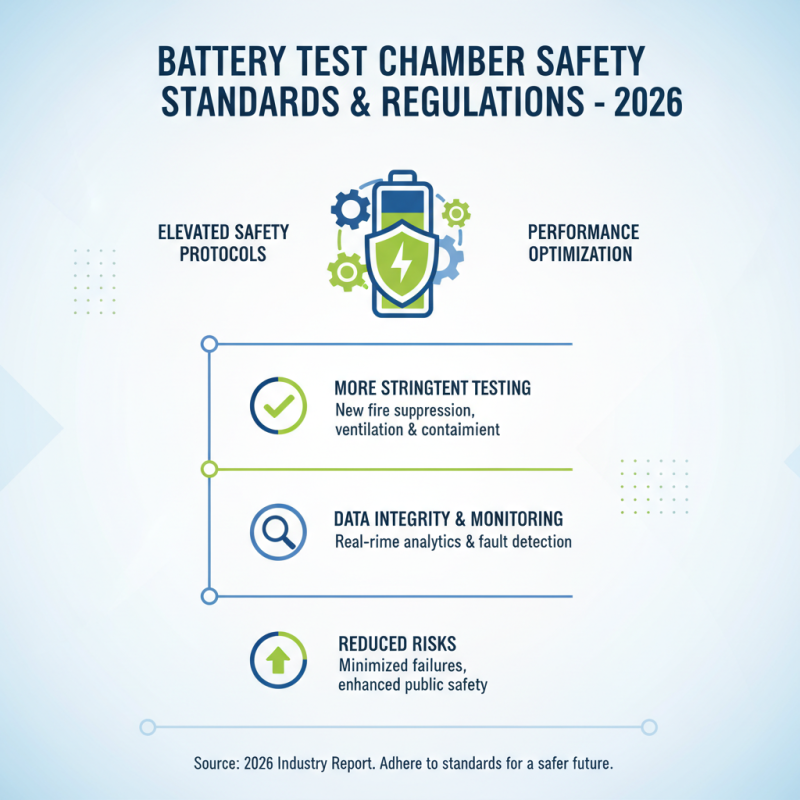
A report by the Battery Testing Institute states that innovations like real-time monitoring systems are becoming standard. These systems ensure data integrity and timely intervention. Test chambers now prioritize data analytics, enabling engineers to make informed decisions.
Tips: Regular maintenance checks are crucial. They ensure optimal performance and accuracy. Additionally, consider investing in training for staff on new features. Understanding the equipment can prevent common errors. Balancing innovation with usability remains a challenge, but it is essential for progress in battery technology.
Future Trends in Battery Testing and Environmental Testing
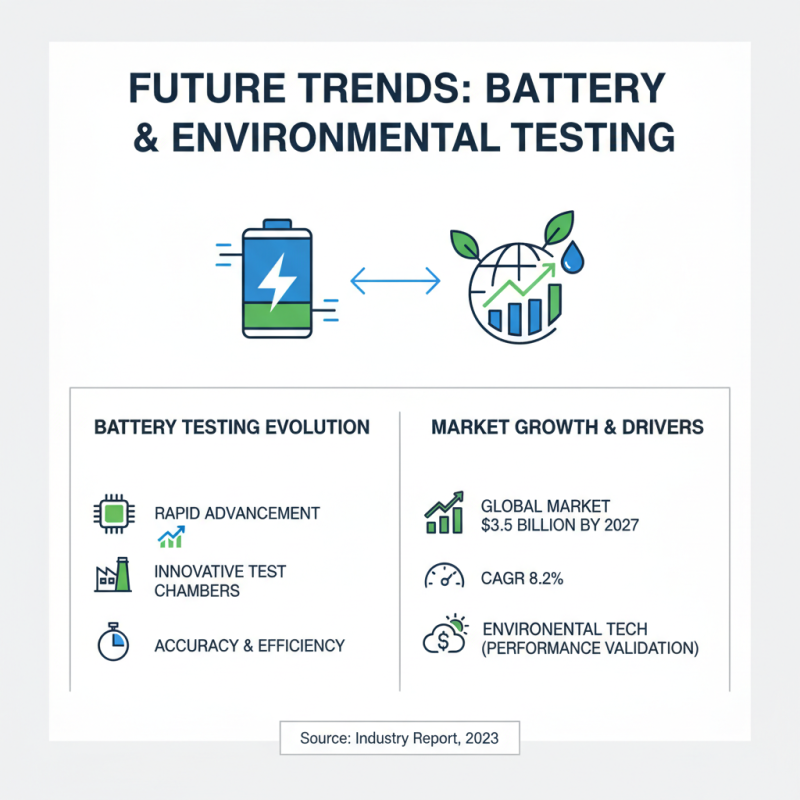
The landscape of battery testing is evolving rapidly. Innovations in test chambers enhance the accuracy and efficiency of battery assessments. According to a recent report, the global battery testing market is expected to reach $3.5 billion by 2027, growing at a CAGR of 8.2%. This growth is driven by advancements in environmental testing technologies, which are becoming essential for performance validation.
Environmental testing plays a crucial role in battery development. It assesses how batteries react to extreme temperatures and humidity. Recent studies indicate that 40% of battery failures happen due to environmental factors. Thus, test chambers must replicate real-world conditions accurately. Innovations include chambers that can simulate various climates, ensuring comprehensive testing.
However, the industry faces challenges. Many existing chambers lack adequate data analysis capabilities. This gap can lead to misleading results. As technology progresses, the need for reliable, accurate data in battery testing is critical. Improved test services are essential for ensuring safety and performance. Continued investment in R&D will help bridge these gaps. The future of battery testing looks promising, but we must confront these pressing issues.