How to Choose the Right Altitude Test Chamber for Your Needs?
Choosing the right Altitude Test Chamber is crucial for various industries. According to Dr. Emily Tran, an expert in environmental testing, "Selecting the right chamber can significantly affect your project's outcomes." This statement highlights the importance of a well-informed choice.
Altitude Test Chambers simulate high altitude conditions. They are used to test products for performance and reliability. However, with many options available, it can be overwhelming to make the right selection. Factors such as chamber size, temperature range, and humidity control must be considered meticulously.
Understanding specific requirements is essential. Different projects have unique needs. Without careful evaluation, you may end up with a chamber that does not fully meet your testing requirements. Rushing this decision can lead to inefficient testing processes. Reflecting on the specific applications of the Altitude Test Chamber will enable you to make a more informed decision.
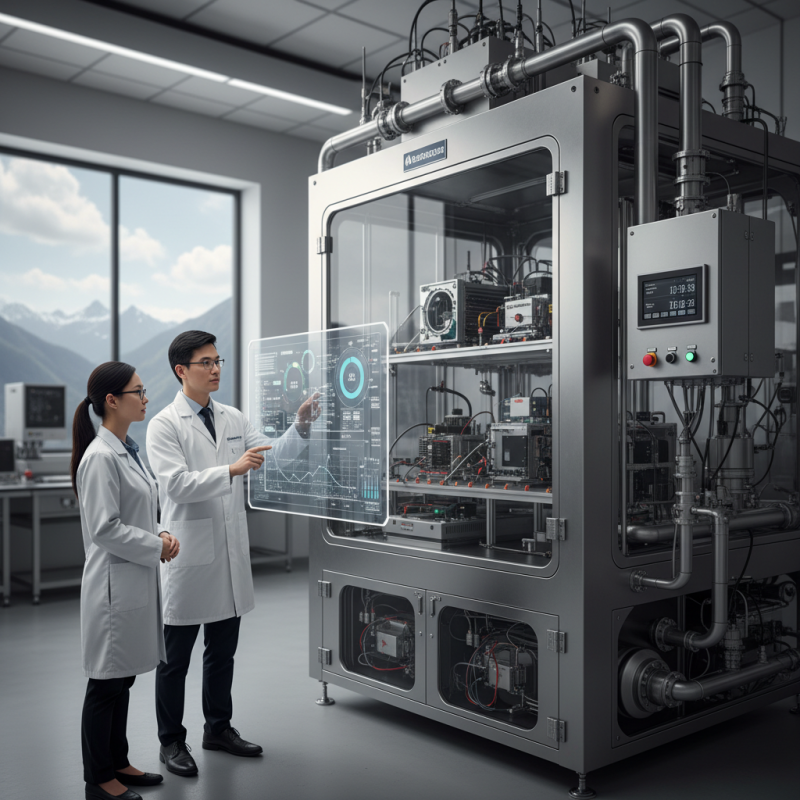
Understanding the Purpose of Altitude Test Chambers
Altitude test chambers are essential for simulating high-altitude conditions. These chambers help in assessing the performance and reliability of products under low-pressure environments. The aerospace and automotive industries particularly rely on these tests for safety and durability validation. According to industry reports, over 70% of aerospace companies utilize altitude testing to ensure compliance with strict safety standards.
Understanding the purpose of altitude test chambers is crucial for effective testing. These chambers replicate conditions such as reduced oxygen levels, temperature fluctuations, and lower atmospheric pressure. Research indicates that 85% of product failures in aerospace can be traced back to inadequate testing. The right altitude test chamber can help identify potential weaknesses early in the design process.
However, choosing the correct chamber is not straightforward. Factors like chamber size, temperature ranges, and control precision require careful consideration. The complexity of these systems can lead to misunderstandings. Poorly defined requirements can result in ineffective testing. Therefore, a detailed assessment of needs is vital before making a decision.
Key Factors to Consider When Selecting an Altitude Test Chamber
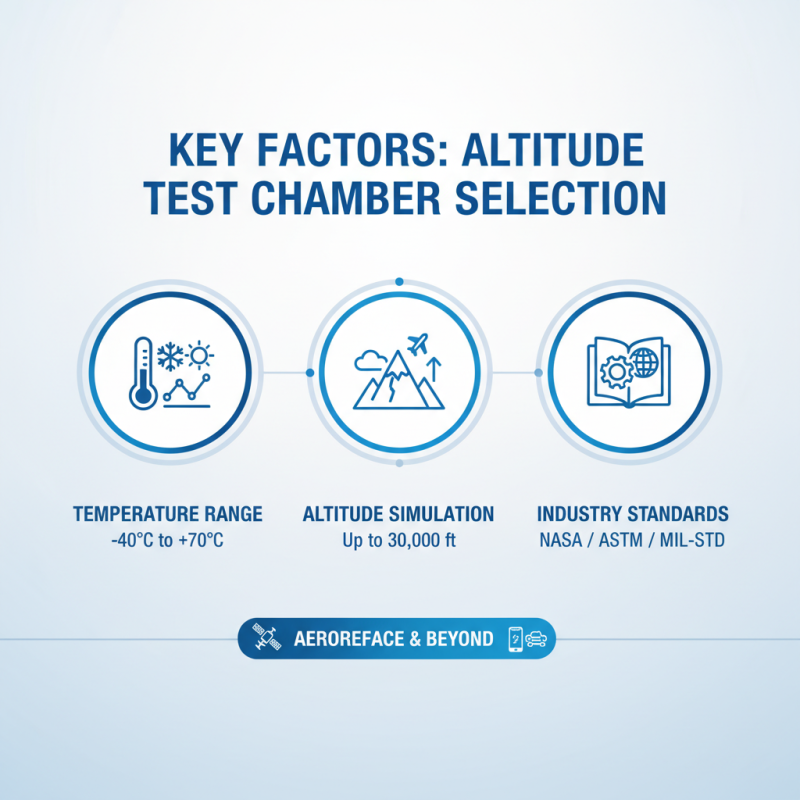
When selecting an altitude test chamber, several critical factors must be evaluated. Temperature range is vital. Many products may operate at various altitudes and temperatures. For example, a chamber must simulate altitudes of 30,000 feet and range from –40°C to +70°C to meet aerospace testing requirements. This data often derives from industry standards like those from NASA or ASTM.
Consider chamber size based on your specific test items. Oversized chambers can lead to inefficient energy use. However, too small a chamber may not replicate real-world conditions. A report by the International Society for Aerospace Testing emphasizes the need for adequate space to avoid condensation and ensure precise measurements.
Finally, assess your testing frequency and duration. Continuous testing requires robust systems capable of withstanding extensive use. Feedback from engineers shows that some chambers fail under prolonged stress. Choose a chamber with a solid track record for reliability. Reflections on past experiences reveal that investing in quality often leads to fewer issues in the long run.
Types of Altitude Test Chambers and Their Applications
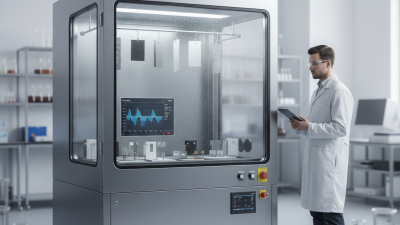
Altitude test chambers come in various types, each suited for specific applications. These chambers simulate high-altitude conditions to evaluate the performance and reliability of products. One common type is the environmental test chamber, which controls temperature and humidity. This is essential for aerospace, automotive, and electronics industries.
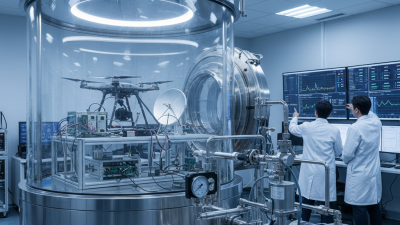
Another type is the pressure test chamber. It is designed to test components under low-pressure conditions, which is crucial for aerospace and military applications. This device helps determine how materials react to reduced atmospheric pressure. Understanding the differences is important.
Selecting the right chamber can be challenging. Each application requires unique conditions and varies in complexity. Users should consider their specific testing criteria and how each chamber’s features align with their needs. Testing the limits of various chambers often reveals unexpected challenges. Keeping an open mind about adjustments and improvements is vital.
Evaluating Technical Specifications for Optimal Performance
Selecting the right altitude test chamber requires a careful evaluation of technical specifications to ensure optimal performance. An essential factor to consider is the chamber's altitude range. Some models can simulate altitudes up to 30,000 feet. This capability is crucial for aerospace and automotive testing. Manufacturers often provide detailed performance data in specifications. For instance, a study by the National Institute of Standards and Technology indicates that precise altitude simulation impacts material fatigue and performance under stress.
Temperature variability is another critical aspect. Chambers should maintain stable temperatures across a wide range, ideally from -40°C to 70°C. Inconsistent temperatures can lead to unreliable testing results. It’s advisable to check the uniformity tolerance specified in the documentation. Quality control tests often require a ΔT of less than 2°C across the chamber. This level of precision is vital for applications in electronics and pharmaceuticals.
**Tip:** Always examine user reviews or third-party evaluations. Real-world performance feedback can shed light on potential shortcomings. Look for reports detailing any maintenance issues or calibration discrepancies. Understanding the longevity and reliability of the unit aids in making a well-informed choice.
How to Choose the Right Altitude Test Chamber for Your Needs?
| Specification |
Option A |
Option B |
Option C |
| Altitude Range |
0 to 80,000 ft |
0 to 50,000 ft |
0 to 25,000 ft |
| Temperature Range |
-40 to 70 °C |
-20 to 60 °C |
-10 to 50 °C |
| Humidity Control |
10% to 95% RH |
20% to 90% RH |
30% to 85% RH |
| Chamber Size |
1500 L |
1000 L |
500 L |
| Energy Efficiency |
Class A |
Class B |
Class C |
| Warranty Period |
5 years |
3 years |
2 years |
Budget and Maintenance Considerations for Altitude Test Chambers
When selecting an altitude test chamber, budget plays a crucial role. Industry reports indicate that chambers can range from $10,000 to over $100,000. A higher price often correlates with advanced features and larger capacities. However, investing in extra capabilities may not always be necessary. For smaller projects, opting for a basic model can be a wise choice. Consider your specific testing needs before making a decision.
Maintenance costs should also be factored in. Chambers require periodic calibration and routine upkeep, which some reports estimate at about 15% of the initial purchase price annually. Failure to maintain the equipment can lead to inconsistent test results. A chamber that is more complex may demand more from your maintenance budget. Be sure to identify the total cost of ownership beyond the initial purchase.
While premium options assure quality, they may not be essential for every application. Studies show that properly maintained budget models can perform adequately for less rigorous testing environments. Each organization's requirements will differ. Reflect on how often you'll use the chamber and the condition of your testing environment. This reflection can lead to a more informed decision, ultimately benefiting your testing accuracy and financial health.
Altitude Test Chamber Cost vs Maintenance Frequency