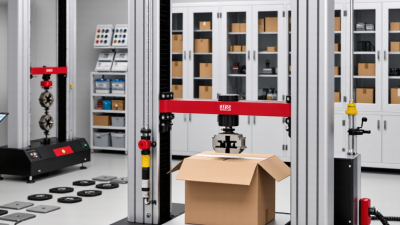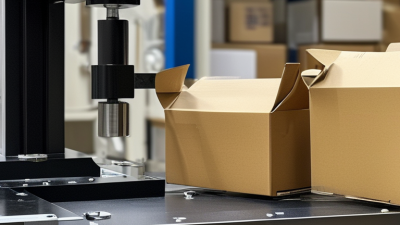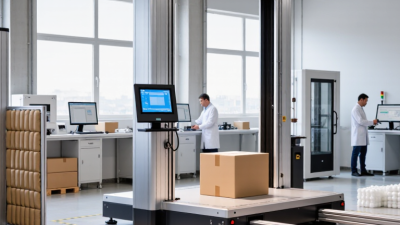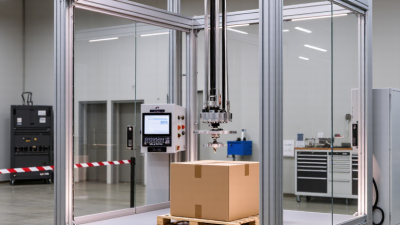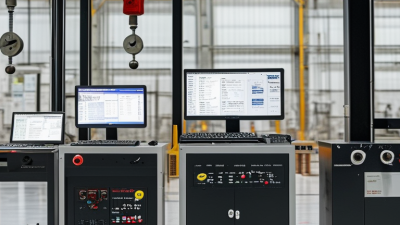
Choosing Drop Test Equipment for global markets is not a simple matter of comparing prices. Buyers must connect equipment performance with real shipping conditions, product weight, package design, and destination risks. A compact carton moving through warehouses may face corner impacts, repeated handling, and uneven floors. A heavy industrial crate requires different fixtures, lifting systems, and safety controls. The test machine should reproduce these situations with measurable accuracy.
Packaging engineer Dr. Jay Singh explains, “A drop test is valuable only when it reflects the product’s real distribution journey.” This principle deserves attention. A machine with impressive specifications may still produce weak decisions if its drop height, impact surface, or payload range does not match actual operations. Buyers should examine calibration records, control-system repeatability, emergency protection, and available technical support. They should also verify whether the supplier can provide installation training and replacement parts in their region.
Standards matter. So does practical experience.
ASTM, ISO, and ISTA methods can guide equipment selection, but they cannot replace product-specific judgment. Global buyers should request test demonstrations using comparable packages, not empty promises. They should inspect how easily operators adjust height, secure samples, record results, and repeat tests. Software compatibility may seem minor, yet poor data export can slow quality investigations across international teams.
There is no perfect machine.
Budget pressure can tempt companies to choose the lowest quotation. That choice may become expensive after inaccurate results, delayed certification, or unavailable service. A careful decision compares lifetime reliability, safety, documentation, and local support. Even experienced teams can overlook one variable. That is why a trial test, clear specification sheet, and honest risk review remain essential before purchase.
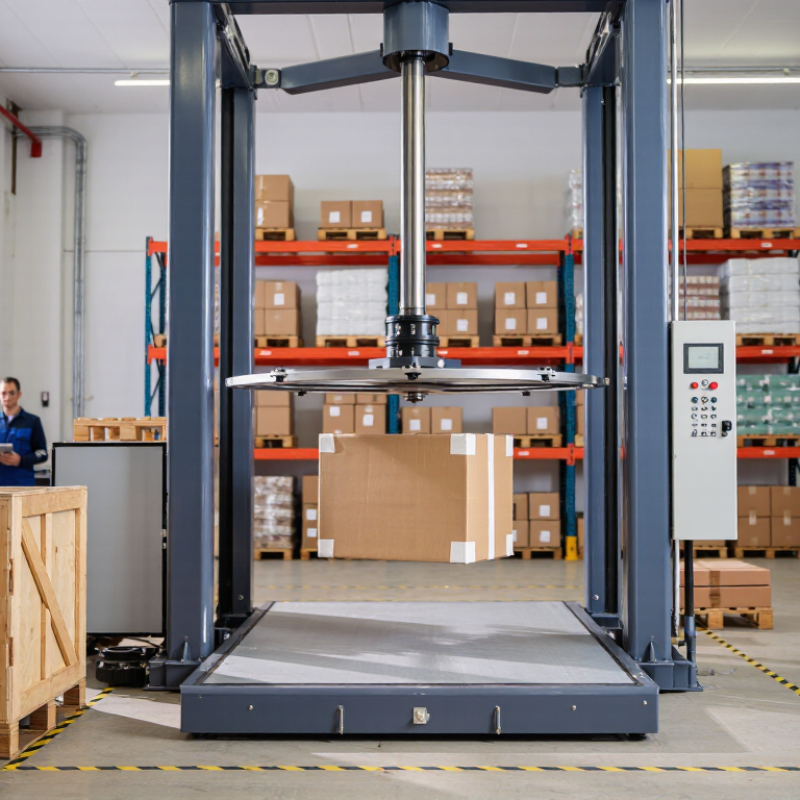
Choosing drop test equipment begins with a clear question: what failure must the test reveal? A cosmetic mark, cracked housing, loose connector, or complete product shutdown requires different test priorities. The 2023 Pitney Bowes Parcel Shipping Index recorded 161.8 billion parcels worldwide in 2022. More handling creates more exposure to impact.
Define the product’s risk factors before selecting a machine. Record product mass, center of gravity, packaging materials, shipping orientation, and likely drop height. Fragile glass, liquid-filled containers, and battery-powered devices may need separate test sequences. ASTM D5276 provides a recognized framework for manually handling loaded containers, while ISTA procedures help simulate distribution conditions. These standards improve repeatability, but they do not replace field experience.
Risk is rarely uniform. A dense product may damage the package, while a lightweight product may suffer internal shock. Test the weakest corner, edge, and face. Use calibrated height controls, a rigid impact surface, and sensors when acceleration matters. The 2023 World Bank Logistics Performance Index highlights reliability as a key logistics factor, yet laboratory certainty can still mislead. Real parcels are tilted, delayed, and handled imperfectly. That matters. A common mistake is testing only the “ideal” orientation. Review failures after each cycle, then adjust the equipment, packaging, or test objective rather than forcing a pass.
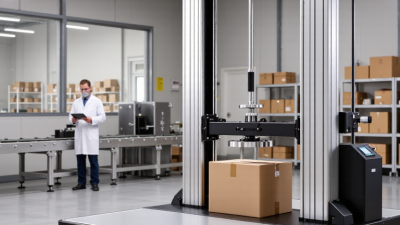
Define drop-test objectives and prioritize product risk factors before selecting test capacity, drop height, impact surface, and measurement equipment.
The 1–5 screening scores represent common engineering risk criteria: 1 indicates low influence on test severity and 5 indicates a high influence. Products with high fragility, greater package mass, an offset center of gravity, sensitive cushioning, or frequent manual handling require more carefully controlled drop-test equipment and broader test coverage.
Match the equipment to the package, product, and required test standard. A small carton may need a controlled free-fall tester with adjustable drop height. Heavy crates often require a stronger frame, larger platform, and safer lifting system. For fragile electronics, use repeatable face, edge, and corner drops. The package should remain closed during testing. Otherwise, results may reflect poor handling rather than product durability.
Check the product’s mass, dimensions, center of gravity, and cushioning design before selecting equipment. A narrow package can rotate unexpectedly after release. A soft insert may also absorb energy differently at different temperatures.
Testers should support relevant methods from standards such as ASTM, ISO, or ISTA procedures. However, the standard name alone is not enough. Confirm the required drop sequence, height, conditioning time, and inspection criteria with the test laboratory or buyer.
In practical testing, accurate release control matters as much as frame strength. I have seen operators lose useful data because the package touched the guide rail. Small alignment errors can change damage patterns. Keep records of calibration, surface condition, and operator settings. No setup is perfect. A test may expose weaknesses in the equipment, not only the package. Review unusual results carefully before changing the design. Safety guards, emergency stops, and clear operating instructions should also fit the working environment and local requirements.
How to Choose Drop Test Equipment for Global Buyers
Drop height should match the product’s real shipping risks. A small carton may fall from a conveyor, while a heavy case may drop during manual handling. Select equipment with adjustable height, clear measurement markings, and controlled release. Metric settings are useful for international teams, but dual-unit displays reduce conversion errors. I have found that a fixed-height tester can limit meaningful comparisons. It may be simple, but it does not represent every distribution route.
Impact surface affects the test result. A rigid steel platform creates a sharp shock, while a softer surface absorbs some energy. Choose a surface that reflects the package’s likely handling environment. Check its flatness, hardness, and replacement condition. Even a thin dent can change impact behavior. Small details matter. Record the surface type for every test.
Load capacity must cover the complete package, not just the product. Include the carton, inserts, labels, and any protective frame. Leave a practical safety margin above the maximum test load. A machine operating near its limit may produce unstable release or inconsistent readings. Verify calibration records, sensor accuracy, and emergency controls before purchase. Test operators should also receive clear instructions. One weak point remains: laboratory drops cannot reproduce every warehouse movement. Repeating tests from different faces and corners gives better evidence, though it still requires careful judgment.
Choosing drop test equipment for global buyers requires more than checking maximum load and drop height. Safety features should be visible and testable. Look for guarded impact areas, door interlocks, emergency stops, and controlled descent systems. A stable frame matters too. During practical evaluations, operators should be able to load a carton without reaching beneath moving parts.
Accuracy depends on more than a stated specification. Check drop-height repeatability, impact-position consistency, and sensor resolution. Ask for calibration records with traceable references. Run repeated tests with the same sample and compare results. Small variations can reveal loose fixtures, uneven floors, or inconsistent release mechanisms. Environmental conditions may also affect readings. This detail is easy to overlook.
Controls should be clear enough for a new operator to use safely. A responsive touchscreen, protected settings, and role-based access can reduce accidental changes. Data recording deserves equal attention. The system should store test IDs, sample details, drop sequence, height, impact results, operator names, and timestamps. Exportable files support internal reviews and customer communication. Automatic backups are valuable, but they are not a complete solution. We once treated digital records as reliable until a naming error made two test batches difficult to distinguish. A simple file structure and regular data checks would have prevented that problem. No equipment is perfect. Choose a system that makes its weaknesses easier to detect.
| Selection Dimension | Manual Drop Tester | Semi-Automatic Drop Tester | Motorized Precision Drop Tester | Recommended Buyer Profile |
|---|---|---|---|---|
| Typical application | Basic package screening and occasional laboratory checks | Routine package testing with repeatable operator procedures | High-volume testing, product development, and regulated validation | Select according to test frequency, required repeatability, and compliance needs |
| Test orientation | Usually flat-face drops; edge and corner drops may require manual positioning | Flat, edge, and corner orientations using adjustable fixtures | Programmable face, edge, and corner positioning with controlled release | Use adjustable orientation fixtures when package geometry affects failure modes |
| Common drop-height range | Approximately 300–1,200 mm, depending on frame design | Approximately 300–1,500 mm with a graduated height scale | Approximately 300–2,000 mm or higher on specialized systems | Confirm that the available range covers the required shipping or internal test protocol |
| Typical specimen capacity | Up to approximately 60 kg for compact laboratory units | Approximately 60–100 kg, depending on platform and release mechanism | Approximately 100–200 kg or more on heavy-duty configurations | Choose a rated capacity at least 20% above the heaviest test specimen |
| Drop-height accuracy | Typically dependent on operator reading and mechanical scale resolution | Usually improved by digital height indication and motor-assisted positioning | Typically the highest repeatability through encoder or digital position control | Request the stated tolerance, measurement method, and calibration evidence |
| Release consistency | Manual release may introduce timing or contact variation | Electromagnetic or pneumatic release reduces operator influence | Controlled release mechanism supports repeatable free-fall conditions | Prioritize controlled release for comparative testing and formal reports |
| Safety enclosure | May use a partial shield, impact mat, and warning label | Usually includes a full or partial guard, access door, and emergency stop | Typically includes interlocked doors, emergency stop, guarding, and controlled reset | For frequent use, require interlocked guarding and restart prevention |
| Operator controls | Mechanical height adjustment and manual release | Push-button or touchscreen controls for height and release functions | Programmable touchscreen control with user access levels and test recipes | Choose recipe storage when multiple operators or products are involved |
| Data recording | Manual recording on paper or separate spreadsheet | Basic digital display; data export may require an optional interface | Electronic records with test ID, height, orientation, operator, date, and result fields | For traceability, require CSV or PDF export and timestamped records |
| Calibration requirements | Periodic verification of scale, release mechanism, and frame stability | Verification of digital height indication and release repeatability | Documented calibration for height sensors, load-related components, and control system | Ask for calibration intervals, traceability, and available service documentation |
| Applicable test references | May support basic internal procedures based on package drop requirements | Commonly configured for ASTM D5276, ISO 2248, or equivalent procedures | Better suited to documented ASTM, ISO, ISTA, or customer-specific protocols | Confirm the exact standard revision and required test sequence before purchase |
| Power and utility needs | Often low-power or manually operated; utility requirements are limited | Usually requires single-phase electrical power; some designs use compressed air | May require dedicated electrical power and, for some release systems, compressed air | Check voltage, frequency, plug type, air pressure, and regional installation requirements |
| Best value when | Budget is limited and tests are infrequent | The laboratory needs a balance of cost, safety, and repeatability | Data integrity, throughput, and repeatable automated operation are priorities | Compare total ownership cost, including calibration, training, service, and shipping |
Note: Specifications shown are typical configuration ranges for general comparison. Actual capacity, accuracy, safety functions, standards coverage, and data-recording options vary by equipment design and should be confirmed in the supplier’s technical documentation.
Verify Supplier Quality, Compliance, Service, and Total Cost
A drop tester should match your package size, product weight, and testing frequency. Ask suppliers for factory inspection records, material certificates, and recent calibration reports. During a factory visit, inspect the frame, release mechanism, safety guards, and control panel. Loose bolts or uneven platforms are warning signs. Small defects can distort repeated results.
Request test reports using recognized methods, such as ISO 2248 or ASTM D5276, when applicable. Confirm the equipment supports your required drop height, load range, and impact surface. Compliance documents must fit your destination market and internal quality system. Do not accept generic certificates without checking their issuing body and validity. A practical trial matters. Load a real carton, record the release height, and compare the result with your current procedure.
Service quality often determines long-term value. Ask about installation, operator training, remote support, spare parts, and response times. Calculate the total cost, including freight, duties, installation, calibration, energy, and downtime. The lowest quotation may become expensive after one failed repair. Still, a premium machine is not automatically better. I have seen buyers overpay for features they never use. A written acceptance test can prevent that mistake. It should define accuracy, repeatability, training, and repair responsibilities. No tester predicts every transport accident. Review your assumptions before approving the purchase.