China Top Altitude Test Chamber Technologies and Applications in Industries?
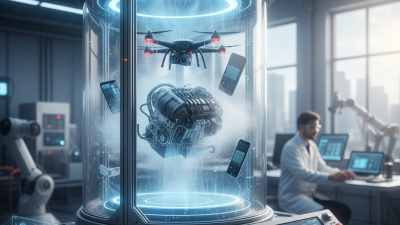
Altitude Test Chambers play a crucial role in various industries, particularly in aerospace, automotive, and electronics. These chambers simulate high-altitude conditions to test products’ performance. According to a recent market report by Research and Markets, the global altitude test chamber market is projected to reach $320 million by 2026, growing at a CAGR of 6.5%. This highlights the increasing demand for reliable testing solutions.
In aerospace, altitude test chambers ensure that instruments can withstand extreme conditions. For example, they help test the reliability of satellite components, impacting mission success rates significantly. Similarly, the automotive industry uses these chambers to evaluate vehicles’ performance in different environmental conditions. Manufacturers can identify weaknesses and potential failures before products reach the market.
However, not all testing is perfect. Some chambers may not accurately replicate real-world conditions. This can lead to unforeseen product issues post-launch. Continuous improvements in altitude test chamber technologies are necessary to enhance their reliability. Greater collaboration between manufacturers and researchers may bridge existing gaps, ensuring more accurate and effective testing methods in the future.

China's Leading Altitude Test Chamber Technologies Overview
China's altitude test chamber technologies are gaining significant recognition in various industries. These chambers simulate high-altitude conditions, providing critical data for testing equipment and materials. They play a vital role in aerospace, military, and automotive sectors, where performance under extreme conditions is crucial.
Experts in the field emphasize the importance of rigorous testing. While many companies invest in these technologies, not all chambers meet the required standards. Subpar equipment can lead to unreliable results. Therefore, selecting a chamber with proven performance is essential.
Tips: Always verify the technical specifications of altitude test chambers. Look for certifications that ensure compliance with industry standards. A well-validated chamber enhances the reliability of your tests. This can save time and resources in the long run.
The applications of these technologies extend beyond aerospace. For example, the electronics industry uses altitude chambers to ensure product durability. As devices become more compact, they may operate in varying atmospheric pressures. Understanding the implications of altitude on these products is vital.
Tips: Collaborate with specialists who understand altitude-related challenges. Their insights can guide effective testing strategies. Engaging with professionals fosters a deeper understanding of altitude impacts. This approach is key for successful product development.
Key Features of Altitude Test Chambers in the Chinese Market
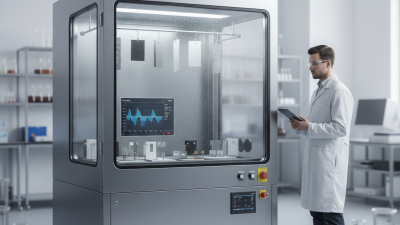
Altitude test chambers play a critical role in various industries in China. These chambers simulate high-altitude environments, enabling rigorous testing for aerospace, automotive, and electronics sectors. The technology focuses on creating low-pressure and low-temperature conditions, essential for evaluating product performance in extreme environments. Equipped with advanced control systems, these chambers ensure precise measurement of pressure and temperature.
Key features of altitude test chambers include real-time monitoring and automation capabilities. Many chambers now come with user-friendly interfaces, making data analysis more efficient. The integration of IoT technologies allows for remote monitoring and control. However, there is still room for improvement. Some chambers may lack adaptability to varying test conditions, which could limit their effectiveness. Organizations must balance investments with the need for versatile testing options.
Furthermore, the learning curve for operators can be steep. Some users may find it challenging to interpret data correctly. As the market evolves, manufacturers are encouraged to enhance training programs. This ensures that operators can fully utilize the capabilities of altitude test chambers. Continuous feedback and development are necessary to improve these vital technologies.
Industrial Applications of Altitude Test Chambers in China
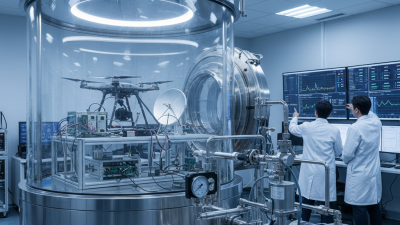
Altitude test chambers play a vital role in various industrial applications in China. These chambers simulate high-altitude environments to evaluate product reliability. Industries such as aerospace, automotive, and electronics rely on these technologies to ensure their products withstand harsh conditions. For instance, aerospace companies conduct tests to validate their components under reduced pressure and low oxygen levels. This simulates the extreme conditions experienced during flight.
In the automotive sector, manufacturers use altitude test chambers for vehicle testing. This includes assessing engine performance and fuel efficiency at different altitudes. Electronics manufacturers also benefit from these chambers, ensuring devices function properly in low-pressure situations. Observing failures during these tests provides crucial insights. However, some industries still lack comprehensive testing methods, leading to potential oversights. Ultimately, the demand for altitude test chambers in China highlights the growing need for reliable and efficient product testing solutions.
Altitude Test Chamber Applications in Various Industries
Challenges and Innovations in Altitude Testing Technology
Altitude testing technologies face various challenges in their development. As industries demand high-performing products, engineers grapple with simulating real-life conditions. High altitudes affect material strength and system performance. Creating reliable testing environments is crucial, yet complex. Many facilities struggle to maintain consistent pressure and temperature. Rigorous testing is needed for aerospace, automotive, and electronics sectors.
Innovations in altitude testing are ongoing. Advanced data collection tools help scientists analyze results effectively. These tools can capture minute changes in performance under stress. New materials for chamber construction also show promise. They enhance insulation and minimize energy loss. However, scaling these innovations remains a challenge. Not all industries adopt the latest technologies due to costs.
The need for collaboration among researchers is evident. Sharing insights can lead to better solutions. Some industries still rely on outdated methods. This hesitance hinders progress. Embracing innovations requires a cultural shift within organizations. Balancing cost and technological advancement is critical for future success.
Future Trends in China's Altitude Test Chamber Industry
The altitude test chamber industry in China is evolving rapidly. Increasing demands from aerospace and automotive sectors are driving innovations. A recent report indicates that the Chinese altitude test chamber market is expected to grow at a CAGR of 8.5% over the next five years. This growth is fueled by the need for rigorous testing in diverse environments.
One emerging trend is the integration of advanced monitoring technology. Real-time data analysis can enhance testing precision. Some companies are exploring AI capabilities to predict equipment failures before they occur. However, the adaptation of these technologies comes with challenges. Training personnel to handle sophisticated systems may slow down the implementation process.
Sustainability is also a focal point. Manufacturers are seeking eco-friendly materials for chamber construction. Energy-efficient designs are becoming a necessity, rather than an option. There is a noticeable pressure to reduce operational costs and environmental impact. While many companies strive to meet these demands, not all have the resources to fully transition. The balancing act between innovation and sustainability remains a significant hurdle.