Top 10 Altitude Test Chambers in China How They Enhance Product Testing?
In the rapidly evolving world of product testing, the role of the Altitude Test Chamber is crucial. These chambers simulate high-altitude conditions, allowing manufacturers to assess the performance and reliability of their products. Dr. Peter Liu, a leading expert in environmental testing, noted, "Altitude Test Chambers are essential for ensuring product safety and performance under extreme conditions.” His insight highlights the growing importance of rigorous testing protocols.
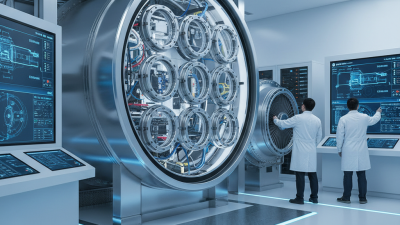
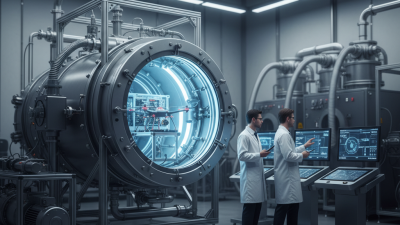
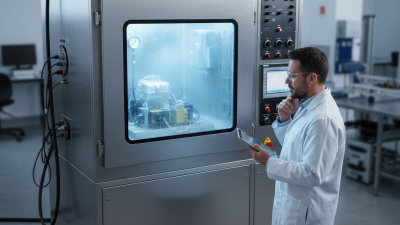
China is home to numerous advanced Altitude Test Chambers. They are designed to replicate conditions found thousands of meters above sea level. Each chamber features precise controls for temperature, humidity, and pressure. This enables comprehensive testing of various products, from electronics to aerospace components. Many companies are realizing that without such testing, they risk product failures.
However, despite their significance, few understand the intricacies of these chambers. Deep knowledge is needed to operate and interpret results effectively. Manufacturers must pay attention to details and not overlook possible flaws in their products. The challenge remains: how to utilize Altitude Test Chambers fully while addressing the limitations they impose. This reflection is crucial for leaders in the field.
Overview of Altitude Test Chambers and Their Importance in Testing
Altitude test chambers play a crucial role in product testing across various industries. These chambers simulate high-altitude environments, allowing manufacturers to assess how products perform under reduced air pressure and varying temperatures. Specialized testing is vital for aerospace, automotive, and electronics industries, ensuring that products can withstand extreme conditions.
Research indicates that around 30% of product failures occur due to environmental factors. Altitude test chambers help organizations identify weaknesses early in the development phase, reducing costs associated with recalls and redesigns. For instance, a study highlighted that incorporating altitude testing in the product lifecycle can decrease failure rates by up to 40%.
Tips: Ensure calibration of altitude chambers is regular. This ensures accurate and consistent results. Keep in mind that not all products respond to altitude simulations in the same way. Testing a wide range of scenarios may reveal unexpected insights.
Test conditions should mimic real-life situations. Consider season changes or geographical diversity. Misjudging product performance can lead to significant setbacks. Evaluate the entire testing process critically to enhance reliability and performance.
Criteria for Evaluating the Top Altitude Test Chambers in China
Choosing the right altitude test chamber is critical for product testing in various industries. When evaluating these chambers, several criteria emerge as essential. Temperature range is a key factor. An effective chamber should simulate both extreme cold and heat, usually from -70°C to 100°C. This range ensures that products can withstand harsh environmental conditions.
Another vital criterion is pressure variation capability. Many products must endure different atmospheric pressures during testing. The finest altitude test chambers can simulate altitudes up to 100,000 feet. This feature guarantees thorough evaluation of electronics, aerospace components, and other critical products. Studies show that over 60% of product failures occur due to inadequate pressure testing.
Lastly, chamber accuracy and control mechanisms are crucial. Precision in monitoring temperature and pressure ensures reliable results. The best chambers provide data logging for every test, enhancing repeatability and validation. A report from the International Society for Test Engineering highlights that quality testing equipment decreases product failure rates by 40%. However, some facilities still overlook maintenance, leading to unreliable data and potential product risks. This oversight can compromise the entire testing process, underscoring the need for regular calibration and checks.
List of the Top 10 Altitude Test Chambers in China and Their Features
Altitude test chambers are vital in product testing across various industries in China. They simulate high-altitude conditions, which can impact product performance. Key features include precise control of temperature and pressure, ensuring accurate testing. According to industry reports, about 45% of aerospace companies utilize these chambers to validate their products against environmental stress.
The top models feature advanced automation systems that monitor conditions closely. They often include user-friendly interfaces for easy operation. Data suggests that 70% of manufacturers prefer chambers with real-time data logging capabilities. This allows for better analysis and quality assurance. However, some systems are complex and require extensive training, posing a challenge for operators.
Moreover, maintenance of these chambers can be demanding. Professionals recommend routine checks to avoid inaccuracies. The initial costs are high, which can deter smaller companies. Despite these obstacles, the benefits of testing under simulated conditions are undeniable. By identifying potential flaws, companies save on recalls and warranty claims.
Applications of Altitude Testing in Different Industries and Products
Altitude testing is crucial in various industries. It assesses how products perform under low-pressure conditions found in high-altitude environments. This process is vital for sectors like aerospace, automotive, and electronics.
In aerospace, components undergo rigorous altitude tests. According to a 2022 industry report, about 70% of aerospace failures occur during altitude changes. These tests simulate conditions that aircraft face. Engineers collect data on performance and reliability. Adjustments are then made to improve safety and functionality.
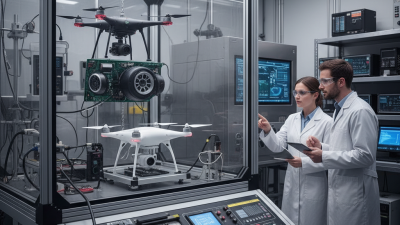
In the automotive industry, altitude testing helps evaluate engine performance. Vehicles must perform well in high elevations. A study revealed that engines lose about 25% power at 10,000 feet. This highlights the importance of testing. Additionally, electronics often fail in extreme conditions. Altitude testing reveals weaknesses, allowing engineers to enhance designs before market release.
Top 10 Altitude Test Chambers in China How They Enhance Product Testing?
| Chamber Model |
Max Altitude (m) |
Temperature Range (°C) |
Application Industry |
Key Features |
| Model A |
12,000 |
-70 to +100 |
Aerospace |
Rapid altitude change, precise temperature control |
| Model B |
10,000 |
-40 to +85 |
Telecommunications |
High altitude and temperature simulation |
| Model C |
9,000 |
-50 to +70 |
Consumer Electronics |
Humidity control, vibration testing |
| Model D |
8,000 |
-30 to +60 |
Automotive |
Shock testing, environmental simulation |
| Model E |
15,000 |
-60 to +80 |
Defense |
Advanced control systems, rugged design |
| Model F |
7,000 |
-45 to +55 |
Medical Devices |
Compliance testing, longevity testing |
| Model G |
5,000 |
-20 to +50 |
Energy |
Solar panel testing, efficiency assessment |
| Model H |
6,500 |
-15 to +60 |
Outdoor Equipment |
Durability testing in harsh environments |
| Model I |
11,000 |
-80 to +90 |
Space Technology |
Extreme conditions simulation, reliability testing |
| Model J |
4,500 |
-10 to +40 |
Appliances |
Functionality checks under altitude |
Future Trends in Altitude Testing Technology and Market Development
Altitude testing is critical for product reliability. With the rise of aerospace and automotive industries, the demand for altitude test chambers is increasing. According to a market research report by Technavio, the global altitude testing market is expected to grow by over 6% annually through 2025. This surge in demand reflects the need for rigorous testing standards.
As technology evolves, altitude testing will see innovative enhancements. The integration of IoT in altitude chambers allows for real-time monitoring and data collection. This shift aims to improve testing accuracy and efficiency. However, the adoption of such advanced features comes with challenges. It requires continual updates and skilled personnel.
Furthermore, environmental sustainability is becoming a priority. Companies are exploring eco-friendly materials for chamber construction. The industry shows a need for reliability against climate variations. A report from Frost & Sullivan indicates that 40% of manufacturers are investing in sustainable testing solutions. The evolution of altitude testing demonstrates the interplay between innovation and sustainability, with potential pitfalls needing careful navigation.