In today's fast-evolving tech landscape, the importance of a reliable Battery Test Chamber cannot be overstated. Achieving safety and efficiency in battery technology is crucial. Dr. Emily Chen, a leading expert in battery testing, emphasizes, "Accurate testing can truly elevate battery performance standards." Her insights highlight the critical features to consider when choosing the right test chamber.
Understanding battery behavior under various conditions is necessary for innovation. Each feature of a Battery Test Chamber plays a vital role in ensuring precise testing. Temperature control, humidity management, and safety protocols directly impact test outcomes. However, not all chambers meet these essential criteria, which can lead to unreliable results.
Investing in a Battery Test Chamber with top-tier features is key. Yet, options can be overwhelming. Many companies overlook the importance of robust data acquisition and analysis tools. Choosing poorly can leave gaps in performance validation. As Dr. Chen notes, "The devil is in the details." Prioritizing the right features will ensure your testing aligns with industry standards and drives future advancements.
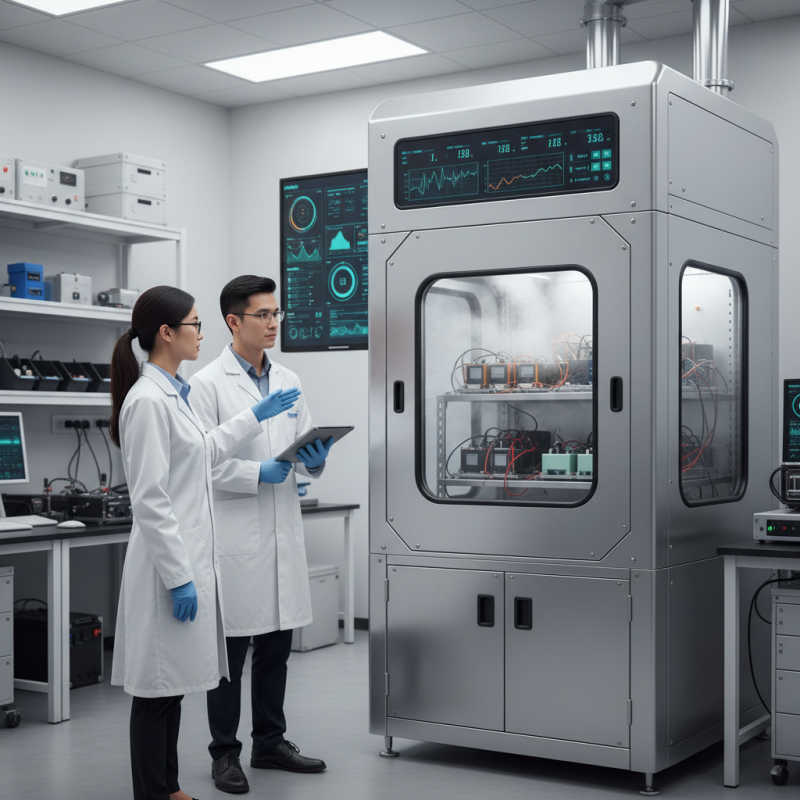
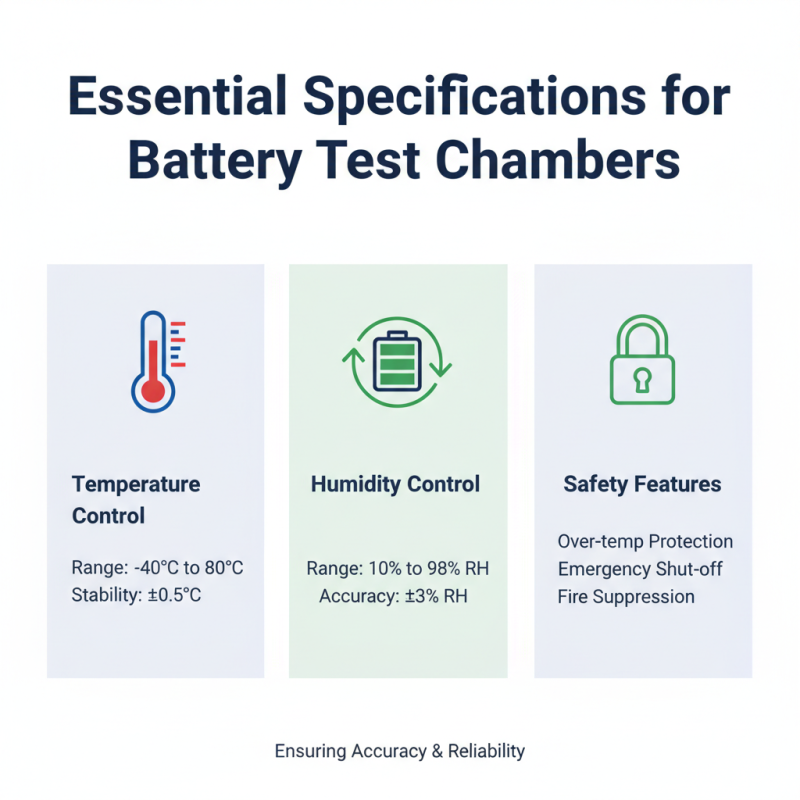
When selecting a battery test chamber, essential specifications are crucial. These features ensure accuracy and reliability during testing. A well-designed chamber maintains stable conditions. Temperature control is one key aspect. It should support a wide range, often from -40°C to 80°C. This range is vital for different battery chemistries.
Humidity control is another significant factor. Maintaining the right moisture level can impact battery performance. A chamber with adjustable humidity settings is ideal. Also, consider the ability to simulate various environmental conditions. This feature helps predict how batteries react in real-life situations.
Safety features are paramount. Look for chambers with protective measures against overheating and short circuits. Additionally, monitoring systems should be in place to provide real-time data. This data aids in understanding battery behavior. Maintaining rigorous testing standards is essential for credible results. Evaluate these factors carefully to choose the best battery test chamber for your needs.
When it comes to battery testing, safety is paramount. Key safety features in battery test chambers protect both the environment and personnel. One essential feature is thermal management. It ensures the chamber operates within safe temperature limits, reducing the risk of overheating. The chamber's design should include efficient cooling systems to counteract heat build-up during testing.
Another critical aspect is fire containment. Battery failures can lead to fires, so having fire suppression systems in place is vital. These systems can include automatic sprinklers or gas suppression technology. Visual alarms and emergency shut-off mechanisms further enhance safety, allowing for quick responses in hazardous situations.
When assessing battery test chambers, consider ventilation systems. Proper airflow helps prevent toxic gases from accumulating. Also, a robust monitoring system can detect irregularities during tests. These features may seem straightforward but often need closer examination. Ensuring they meet safety standards is crucial. Regular evaluations can reveal areas for improvement. After all, creating a safe testing environment is an ongoing process, not a one-time effort.
When selecting a battery test chamber, temperature and humidity control features are crucial. A well-controlled environment ensures accurate testing results. For instance, the most effective chambers maintain a consistent temperature range of -40°C to 150°C, allowing for a comprehensive evaluation of battery performance under various conditions.
Humidity control is equally important. Reportedly, optimal humidity levels for battery testing should range from 20% to 95%. Such parameters help in understanding the battery's behavior when exposed to moisture. This exposure can reveal insights into potential degradation and failure mechanisms. Validating these conditions with rounded data enhances the reliability of the results.
Tips: Consider a chamber with precise calibration. Regular maintenance is key to sustaining performance. A poorly functioning chamber can skew results and lead to incorrect conclusions. Always assess the chamber's environmental monitoring equipment, as it plays a significant role in ensuring data integrity. Understanding the specifications of temperature and humidity control will support informed decision-making and enhance testing accuracy in research and development.
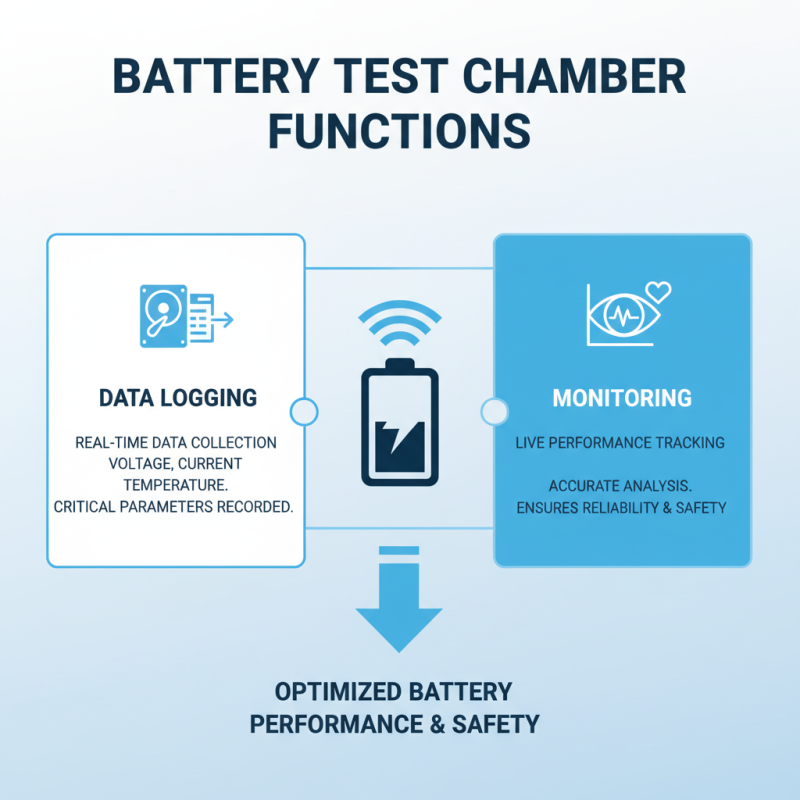
Data logging and monitoring functions are essential features in battery test chambers. These functions facilitate real-time data collection during testing. Accurate data ensures that performance metrics are analyzed properly. Logging includes voltage, current, temperature, and other critical parameters.
Effective monitoring allows engineers to track changes as they happen. Variations in battery behavior can indicate potential issues. A reliable system can alert users to anomalies, enabling swift action before damage occurs. This preventative measure enhances battery safety and longevity.
However, data logging systems are not without challenges. Improper calibration can lead to inaccuracies. Additionally, the sheer volume of data may overwhelm users. It is vital to have a plan for data management. Clear visualization tools can aid in interpretation. Ultimately, efficient data handling is key to maximizing the benefits of advanced testing capabilities.
When considering battery test chambers, compatibility is crucial. They must accommodate various battery types and sizes. Different applications require distinct configurations. For example, lithium-ion batteries differ significantly from lead-acid batteries. Thus, chambers need adjustable fixtures for proper testing.
Many researchers prefer chambers that support multiple sizes. A flexible design allows for testing both small cells and larger battery packs. This adaptability enhances experimental options. Factors like temperature control and safety features also play a role in compatibility. Test chambers must be designed to handle the unique characteristics of each battery type.
However, achieving universal compatibility is challenging. Some chambers may excel with specific batteries but falter with others. Testing procedures might need adjustment for different chemistries. Reflexivity becomes essential. Manufacturers must continually evaluate their chambers. Feedback can improve designs, ensuring better performance with a range of battery types.
| Feature | Description | Compatibility | Typical Use Cases |
|---|---|---|---|
| Temperature Control | Maintains a consistent temperature for accurate testing. | All battery types | Performance testing, safety assessments |
| Humidity Control | Controls humidity levels to simulate real-world conditions. | Li-ion, NiMH | Durability testing |
| Size Adjustability | Adjustable chamber size for different battery dimensions. | Various sizes | Testing of large format batteries |
| Data Logging | Records temperature, humidity, and test duration. | All battery types | Compliance and analysis |
| Ventilation System | Prevents overheating and gas buildup during tests. | Li-ion, Lead-acid | Safety testing |
| Shock Testing | Simulates impact scenarios to test battery resilience. | Various battery types | Durability and reliability testing |
| Multi-Channel Testing | Allows simultaneous testing of multiple batteries. | Different chemistries | High throughput scenarios |
| Built-in Safety Features | Includes alarms, sensors, and automated shutdown systems. | All battery types | Risk management during testing |
| Energy Recovery Systems | Recovers energy during testing for better efficiency. | Li-ion, NiMH | Sustainability-focused tests |
| Remote Monitoring | Enables remote access to test data and settings. | All battery types | Convenience and efficiency in monitoring |