What is Aging Testing Room and Why is it Important?
An Aging Testing Room is crucial for assessing the durability and lifespan of products. This specialized environment simulates long-term use conditions. Companies use it to determine how products behave over time.
In these rooms, temperature and humidity are controlled precisely. This allows researchers to expose products to various aging processes. The findings provide essential insights into product performance and reliability. However, the testing can sometimes yield unexpected results, leading to further reflection on product design.
Understanding the role of an Aging Testing Room is vital for quality assurance. It ensures that products meet customer expectations and safety standards. Manufacturers recognize that investing in such testing can prevent future recalls and enhance brand reputation. Yet, not all processes are foolproof, prompting continuous improvement in methodologies.
What is an Aging Testing Room and Its Functionality
An aging testing room is designed to evaluate product durability over time. It provides a controlled environment where products can be subjected to extreme conditions. These conditions can include temperature fluctuations, humidity, and light exposure.
The functionality of an aging testing room is critical for manufacturers. Products can be tested to understand how they will perform under stress. This helps businesses identify potential weaknesses in their designs. Testing in such environments can reveal failures that might not appear during standard testing.
However, creating an effective aging testing room requires expertise. Many facilities struggle with maintaining consistent conditions. Small deviations can lead to inaccurate results. Design limitations also affect testing capabilities. It’s imperative to continuously re-evaluate protocols to enhance reliability. Regular updates ensure that the testing process remains robust against evolving product demands.
Key Equipment and Technologies Used in Aging Testing Rooms
Aging testing rooms play a crucial role in evaluating product longevity and performance. They simulate environmental conditions that products might face over extended periods. Temperature, humidity, and light exposure are carefully controlled. These factors help predict how products will perform in their actual lifespan.
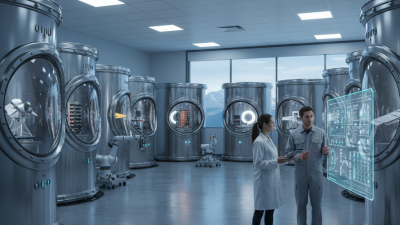
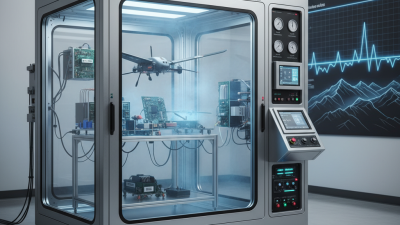
In aging testing rooms, various key equipment enhances the testing process. Environmental chambers are essential. They create specific climate scenarios. These chambers can simulate extreme heat or cold. They can also mimic moisture levels. Light exposure testing equipment is another critical component. It allows for the analysis of how light affects materials over time.
In addition to equipment, advances in technologies improve testing accuracy. Data logging systems capture real-time results. They monitor conditions continuously. Such insights help researchers assess product durability deeper. However, even with sophisticated setups, human errors can occur. Calibration might not be perfect, leading to unexpected results. Continuous training for operators is vital to address these issues. Understanding potential biases in data interpretation remains a challenge.
Aging Testing Room Temperature Impact on Material Degradation
This chart illustrates the relationship between aging duration and material degradation rates in an aging testing room. As the duration increases, the degradation rate of materials also rises, highlighting the importance of aging testing in assessing material reliability over time.
Industry Standards and Protocols for Aging Testing Procedures
Aging testing rooms simulate long-term product exposure to various environmental conditions.
These controlled environments assess how products will perform over time. Proper aging tests help ensure that products
maintain their integrity and reliability throughout their lifespan.
According to industry reports, around 30% of products face failure due to inadequate aging assessments.
Standards such as ASTM D1005 and ISO 4892 outline protocols for conducting aging tests.
These guidelines specify temperature ranges, humidity levels, and light exposure. For example, a test might require
holding a product at 60°C and 70%
humidity for a month. Such conditions enable manufacturers to predict potential degradation.
However, many companies overlook these essential steps, risking premature product failure in the market.
Data shows that 25% of companies lack rigorous aging protocols.
This gap in compliance can lead to costly recalls and damaged reputations.
Investing in comprehensive aging testing is not just a regulatory requirement; it's a business necessity.
A robust protocol can significantly mitigate risks and enhance product durability in diverse market conditions.
Significance of Aging Testing in Product Lifecycle Management
Aging testing is a vital component of product lifecycle management. It evaluates how products endure over time under various environmental conditions. This testing influences quality and reliability. According to a report from the International Journal of Product Research, products that undergo aging tests have a 30% lower failure rate in real-world situations.
In the production phase, aging tests help identify potential defects before launch. This early detection can save companies significant resources. The cost of fixing defects post-launch can be up to 100 times greater than addressing them during development. Manufacturers that implement systematic aging testing can improve customer satisfaction and reduce warranty claims. A survey by the American Society for Quality noted that companies prioritizing aging tests see a 25% increase in overall product performance.
Yet, there are challenges. Some companies underestimate the importance of aging tests. They might push for speed over thoroughness. This oversight can lead to costly mistakes in product efficiency or safety. The balance between rapid development and ensuring product durability is crucial. This highlights the need for a strategic approach in testing—one that integrates thorough evaluation with innovation.
Case Studies Demonstrating the Impact of Aging Testing Results
Aging testing rooms play a crucial role in evaluating the longevity of products. These controlled environments simulate real-world conditions, exposing materials and products to heat, humidity, and light. By doing so, manufacturers can predict how their products will perform over time. This testing allows for adjustments in design and materials to enhance durability.
Recent case studies highlight the impact of aging testing results. In one instance, a packaging company discovered that its materials degraded rapidly under simulated sunlight. This finding prompted a redesign, significantly extending product shelf life. Another case involved electronic components that failed after just six months. Aging tests revealed flaws in insulation that were easily corrected, ensuring reliability for customers.
Despite these successes, aging tests are not foolproof. Sometimes, results can vary due to unexpected environmental factors, leading to oversights. Manufacturers must remain aware of the limitations of their testing. Continuous refinement of testing methods is essential. Further understanding the aging process can lead to innovative solutions and improved product reliability.