How to Choose a Battery Test Chamber in 2026?
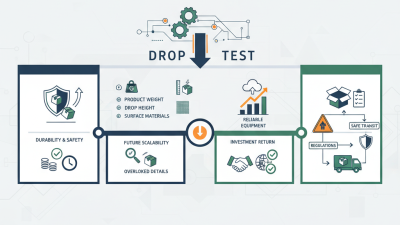
Choosing a Battery Test Chamber in 2026 requires more than comparing temperature ranges and catalog prices. The right chamber must match your battery chemistry, cell format, test schedule, and risk controls. A compact pouch-cell program may need different airflow and fixturing than a large automotive module. Details matter.
Start with the test environment. Check temperature uniformity, recovery speed, humidity control, chamber volume, and maximum electrical load. A chamber rated from −40°C to 150°C may look impressive, but unused capacity can increase cost and energy consumption. A wider range is not always better. Confirm whether the chamber supports your cyclers, feedthroughs, sensors, and data system. Small compatibility mistakes can stop a test campaign.
Safety deserves careful attention. Look for suitable fire detection, pressure relief, gas monitoring, emergency shutdown, and containment features. These protections should support a documented risk assessment, not replace one. Experienced laboratories also review IEC, ISO, UN, and regional requirements relevant to their products. Standards can change. Verify current editions with qualified specialists or accredited testing partners.
Reliability is measured beyond the first demonstration. Examine calibration records, service response, spare-parts access, software stability, and factory acceptance testing. Ask for performance data from comparable battery applications. Speak with existing users when possible. Their maintenance history may reveal more than a polished brochure.
Budget discussions should include installation, ventilation, utilities, validation, training, and downtime. I would not choose solely by purchase price. That approach is tempting, but often incomplete. This guide explains how to compare Battery Test Chamber options, avoid common selection errors, and build a defensible decision for 2026. Some recommendations may need adjustment as your technology evolves. That is normal. Good engineering leaves room for revision.
Define the Battery Testing Goals and Required Chamber Capabilities
How to Choose a Battery Test Chamber in 2026?
Define the Battery Testing Goals and Required Chamber Capabilities
Battery testing begins with a clear question, not a larger chamber. Are you measuring capacity loss, fast-charge performance, thermal aging, or abuse behavior? The International Energy Agency reported that global electric-vehicle battery demand reached about 1 TWh in 2024. This growth increases pressure for repeatable, scalable testing (IEA, Global EV Outlook 2025).
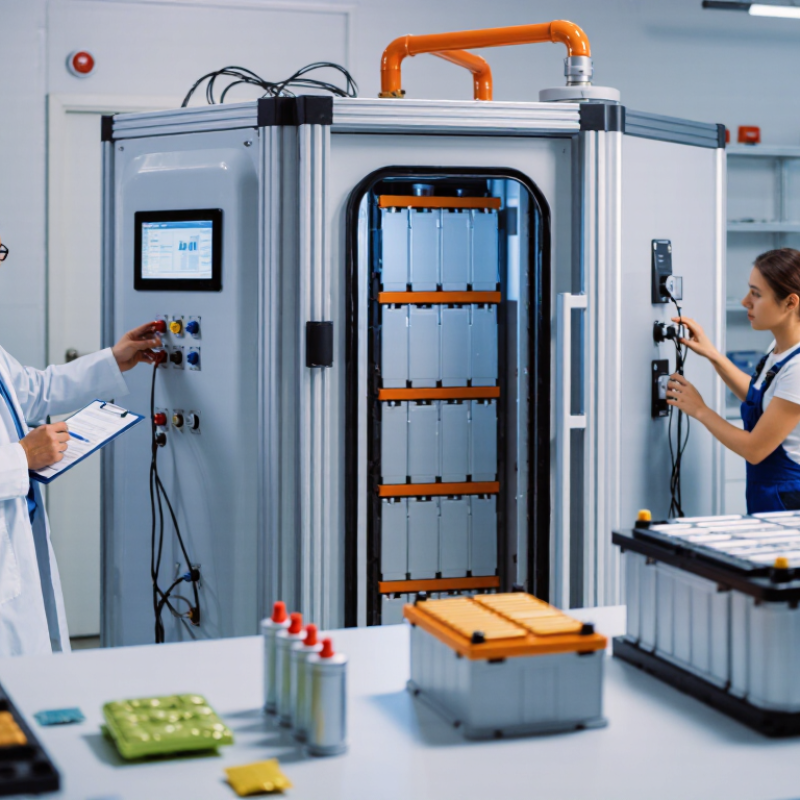
Match the chamber to the test profile. Cycle-life studies need stable temperature control, low humidity variation, and reliable data logging. Thermal studies require rapid temperature changes, multiple thermocouple inputs, and safe exhaust handling. Abuse testing may require pressure relief, gas detection, fire suppression, and remote operation. Standards such as IEC 62660 and ISO 12405 can guide electrical and performance procedures, but they do not replace a site-specific risk assessment.
More range is not always better.
A chamber reaching extreme temperatures may still perform poorly at ramp control or uniformity. In practical laboratory planning, I would verify calibration records, sensor placement, door sealing, and recovery time after opening. These details often decide whether results are comparable.
The U.S. Department of Energy’s Battery500 research emphasizes improved energy density, durability, and safety, yet one chamber rarely supports every objective equally (U.S. DOE, Battery500 Consortium). A modest chamber with precise control may be more useful than an oversized system with unclear safety limits. That assumption deserves testing.
Match Battery Chemistry, Size, and Test Conditions to Chamber Specifications
How to Choose a Battery Test Chamber in 2026?
Choosing a battery test chamber in 2026 starts with the cell, not the catalog. Lithium-ion cells may need controlled temperature, humidity, and electrical feedthroughs. Other chemistries can release different gases or require different safety responses. Confirm the chamber’s operating range, stability, recovery time, and sensor accuracy. A chamber reaching -40°C is not automatically suitable. Temperature uniformity around the battery matters during every cycle.
Tips: Measure the largest assembled pack, including cables, fixtures, and clearance. Leave room for airflow and inspection. Match chamber volume to the test load, but avoid excessive empty space. Check voltage, current, and connector ratings before installation. Ask for calibration records and alarm tests. Test engineers often overlook door seals. This detail is easy to miss. Small leaks can distort humidity results and waste a week of data.
Test conditions should mirror the real duty profile, including cold starts, heat soak, cycling, storage, and fault monitoring. Confirm remote logging and independent overtemperature protection. For large packs, review floor loading, access width, and cable routing. Do not rely only on nominal capacity. Request evidence from comparable loads, then question the assumptions. A rushed selection may appear efficient, but it can create unstable data and repeated testing.
Evaluate Temperature, Humidity, Safety, and Environmental Control Systems
How to Choose a Battery Test Chamber in 2026?
Choosing a battery test chamber requires more than checking its temperature range. Temperature stability, recovery speed, and chamber uniformity directly affect test reliability. Ask for mapping data at several shelf positions. A single sensor can hide cold or hot spots. For many battery tests, control within ±1°C is useful, but the right limit depends on the test method. Humidity also matters. Condensation can damage samples and distort results. Confirm the chamber’s humidity range, sensor accuracy, and dehumidification response. A dry chamber is not always better.
Safety systems deserve equal attention. Look for independent over-temperature protection, door interlocks, smoke detection, pressure relief, and controlled exhaust. The chamber should respond predictably during a damaged-cell event. Verify how alarms are recorded and how power is isolated. Environmental control should support stable ramps, rapid recovery, and low vibration. It should also prevent outside air from changing test conditions. In practice, technicians often focus on maximum temperature and overlook recovery time. That is a costly blind spot.
Tips: Place representative sensors near the battery, not only on the chamber wall. Review calibration records before acceptance. Request a witnessed empty-chamber test and a loaded test. Check noise, drainage, and cleaning access. Leave space for wiring and future fixtures. Some specifications look impressive on paper. Real testing can expose gaps. Reflect on your worst-case failure, not just your normal cycle.
Assess Installation, Maintenance, Operating Costs, and Supplier Support
How to Choose a Battery Test Chamber in 2026?
Choosing a battery test chamber requires more than checking its temperature range. The IEA’s Global EV Outlook 2024 reports that EV battery demand exceeded 750 GWh in 2023, rising about 40% year on year. That scale makes installation errors expensive. Check floor loading, door clearance, ventilation, heat rejection, drainage, and emergency isolation before signing. A chamber may fit on paper yet overload a room’s cooling system. Ask for a site survey using measured ambient conditions, not a generic checklist.
Maintenance planning should match test intensity. IEC 60068-3-5 and IEC 60068-3-6 provide methods for temperature performance verification. Electrical safety and battery-abuse procedures need separate risk controls. Request calibration intervals, sensor replacement times, leak checks, refrigerant service, and fault histories. The U.S. Department of Energy’s National Blueprint for Lithium Batteries 2021–2030 links industry growth with stronger safety and manufacturing resilience. That is practical guidance. Early cost estimates are often too optimistic because downtime, data recovery, and technician travel get omitted. Measure it. Include these items in total cost of ownership.
Operating costs often hide inside the compressor and facility interface. Require kWh-per-cycle data under realistic temperatures, ramp rates, humidity, and payloads. Compare standby power too. Supplier support should include response targets, remote diagnostics, spare-parts availability, software updates, training, and calibration traceability. Ask who arrives at 2 a.m. A low quotation can become costly when one failed sensor stops a week of testing.