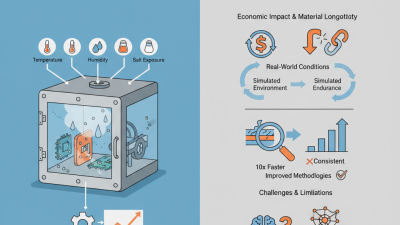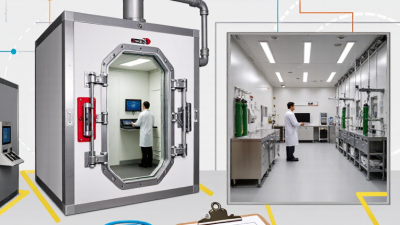
Choosing an Aging Testing Room in 2026 requires more than comparing chamber size and purchase price. The right facility must reproduce defined temperature, humidity, light, airflow, and exposure conditions consistently. It should also protect samples from contamination, vibration, and unexpected environmental changes.
A reliable Aging Testing Room begins with the test purpose. Electronics may require stable heat, humidity cycling, and continuous electrical monitoring. Packaging studies may need light exposure, airflow control, and accurate mass measurements. Materials testing can demand larger working spaces and stronger ventilation. Ask for mapping reports, calibration records, alarm histories, and maintenance procedures. These documents reveal performance better than attractive brochures.
Do not overlook data integrity. Modern systems should record conditions continuously, preserve audit trails, and support secure data export. Remote access is useful, but cybersecurity and permission controls still matter. Energy efficiency also deserves attention, especially when tests run for weeks or months. A cheaper unit may consume more power and require frequent repairs. That choice can become expensive.
Think beyond the first test. Can technicians clean the room safely? Are spare parts available locally? Will the supplier provide method development and timely technical support? These questions often expose weak decisions. Still, no room is perfect. Some specifications may look impressive but remain poorly verified under real workloads. Compare independent evidence, review applicable standards, and inspect the system whenever possible. A careful choice protects product quality, testing credibility, and long-term operating value.
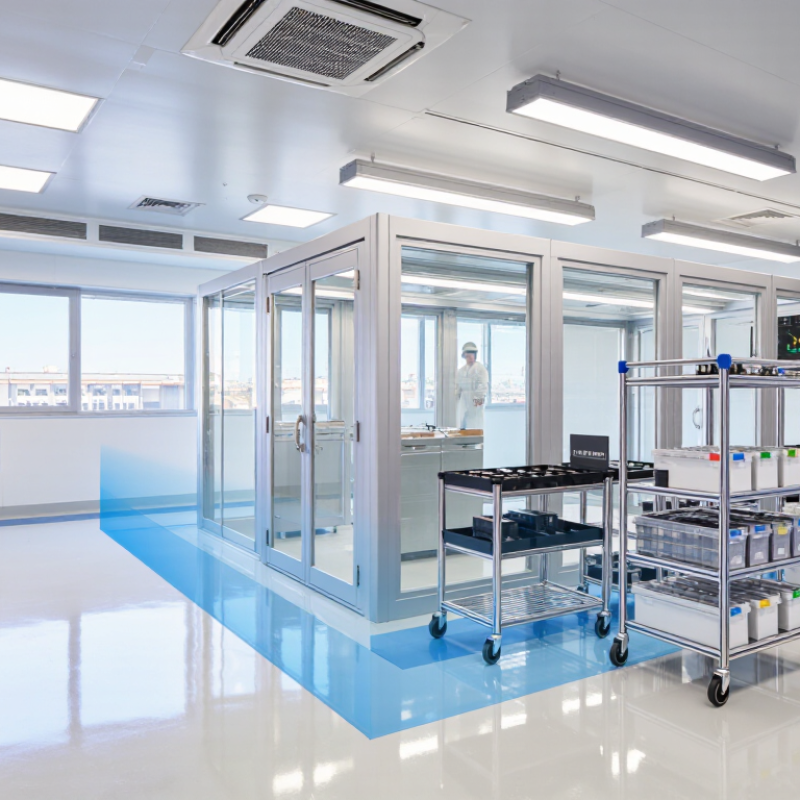
When choosing an aging testing room in 2026, begin with the failure you need to understand. A battery seal, polymer panel, and medical package may age differently. Write the test goal in measurable terms: color change, tensile loss, leakage, corrosion, or electrical drift. Define the endpoint and inspection interval before comparing room sizes. Otherwise, impressive equipment can produce beautifully organized uncertainty.
Environmental conditions must mirror the product’s real exposure. Set temperature, relative humidity, light intensity, oxygen availability, and contaminant levels according to the intended application. A coastal component may require salt exposure, while an indoor plastic part may need heat and humidity cycling. Check how quickly the room reaches its setpoint. More importantly, check how evenly conditions remain across shelves. Small differences can distort comparisons. Ask for calibration records, sensor locations, alarm functions, and recovery data after door openings.
I once approved a chamber based mainly on its temperature range. That was too narrow a judgment. The test samples later experienced uneven airflow, and the results needed review. Now, I examine sample loading plans, maintenance access, data logging, and emergency protection before approval. The room should support traceable measurements, controlled variables, and repeatable procedures. Leave space for controls and duplicate samples. Human error remains part of testing. A practical room makes that error easier to detect.
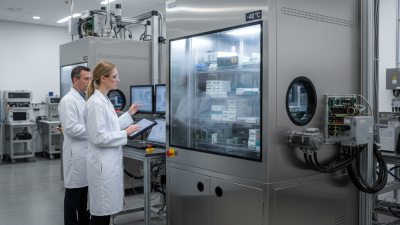
How to Choose an Aging Testing Room in 2026?
In 2026, selecting an aging testing room should begin with the test profile, not the catalog image. I have seen teams choose oversized rooms and later waste energy on unused space. Reach-in chambers suit small batches and frequent checks. Walk-in rooms support large assemblies, pallets, and production-scale trials. Modular rooms offer flexibility, but their panels need careful sealing and maintenance. The right size leaves enough clearance for airflow, sensors, and safe movement.
Configuration affects results as much as capacity. Adjustable racks help when samples change height. Even air circulation matters around every load, especially near corners and doors. A wide door can simplify loading, but it may increase heat loss during access. Check controller placement, viewing windows, drainage, lighting, and electrical points before approval. Independent temperature mapping is essential after installation. It reveals cold spots that ordinary display readings can miss. No layout is perfect. I would review the first test cycle and revise the rack arrangement if airflow appears uneven.
Tips: Measure the largest sample first. Add working clearance, not empty volume. Ask for load calculations at full capacity. Confirm the room can maintain stable conditions during door openings. Record sensor locations in every report. A smaller room may perform better than a larger one when loading patterns remain consistent. Also, leave space for future equipment. This is easy to overlook.
| Room Type | Typical Internal Size | Typical Temperature Range | Humidity Capability | Typical Test Volume | Best-Fit Applications | Main Configuration Options | Advantages | Limitations |
|---|---|---|---|---|---|---|---|---|
| Reach-In Aging Chamber | 0.3–2.0 m³ | Approximately −40°C to +150°C | Usually temperature only; humidity option commonly available at approximately 10–95% RH | Small components, assemblies, and laboratory batches | Electronic components, sensors, small battery modules, materials, and reliability screening | Single or double door; shelves; cable ports; viewing window; programmable controller; safety interlocks | Lower installation cost, faster temperature response, and easier qualification | Limited product quantity and restricted access during testing |
| Walk-In Environmental Aging Room | 6–100 m³ | Typically −20°C to +80°C; wider ranges require specialized refrigeration and insulation | Commonly 20–95% RH above the dew-point limit | Multiple racks, cabinets, pallets, or large assemblies | Automotive parts, lighting systems, appliances, industrial electronics, and packaged products | Insulated panels; floor loading; personnel door; equipment door; ramps; racks; lighting; emergency release; data logging | High capacity, walk-in access, and flexible product loading | Higher energy consumption, larger footprint, and longer stabilization time |
| High-Temperature Aging Room | 6–80 m³ | Typically ambient +10°C to +80°C or +120°C; higher temperatures need dedicated design review | Usually dry heat; humidity control is not normally included | Large batches and products requiring long-duration heat exposure | Burn-in, thermal aging, insulation evaluation, plastics, lamps, motors, and power electronics | Forced-air circulation; multi-level racks; exhaust; over-temperature protection; fire detection; access control | Simple operating principle, high throughput, and relatively low maintenance | Cannot reproduce moisture-related failure mechanisms without a humidity system |
| Temperature and Humidity Aging Room | 10–100 m³ | Commonly +10°C to +80°C | Typically 20–95% RH within the permitted temperature and dew-point range | Medium to large batches with controlled climate exposure | Corrosion studies, polymer aging, electronic reliability, packaging, and damp-heat testing | Steam or ultrasonic humidification; dehumidification; condensate drainage; corrosion-resistant interior; humidity sensor redundancy | Tests both thermal and moisture-driven degradation mechanisms | Higher purchase and operating cost; condensation control is essential |
| Modular or Expandable Aging Room | 10–200 m³ or larger, depending on panel layout | Commonly ambient +10°C to +80°C | Optional; typically 20–95% RH when equipped with humidity control | Growing production volumes and changing product dimensions | Contract testing, pilot production, qualification laboratories, and factories with future expansion plans | Removable panels; multiple chambers; shared refrigeration; adjustable racks; separate control zones; service access panels | Scalable capacity and easier adaptation to future test programs | More complex installation and potential differences in uniformity between zones |
| Drive-In Vehicle or Large-Assembly Room | 50–500 m³ or larger | Often approximately −20°C to +60°C | Optional; humidity range depends strongly on room volume and heat load | Vehicles, machinery, cabinets, large battery systems, and complete product lines | Automotive validation, transportation equipment, industrial machinery, and large energy-storage assemblies | Vehicle door; reinforced floor; high-capacity airflow; cable trenches; charging interfaces; gas detection; exhaust; emergency systems | Tests complete systems under realistic thermal conditions | Highest capital cost, substantial utility demand, and strict safety planning |
| Decision Dimension | Recommended Planning Basis | Practical Selection Guidance |
|---|---|---|
| Useful Internal Volume | Product volume plus rack volume, airflow clearance, and handling space | Avoid filling the room wall-to-wall. Leave clearance around products so conditioned air can circulate evenly. |
| Future Capacity | Add approximately 20–30% spare capacity where product volume is expected to increase | A slightly larger room can reduce the need for an early replacement, provided operating costs remain acceptable. |
| Uniformity Requirement | Define allowable spatial variation before purchasing | Use airflow mapping and temperature/humidity qualification at empty and representative loaded conditions. |
| Heat Load | Include product heat generation, powered equipment, lighting, personnel, and door openings | Battery systems and powered assemblies may require additional cooling capacity and dedicated safety controls. |
| Floor Loading | Account for products, racks, pallets, carts, and concentrated wheel loads | Specify both distributed load and point-load requirements for large or mobile equipment. |
| Safety and Monitoring | Independent over-temperature protection, alarms, emergency release, and data logging | For batteries or flammable materials, evaluate smoke, gas, fire, pressure-relief, exhaust, and emergency-shutdown requirements. |
| Installation Utilities | Electrical supply, heat rejection, drainage, ventilation, and service access | Confirm building power, door dimensions, ceiling height, floor strength, and maintenance clearance before finalizing the layout. |
| Qualification and Records | Calibration, uniformity mapping, stability verification, alarms, and traceable test records | Specify the required acceptance criteria and documentation before procurement rather than treating them as commissioning extras. |
Note: Temperature, humidity, volume, and load figures are typical planning ranges for general aging-test applications. Final specifications should be confirmed against the product heat load, applicable test method, site conditions, safety assessment, and required qualification criteria.
How to Choose an Aging Testing Room in 2026?
Temperature and humidity control accuracy should guide your purchase. A chamber displaying 85°C may actually fluctuate several degrees. That difference can distort aging results. JEDEC JESD22-A101 defines the widely used 85°C and 85% relative humidity stress condition, but the setpoint alone proves little. Ask for mapping data from loaded shelves, not only an empty-chamber certificate. IEC 60068-3-5 and IEC 60068-3-6 provide useful methods for evaluating temperature and humidity performance.
Look closely at stability, uniformity, recovery time, and sensor uncertainty. A strong room should record conditions continuously, with traceable calibration linked to national standards. NIST Technical Note 1297 explains that measurement uncertainty must include sensor accuracy, calibration, resolution, and environmental variation. Request the complete uncertainty budget. A single accuracy figure can hide weaknesses. It happens more often than buyers expect.
Inspect real operating details. Open the door for two minutes, then observe how quickly conditions recover. Check the coldest corner and the shelf nearest the humidifier. Ask whether the control system can alarm before samples leave specification. Also examine condensation management, airflow, and data export. I would not trust impressive brochure numbers without recent independent mapping. My own practical concern is often overlooked: heavily loaded rooms behave differently. Leave space around products, repeat the test, and question results that look too perfect.
Safety systems should be verified, not merely listed in a brochure. Check door interlocks, emergency stops, over-temperature cutoffs, smoke detection, ventilation, and controlled power isolation. Each function should be tested under realistic failure conditions. NFPA’s Fire Loss in the United States During 2023 report recorded approximately 1,504,500 fires. That figure supports a conservative approach to heat-generating equipment and electrical loads. Fire-rated construction, suitable suppression, and clearly marked escape routes deserve direct inspection.
Monitoring quality determines whether test results remain defensible. The room should record temperature, humidity, pressure, power status, alarms, and access events continuously. Time-stamped audit trails are valuable during investigations. Independent sensors can expose control-system drift. They also add maintenance work. That trade-off is easy to underestimate. ISO/IEC 17025 emphasizes technically valid results, calibration, and traceable measurement processes. Ask for calibration certificates, sensor uncertainty data, backup procedures, and documented alarm-response tests. A dashboard alone proves little.
Regulatory compliance requires local interpretation. Review electrical safety against IEC 61010-1 where applicable, then confirm building, fire, occupational, and environmental requirements. The International Labour Organization reported 2.93 million work-related deaths globally in 2019. Aging rooms are not automatically dangerous, but weak procedures can amplify small failures. Request risk assessments, training records, inspection logs, and corrective-action evidence. Visit the room during an actual test cycle. That is when noise, heat, blocked access, or delayed alarms become visible. Perfect paperwork is not enough.
Choosing an aging testing room requires more than comparing purchase prices. From my experience, installation errors often create the highest early costs. Check the required floor load, door width, ceiling clearance, electrical capacity, ventilation, and drainage before signing an order. A unit may fit on paper but fail during delivery. Measure the route, not only the room.
Maintenance planning should begin during equipment selection. Ask how technicians access heaters, sensors, fans, and control panels. A cramped service area can turn a simple inspection into a full-day shutdown. Confirm calibration procedures, spare-part availability, software support, and expected response times. Keep records of temperature stability, alarm events, and repair history. Small deviations can damage test credibility.
Total ownership cost includes electricity, labor, calibration, cleaning, replacement parts, and production delays. Compare energy use under real operating conditions, not only the rated maximum. Estimate annual test hours and include recovery time after door opening. A lower-priced room may consume more power or need frequent adjustments. That calculation is easy to miss. I have missed it myself.
Use a five-year cost model with conservative assumptions. Add a contingency for installation changes and unexpected downtime. Also ask whether operators need special training or protective equipment. Reliable performance depends on people, not only hardware. Leave enough space for safe movement and future repairs. A perfect forecast is impossible, but a documented assumption is better than a confident guess.