Leave Your Message

Top Altitude Chamber Manufacturers in China?

Choosing among the top Altitude Chamber manufacturers in China requires more than comparing prices or chamber dimensions. Buyers should examine engineering experience, pressure-control accuracy, oxygen monitoring, safety interlocks, and after-sales support. A chamber may look impressive in photographs yet perform poorly under repeated testing. Small details matter. Door seals, sensor calibration, emergency ventilation, and data-recording stability can affect every test.

Peter Hackett, a respected altitude-medicine specialist, stated, “Altitude illness is not a disease of the unfit; it is a disease of the unacclimatized.” His observation explains why reliable simulation equipment matters for aerospace research, sports science, military training, medical studies, and industrial testing. A capable Altitude Chamber should create controlled pressure changes while protecting occupants from sudden risks. Manufacturers should also provide documented factory testing, operator training, maintenance schedules, and responsive technical assistance.

This guide examines leading Chinese manufacturers through practical criteria rather than promotional claims. It considers chamber capacity, simulated altitude range, humidity and temperature control, customization, certification practices, and real project experience. Some suppliers specialize in compact medical units. Others build large walk-in systems for laboratories or aerospace facilities. Neither category is automatically superior. The correct choice depends on workload, users, location, and budget.

There is no perfect ranking. Public information can be incomplete, and specifications may change. Buyers should verify performance directly. Request test records, inspect control interfaces, and speak with previous customers when possible. A lower quotation may hide installation limits or future service costs. Careful comparison remains essential. This overview aims to provide a balanced starting point for selecting a dependable Chinese Altitude Chamber manufacturer.
Top Altitude Chamber Manufacturers in China?

What an Altitude Chamber Does: Hypobaric Simulation and Core Components

Top Altitude Chamber Manufacturers in China?

What an Altitude Chamber Does: Hypobaric Simulation and Core Components

An altitude chamber simulates elevation by lowering air pressure inside a sealed enclosure. The oxygen fraction stays near 20.9%, but its partial pressure falls as total pressure drops. ISO 2533 standard-atmosphere tables place pressure near 70 kPa at 3,000 metres, versus 101.3 kPa at sea level. That difference creates a controlled hypoxic environment without changing the air’s oxygen percentage. Small details matter.

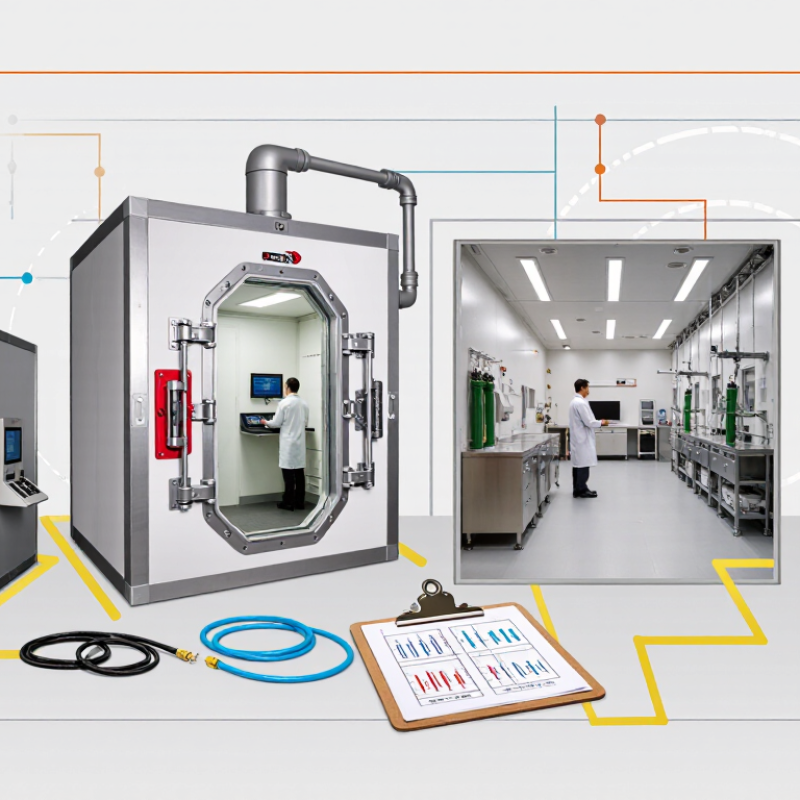
Core systems include the chamber shell, vacuum pump, pressure-control valves, sensors, and an emergency pressure-return system. Sensors track pressure continuously; controllers adjust valves to hold the selected altitude profile. A viewing window, intercom, and temperature monitoring can also support safe, practical operation. The enclosure must maintain a reliable seal, since small leaks can make pressure control less stable. Yet specifications alone do not prove performance.

For evaluation, ask manufacturers for calibration records, pressure-uniformity test results, and documented emergency procedures. ISO 2533 provides a reference atmosphere, not a complete chamber acceptance test. Request data from testing across the intended operating range, including pressure changes during ascent and descent. The uncomfortable point is that a smooth display can hide uneven conditions. Independent verification helps reveal what a sales sheet may miss.
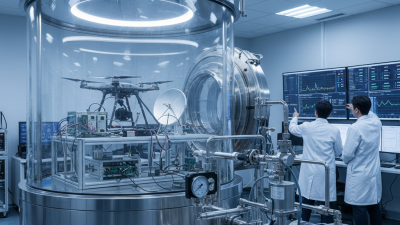
Where Chinese Altitude Chambers Are Used: Aviation, Research, and Testing

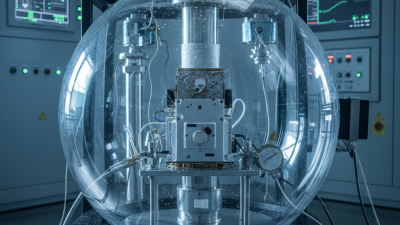
Chinese altitude chambers serve three demanding fields: aviation, biomedical research, and equipment testing. Aviation laboratories use reduced-pressure chambers to reproduce cabin-altitude conditions, often near 8,000 feet. The FAA warns that hypoxia can impair judgment before obvious symptoms appear. Recent ICAO data also show global scheduled air traffic recovering to about 94% of 2019 levels in 2023, increasing pressure for reliable aircraft qualification and crew-safety studies.

Research institutes use these chambers to examine oxygen deprivation, sleep, cognition, and human adaptation. They also simulate high-altitude environments for aerospace materials and life-support systems. China’s National Bureau of Statistics reported national research and development spending above 3.3 trillion yuan in 2023. That investment supports more controlled environmental testing, although funding alone does not guarantee sound experiments. Calibration, chamber uniformity, and emergency oxygen systems still decide whether results are credible.

Industrial testing adds another practical layer. Engineers may expose avionics, batteries, sensors, and sealed assemblies to low pressure, cold temperatures, and rapid pressure changes. ISO/IEC 17025 principles require competent testing, traceable measurements, and documented uncertainty. A chamber can look impressive and still produce weak data. Operators should verify pressure stability, oxygen monitoring, temperature mapping, and maintenance records before selecting a Chinese supplier. Realistic test profiles matter. A perfect simulation is rarely possible.

Where Chinese Altitude Chambers Are Used: Aviation, Research, and Testing

Altitude chambers support aircraft and spacecraft qualification, aerospace research, and environmental testing of components and systems. The chart shows the approximate atmospheric pressure corresponding to different simulated altitudes under the International Standard Atmosphere (ISA); chambers reproduce these pressure conditions to evaluate performance in low-pressure environments.

Performance Benchmark: 6,000 m Equals About 47 kPa Under ISA

Top Altitude Chamber Manufacturers in China?

A 6,000 m altitude test does not mean “half atmosphere.” Under the International Standard Atmosphere, pressure is about 47 kPa, or roughly 47 percent of sea-level pressure. At this altitude, standard temperature is close to minus 24°C. That combination matters when evaluating altitude chamber manufacturers in China. A chamber should control pressure and temperature independently, not merely reduce airflow.

In practical testing, I would inspect the pressure range, recovery time, leakage rate, and sensor calibration records. A stable system should reach 47 kPa without large overshoot. The product inside should also experience uniform conditions. Uneven temperature can produce misleading battery, aerospace, or electronics results. Ask for chamber mapping data, calibration certificates, and maintenance procedures. These documents reveal more than polished showroom claims.

One assumption deserves challenge. Fast pumping is not always better. Sudden pressure changes may stress equipment unrealistically and distort test results. I prefer adjustable ramp rates and recorded pressure curves. The controller should show actual chamber pressure, not only the target value. Independent verification is useful, especially when testing safety-critical components. Still, specifications can look complete while operator training remains weak. That gap is easy to miss. A careful buyer should witness a factory acceptance test and repeat key measurements after installation.

How to Evaluate Chinese Manufacturers: Safety, Controls, and Certifications

When comparing Chinese altitude chamber manufacturers, evaluate engineering evidence, not just chamber volume or quoted altitude. Ask whether the system is hypobaric or normobaric, and request operating limits for pressure, temperature, humidity, and occupancy. Details matter. Check for an accessible emergency stop, door-release arrangements, hazard alarms, and safeguards that remain active during power loss.

Examine the control system in a live demonstration. Can operators set gradual altitude changes, view current conditions, and review alarm history? Request calibration records for sensors and a sample test report. A touchscreen is not proof. Ask how the manufacturer tests leaks, verifies alarm response, and documents factory acceptance. If possible, have your technical team witness a test using agreed performance criteria.

Check certificates against the exact model and manufacturing site, then verify their scope and validity with the issuing body. An ISO 9001 certificate, for example, concerns quality management; it does not by itself establish product safety. Requirements differ by destination and intended use, so confirm applicable standards with qualified local specialists. A polished dossier can still leave gaps. It is easy to overlook service response time, spare-part availability, or who recalibrates sensors after installation. Make those responsibilities clear in writing before comparing quotations.

Chinese Altitude Chamber Manufacturers: Product Range and Service Comparison

Chinese altitude chamber manufacturers offer equipment for hypobaric, temperature, humidity, and oxygen-level testing. Their product ranges cover compact research units and walk-in chambers for aerospace, medical, electronics, and high-altitude simulation.

Chamber volumes often start below one cubic meter and extend beyond ten cubic meters. Pressure control, oxygen regulation, and temperature stability vary by configuration. Some suppliers build combined altitude-temperature systems with touchscreen controls and data export. Others focus on simpler pressure chambers with lower operating costs. Buyers should request actual test curves, not only catalog limits.

Service quality separates many suppliers. Strong manufacturers provide layout drawings, factory acceptance testing, installation guidance, calibration records, and operator training. Remote diagnostics can reduce downtime when alarms appear during a night test. Spare-part availability also matters. A failed pressure sensor can stop a project for days.

During supplier evaluations, I would inspect welding quality, door seals, vacuum-pump noise, and control-system access. Ask for references from laboratories using similar chamber sizes. One weakness is that technical documents may be translated inconsistently. Clarify pressure units, recovery time, sensor accuracy, and warranty exclusions in writing. Custom designs can fit unusual samples, but they usually require longer lead times and more validation work. A cheaper quotation may omit installation, calibration, or export packaging. That detail is easy to miss.