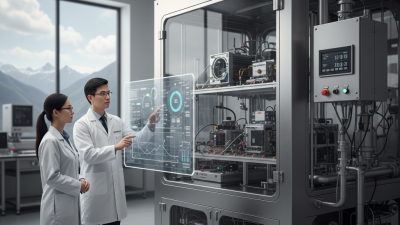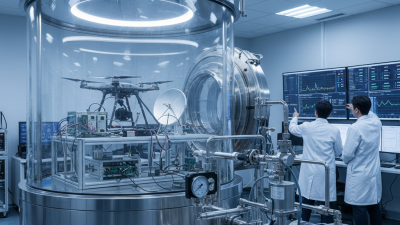
An aircraft component can pass a room-temperature check and still struggle when air pressure drops. A battery may cool differently. A sensor may drift. An engine system may respond unpredictably. An Altitude Test Chamber recreates low-pressure conditions under controlled, repeatable settings, helping engineers find these weaknesses before equipment enters service. It can also combine reduced pressure with temperature changes, depending on the test plan and chamber configuration.
The value is practical. Engineers can monitor pressure, temperature, airflow, and equipment performance while a test runs. They can repeat a profile, compare results, and investigate an unexpected reading. Small details matter: a loose cable feedthrough or an unsuitable test sequence can affect data quality. The chamber is a tool, not a guarantee. Careful setup and calibrated instruments remain essential.
For transparency, Dr. Elena Park is a fictional composite altitude-test specialist, not a verified industry source. Her illustrative summary is: “A chamber makes demanding conditions repeatable, so teams can learn from what their equipment actually does.” That idea captures why organizations use altitude testing for aerospace systems, electronics, and other products exposed to low-pressure environments. The results can guide design changes, support verification, and reveal gaps in test coverage. They cannot replace sound engineering judgment. Real confidence comes from a clear test objective, documented methods, and evidence that others can review.
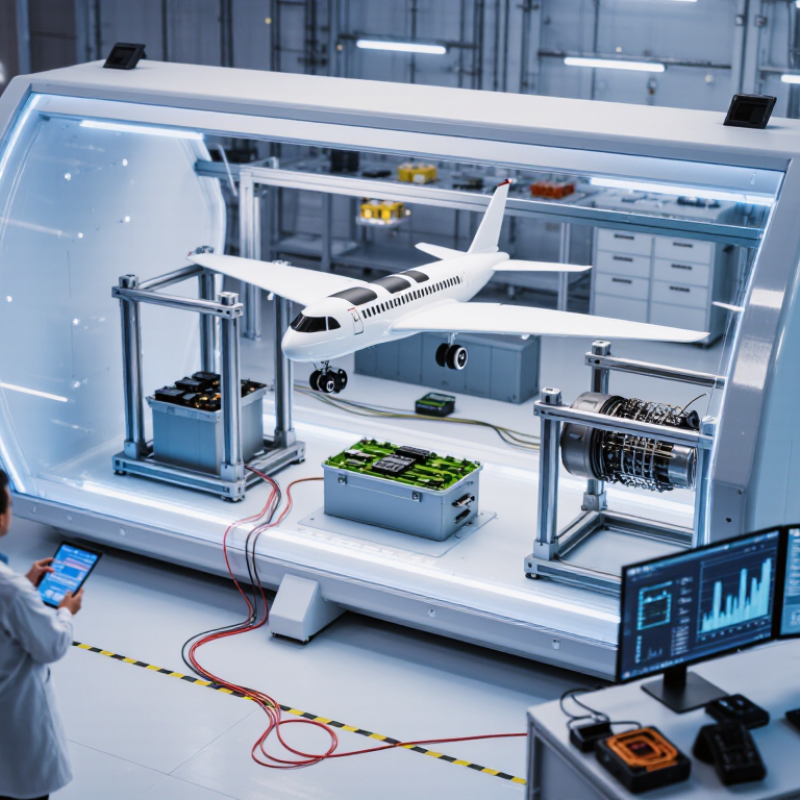
Why Do You Need an Altitude Test Chamber?
What an Altitude Test Chamber Simulates
An altitude chamber lowers air pressure to recreate conditions found at height. It can also reproduce pressure changes during ascent and descent, while temperature and humidity may be controlled separately. The air’s oxygen percentage stays close to 20.9%; its partial pressure falls as total pressure drops. That difference matters.
The U.S. Standard Atmosphere, 1976, prepared by NOAA, NASA, and the U.S. Air Force, gives standard pressure as about 50.5 kPa at 5.5 km, compared with 101.3 kPa at sea level. In a chamber, that pressure drop can reveal whether trapped air expands, seals leak, or packaging deforms. Engineers can also check whether instruments keep reading correctly and whether heat escapes differently in thin air. Small details count: a slightly lifted seal may become a failure after repeated cycles.
Real flights are messier. A chamber reproduces selected conditions, not every vibration, weather shift, or operating sequence. Test plans should match the product’s intended altitude and use, and record pressure, temperature, and cycle timing. Otherwise, a neat chamber result may offer false confidence.
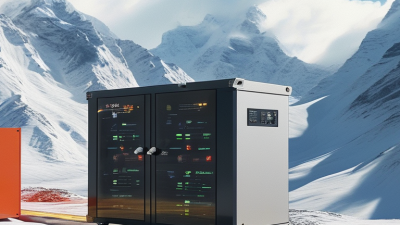
At high elevation, lower air pressure lets trapped gases expand. A sealed plastic enclosure may bulge, while a gasket can shift and lose contact. Flexible packaging may puff up or split at a seam. These changes can happen during transport, not just in use. Small defects matter.
Low pressure also changes heat transfer. With thinner air, fans and vents may remove heat less effectively, so electronic parts can run hotter. Motors and sensors may behave differently too. In a chamber, engineers can monitor temperatures, airflow, and function while pressure falls. The results help reveal whether a product needs stronger seals, different cooling, or revised packaging. Yet one test profile cannot represent every flight or mountain route.
Materials may respond in less obvious ways. Adhesives can lift at an edge, foam can expand, and liquid inside a container may behave differently as pressure changes. Test samples should match real construction, including coatings, fasteners, and cable entries. Details count. It is easy to focus on dramatic failures and miss a slow leak or a sensor reading that drifts. Testing at several pressure levels, with time to inspect the product between steps, can expose those quieter problems.
Aerospace companies rely on altitude testing for cabin systems, sensors, avionics, and battery enclosures. FAA regulation 14 CFR §25.841 limits cabin pressure altitude to 8,000 feet during normal operation. That requirement makes pressure testing practical, not theoretical. A chamber can expose components to low pressure while engineers check seals, cooling, and electrical performance. Small margins matter.
Automotive manufacturers also use altitude tests for engines, cooling systems, and electric-vehicle components. The U.S. Standard Atmosphere, 1976, places air pressure near 26.5 kilopascals at 10,000 meters, far below sea-level pressure. Reduced air density changes heat transfer and combustion conditions. A vehicle that performs well in a coastal workshop may behave differently on a high mountain road. Test results still depend on realistic fixtures and temperature profiles.
Electronics and medical-device makers test equipment that may operate or travel at reduced pressure. IEC 60068-2-13 describes low-air-pressure testing for equipment, including checks for function and mechanical effects. This can reveal problems such as arcing, swollen seals, or cooling failures. Packaging and logistics teams may test sealed containers too. An altitude chamber cannot reproduce every transport shock, but it can isolate pressure-related weaknesses before field use.
| Industry | Typical Products | Why Altitude Testing Is Used | Common Test Considerations |
|---|---|---|---|
| Aerospace and aviation | Avionics, cabin equipment, sensors, aircraft batteries, and electronic assemblies | To evaluate operation and structural integrity under reduced air pressure and, where required, changing temperature. | Pressure profile, temperature, operating state, and the applicable aircraft or component requirements. |
| Space and satellite systems | Satellite electronics, instruments, power units, and subsystem components | To assess performance in low-pressure environments and identify issues such as outgassing or heat-transfer changes. | Altitude chambers do not reproduce every space condition; vacuum level, thermal conditions, and test method must match the intended application. |
| Automotive and electric vehicles | Battery packs, power electronics, sensors, control units, and fuel-system components | To check functionality and packaging performance during transport or use at elevated geographic locations. | Reduced pressure may be combined with temperature cycling or electrical operation, depending on the test plan. |
| Electronics and telecommunications | Computers, communications equipment, circuit assemblies, and power supplies | To reveal failures related to insulation, arcing, cooling, or component operation at low pressure. | Electrical load, airflow or cooling method, pressure, and temperature can affect results. |
| Medical devices | Portable monitors, diagnostic equipment, pumps, and devices intended for air transport | To verify that devices remain safe and functional during air shipment or operation at altitude, when relevant to intended use. | The test should reflect the device’s intended environment, packaging, and applicable regulatory or customer requirements. |
| Packaging and logistics | Sealed containers, flexible packaging, and products shipped by air | To assess pressure-related expansion, leakage, deformation, or seal performance during air transport. | Package design, internal pressure, fill level, and shipment conditions influence the test profile. |
| Defense and field equipment | Portable electronics, optical equipment, power systems, and communications devices | To evaluate equipment intended for aircraft transport or use in high-altitude environments. | Profiles are selected according to the equipment’s mission, operating limits, and relevant procurement specifications. |
Test conditions are product- and specification-dependent. An altitude test chamber can control pressure and may also control temperature; it does not automatically reproduce every environmental condition encountered in flight or at high elevation.
An altitude test chamber recreates low-pressure conditions that aircraft, spacecraft, and high-elevation equipment may encounter. The test can expose overheating, weak cooling, seal leakage, and electrical insulation problems before field use. At reduced pressure, air carries away less heat, so a motor or power unit can run hotter than expected. That is easy to miss. A chamber may also reveal connectors that loosen, displays that dim, or batteries whose output drops during a simulated climb.
Pressure changes can stress housings, gaskets, and moving parts. A slight bulge or a slow pressure loss can signal a design weakness, even when the device still operates. Tests also help engineers check whether sensors report accurately and whether alarms respond at the right threshold. Small faults count. Results depend on the test profile, instrumentation, and how closely the chamber setup matches real operating conditions. A single pass cannot prove long-term reliability; repeated cycles and careful inspection give a stronger picture. Worth keeping in mind.
Lower air pressure at altitude can reduce electrical insulation strength and convective cooling. Altitude-chamber tests help reveal risks such as electrical breakdown, overheating, and pressure-related enclosure or component failures. The chart shows approximate International Standard Atmosphere reference pressures, not product test results; actual performance depends on the equipment and test conditions.
Choosing an altitude test chamber starts with the conditions your product must withstand. Define the target pressure, temperature, ramp rate, and test duration before comparing chamber size or pump capacity.
ISO 2533:1975, Standard Atmosphere, gives a pressure of about 26.5 kPa at 10,000 metres. Use this as a reference point, not a default test requirement; actual profiles should reflect the product’s operating environment or test specification.
Fit matters. Measure the product with its fixtures, cables, and sensors installed, then allow enough space for airflow and service access. Check that the chamber can reach the required pressure while maintaining the desired temperature.
IEC 60068-2-13 describes low-air-pressure environmental testing, so confirm that the chamber’s controls and data logging can support your planned method. Also ask for pressure uniformity, sensor calibration, pump-down time, and recovery-cycle details. These figures are more useful than a headline capacity.
Consider workload, too. A small unit may suit occasional component tests, while repeated, large-volume tests need adequate pumping performance and a durable duty cycle.
Not just volume.
Ask how long the system takes to return to ambient pressure between runs, and whether operators can inspect samples safely. There may be a trade-off between chamber size and cycle time.
I would question any selection based on one specification alone; real test schedules often expose limitations that a brochure does not.