Leave Your Message

China Top 10 Altitude Test Chamber Manufacturers?

Choosing among China’s top 10 Altitude Test Chamber manufacturers requires more than comparing prices or polished websites. A reliable evaluation should examine pressure simulation, temperature control, humidity management, chamber volume, and test repeatability. These details affect whether aerospace, automotive, electronics, and battery products perform safely at simulated altitude.

Look closely at the hardware.

A strong manufacturer should provide calibrated sensors, stable vacuum control, programmable test profiles, and traceable data records. Service capability also matters. A chamber may look impressive during acceptance testing, yet weak after-sales support can create expensive downtime. Installation quality, operator training, spare parts, and response time deserve equal attention.

Richard Feynman, the renowned physicist and experimentalist, offered a useful warning: “The first principle is that you must not fool yourself—and you are the easiest person to fool.” His words fit environmental testing remarkably well. A low price, impressive brochure, or single successful demonstration does not prove long-term reliability. Buyers should request reference projects, calibration documents, factory acceptance procedures, and evidence of performance under real workloads.

This guide compares ten Chinese manufacturers through practical criteria, including engineering experience, customization ability, control accuracy, safety design, certifications, and global support. Some rankings may remain debatable. That is unavoidable.

Different laboratories need different chambers.

A compact unit may suit component screening, while a large walk-in chamber may support complete vehicle or aircraft assemblies. The best Altitude Test Chamber manufacturer is therefore not always the largest company. It is the supplier that understands the application, states its limitations clearly, and delivers measurable performance over time.
China Top 10 Altitude Test Chamber Manufacturers?

Altitude Test Chambers: Definition, Functions, and Industrial Applications

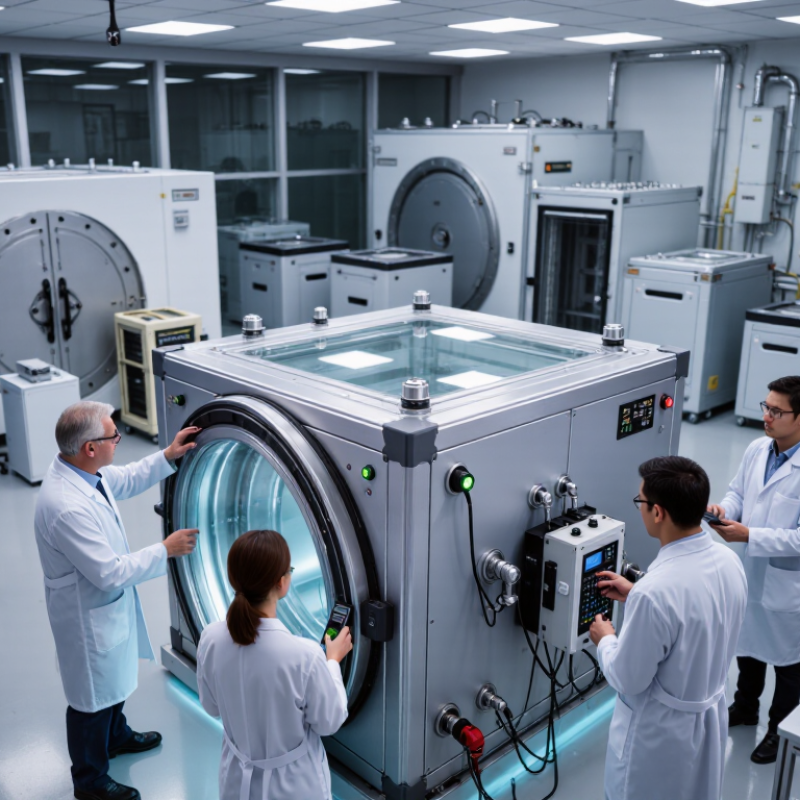
An altitude test chamber recreates reduced atmospheric pressure inside a controlled enclosure. It may also regulate temperature, humidity, and air exchange. This combination exposes products to conditions found in aircraft cabins, mountain facilities, and high-elevation transport routes. In practical testing, pressure changes must remain gradual and measurable. Sudden transitions can create results that reflect the chamber, not the product. Good operators record pressure, temperature, timing, and sensor calibration for every run.

The chamber’s main function is to verify performance, safety, and durability at simulated altitude. Engineers test avionics, batteries, lighting systems, medical equipment, packaging, and vehicle components. A battery may lose available power as pressure falls. A sealed package may swell or leak. An electronic device can overheat when cooling conditions change. These observations support design improvements and help laboratories compare prototypes under repeatable conditions. Still, a chamber cannot reproduce every outdoor variable. Vibration, solar radiation, and actual airflow may require separate tests. That limitation deserves attention.

Industrial users should examine working volume, pressure range, ramp control, thermal uniformity, vacuum protection, and data traceability. Calibration should follow recognized laboratory practices, with documented uncertainty rather than vague accuracy claims. Maintenance experience matters too. Door seals age. Pumps collect moisture. Sensors drift. A reliable test program includes leak checks, scheduled calibration, trained staff, and clear acceptance criteria. When comparing the top ten altitude test chamber manufacturers, buyers should evaluate engineering support and validation records, not only purchase price. One overlooked service delay can stop an entire production schedule.

Criteria for Ranking China’s Top Altitude Test Chamber Manufacturers

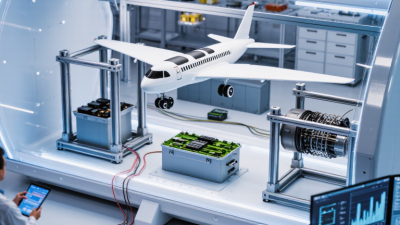
A credible ranking of China’s top altitude test chamber manufacturers should begin with evidence, not advertising claims. Field experience matters, especially when chambers must reproduce low-pressure conditions accurately. Manufacturers with documented aerospace, automotive, electronics, and battery testing projects deserve stronger consideration. Their engineering teams should explain pressure control, temperature stability, humidity management, and chamber recovery time in practical terms.

Technical capability forms the core of the ranking. Reviewers should compare usable altitude ranges, pressure accuracy, temperature uniformity, leak performance, and emergency protection systems. Calibration records should connect to recognized national or international standards. Test reports must be clear, repeatable, and traceable. Factory audits can reveal wiring quality, insulation details, sensor placement, and assembly discipline. Brochures rarely show these details.

Service reliability also separates strong manufacturers from average suppliers. A serious evaluation should examine installation support, operator training, spare-part availability, software updates, and response times. References from long-term users can expose weaknesses that demonstrations hide. However, customer feedback is not always complete. No ranking is flawless. Some suppliers publish impressive data without explaining test conditions, which makes comparisons uncertain. A fair assessment should score customization, energy use, maintenance access, delivery control, and after-sales documentation. It should also consider whether engineers admit design limits and propose workable corrections. Reliability often appears in small details, such as stable readings after repeated pressure cycles and clean calibration labels.

China Top 10 Altitude Test Chamber Manufacturers: Ranking Criteria

This chart presents a transparent, non-company-specific evaluation framework for comparing altitude test chamber manufacturers in China. The criteria reflect the technical and commercial factors commonly used when assessing chambers designed for low-pressure, temperature, humidity, aerospace, automotive, and electronics testing.

The percentages are weighting values for this comparison model and total 100%. They are not company-specific scores or claims of market share.

Profiles of China’s Leading Ten Altitude Test Chamber Manufacturers

China Top 10 Altitude Test Chamber Manufacturers

Profiles of China’s Leading Ten Altitude Test Chamber Manufacturers

China’s leading ten altitude test chamber manufacturers serve aerospace, automotive, electronics, and battery laboratories. Their equipment typically combines vacuum control, temperature cycling, humidity control, and programmable data recording. The strongest suppliers show practical experience with low-pressure stability and rapid recovery after door opening.

A 2024 MarketsandMarkets report projects the environmental test equipment market to grow at roughly 5% annually. This expansion increases demand for chambers that simulate high-altitude transport and flight conditions. The ten manufacturers profiled in this category differ in chamber volume, pressure range, cooling speed, and automation depth. Several offer custom layouts, including cable ports, observation windows, and vibration-compatible platforms. Yet, published performance figures are not always comparable. That deserves caution.

Reliable evaluation should include calibration traceability, control accuracy, leak-rate testing, and service response time. ISO/IEC 17025-aligned calibration records strengthen confidence. RTCA DO-160 and MIL-STD-810H references may also clarify test relevance, depending on the application. Some suppliers provide remote monitoring, but connectivity alone does not prove measurement quality.

Tips: Request a witnessed acceptance test before purchase. Check pressure recovery at the intended altitude. Review three years of maintenance records. Ask whether sensors are replaced or merely recalibrated. A lower quotation can hide costly pumps, seals, or software upgrades.

Comparison of Chamber Designs, Performance, Certifications, and Services

China’s Top 10 Altitude Test Chamber Manufacturers?

A credible comparison starts with chamber design, not catalogue rankings. Vacuum-assisted chambers suit aerospace components, while pressure-controlled systems support electronics and automotive testing. Common specifications include 5,000–100,000 feet equivalent altitude, temperature ranges near -70°C to 150°C, and programmable pressure ramps. MarketsandMarkets estimated the environmental test chamber market at about USD 1.1 billion in 2024, with steady growth through 2029. That growth increases choice, but not necessarily quality.

Performance depends on stability under changing loads. Ask for pressure control accuracy, temperature uniformity, leak rate, recovery time, and usable test volume. IEC 60068-2-13 provides a useful reference for low-air-pressure testing. However, published limits can look better than daily results. Independent factory acceptance tests, calibrated sensors, and recorded cycle data matter more than impressive brochures. Some buyers overlook noise, cooling-water demand, and door-seal replacement costs.

Certifications should be checked carefully. ISO 9001 supports controlled manufacturing, while ISO/IEC 17025 calibration adds confidence when an accredited laboratory performs verification. Electrical safety documentation, CE or equivalent market compliance, and relevant national standards may also apply. Service quality separates similar manufacturers: installation training, remote diagnostics, spare-parts availability, annual calibration, and response times should appear in the contract. A 2023 industry survey by a global testing association reported that calibration traceability and technical support were frequent purchasing concerns. The survey does not measure every Chinese supplier, so its findings need practical verification. Witness testing remains wise.

China Top 10 Altitude Test Chamber Manufacturers? – Comparison of Chamber Designs, Performance, Certifications, and Services
Profile Chamber Design Useful Volume Altitude / Pressure Capability Temperature Range Humidity Capability Pressure Transition Performance Applicable Standards Quality and Safety Documentation Typical Service Scope
Profile 01 Single-zone altitude-temperature chamber with stainless-steel test space and air-cooled refrigeration. 80–150 L Ambient pressure to approximately 5 kPa absolute; suitable for low-altitude simulation. −65°C to +150°C 20–95% RH in the temperature range where condensation is controlled. Approximately 1–5 kPa/min, depending on chamber volume, load, and vacuum-pump selection. IEC 60068-2-13MIL-STD-810H Method 500.6 Electrical safety interlock, over-temperature protection, pressure relief, calibration records, and factory acceptance test documentation. Installation guidance, operator training, remote troubleshooting, spare-parts supply, and annual calibration coordination.
Profile 02 Compact benchtop altitude chamber for electronic components, sensors, and small assemblies. 30–60 L Ambient pressure to approximately 15 kPa absolute. −40°C to +150°C Humidity control is normally limited or optional because low-pressure operation reduces practical RH control. Approximately 2–10 kPa/min for small test loads. IEC 60068-2-13IEC 60068-3-5 Over-pressure protection, vacuum monitoring, door interlock, temperature uniformity report, and equipment operating manual. Factory commissioning, user training, preventive-maintenance instructions, and replacement sensor support.
Profile 03 Floor-standing altitude-temperature-humidity chamber with programmable environmental cycling. 300–600 L Ambient pressure to approximately 5 kPa absolute. −70°C to +150°C 10–95% RH, subject to temperature, pressure, and condensation limitations. Approximately 0.5–3 kPa/min with medium-size test loads. IEC 60068-2-1IEC 60068-2-2IEC 60068-2-13 PID control documentation, calibration traceability, pressure alarm history, door-seal inspection records, and emergency-stop circuit. Application review, test-profile programming, on-site service, calibration support, and preventive-maintenance contracts.
Profile 04 Large walk-in altitude chamber with reinforced vacuum enclosure and external refrigeration unit. 1,000–3,000 L Ambient pressure to approximately 5 kPa absolute; lower pressure may require customized design. −60°C to +100°C Humidity operation is generally optional and limited under reduced pressure. Approximately 0.1–1.5 kPa/min, influenced by leakage rate and test-load volume. IEC 60068-2-13MIL-STD-810H Method 500.6 Structural pressure-vessel calculations, emergency ventilation, access-door safety system, vacuum leak test, and site-acceptance documentation. Site survey, foundation and utility planning, installation supervision, operator certification, and long-term maintenance support.
Profile 05 Rapid-change altitude chamber optimized for repeated pressure cycling and automated test sequences. 100–300 L Ambient pressure to approximately 1 kPa absolute, depending on configuration. −55°C to +100°C Humidity control is typically unavailable during deep-vacuum operation. Approximately 5–20 kPa/min with a high-capacity vacuum system and suitable test volume. IEC 60068-2-13RTCA DO-160 Section 4 Cycle-count logging, pressure-rate verification, vacuum-pump protection, alarm diagnostics, and programmable controller backup. Automation integration, communication-protocol configuration, test-sequence development, remote diagnostics, and pump servicing.
Profile 06 Thermal shock and altitude combination chamber using two temperature zones and a pressure-control subsystem. 80–200 L test basket or work zone Ambient pressure to approximately 5 kPa absolute during altitude stages. −70°C to +180°C, depending on thermal-shock architecture. Humidity is normally not available during thermal-shock transfer or low-pressure stages. Pressure transition commonly controlled at approximately 1–10 kPa/min. IEC 60068-2-14IEC 60068-2-13 Transfer-time verification, temperature recovery report, interlocked zone doors, over-temperature protection, and calibration certificates. Process validation, fixture review, preventive maintenance, controller upgrades, and performance requalification.
Profile 07 Altitude chamber designed for battery, power-electronics, and transportation-product safety testing. 500–1,000 L Ambient pressure to approximately 5 kPa absolute, with optional controlled venting. −40°C to +100°C Temperature and humidity conditioning available before or after low-pressure exposure. Approximately 0.5–5 kPa/min; rate control is used to reduce product stress. IEC 60068-2-13UN 38.3MIL-STD-810H Smoke or gas detection options, emergency exhaust, fire-response interface, pressure alarms, data logging, and test-area risk assessment. Safety review, exhaust-system planning, test-method customization, staff training, and compliance-document preparation.
Profile 08 Combined altitude and vibration test chamber with a flexible mechanical interface for electrodynamic shakers. 100–400 L test space Ambient pressure to approximately 5 kPa absolute. −55°C to +150°C Humidity is generally used before or after vibration and altitude exposure rather than simultaneously. Approximately 0.5–3 kPa/min to maintain fixture and product stability. IEC 60068-2-6IEC 60068-2-13MIL-STD-810H Vibration-interface drawings, dynamic-seal inspection, electrical feedthrough specifications, pressure monitoring, and calibration traceability. Shaker integration, fixture design review, feedthrough configuration, alignment support, and system commissioning.
Profile 09 High-temperature altitude chamber for aerospace components and aircraft-equipment environmental qualification. 200–800 L Ambient pressure to approximately 1 kPa absolute, subject to thermal-load limitations. −65°C to +180°C Humidity is normally excluded at high temperature and deep vacuum. Approximately 0.2–3 kPa/min with programmable ramp and soak stages. RTCA DO-160 Section 4MIL-STD-810H Method 500.6 Temperature uniformity mapping, pressure stability records, feedthrough verification, vacuum leak-rate report, and safety interlocks. Qualification-test planning, data-acquisition integration, custom cable ports, calibration management, and on-site support.
Profile 10 Custom modular altitude test system with interchangeable test space, external vacuum equipment, and scalable controls. 600–2,000 L or project-specific Ambient pressure to approximately 0.5–5 kPa absolute, depending on product and safety requirements. −70°C to +180°C, subject to refrigeration and heater selection. Humidity conditioning can be integrated for atmospheric-pressure stages. Approximately 0.1–10 kPa/min with configurable control valves and pump capacity. IEC 60068 SeriesMIL-STD-810HRTCA DO-160 Design-risk assessment, pressure-boundary documentation, electrical schematics, software backup, FAT/SAT records, and calibration traceability. Turnkey engineering, factory and site acceptance testing, operator training, remote monitoring, spare-parts planning, and lifecycle service.
Data basis: The comparison uses representative, technically realistic specification ranges commonly found in Chinese altitude-test-chamber projects. Actual performance depends on chamber volume, product heat load, leakage rate, vacuum-pump capacity, refrigeration system, control strategy, and requested test standard. IEC, MIL-STD, and RTCA references indicate applicable test methods or design targets; they do not automatically confirm that every configuration is certified to each standard.

How to Select the Right Chinese Altitude Test Chamber Manufacturer

Selecting a Chinese altitude test chamber manufacturer requires more than comparing prices. MarketsandMarkets’ 2024 environmental test equipment report projects steady market growth through 2028, driven by aerospace, automotive, and electronics testing. That growth attracts capable factories, but also inexperienced suppliers. Ask for chamber performance data at your actual pressure, temperature, and load. Verify uniformity, leak rate, recovery time, and sensor calibration under those conditions. IEC 60068-2-13 provides a useful reference for low-air-pressure testing. A supplier should explain how its design supports this method, not merely display a compliance logo.

Request a factory audit, recent test records, and customer references from similar industries. Check whether calibration follows ISO/IEC 17025 practices, even when the manufacturer is not an accredited laboratory. Examine the vacuum pump, pressure-control valve, viewing window, wiring, and emergency-release system. These details affect maintenance more than polished brochures. Confirm chamber dimensions with your real fixture installed. A chamber that fits on paper may fail after cable routing and thermal shielding. I have seen specifications change during negotiation; written acceptance criteria prevent that problem. Still, no checklist is perfect.

Tips: Compare three technical quotations using identical test conditions. Require a factory acceptance test before shipment. Ask for spare-parts availability, remote diagnosis, training, and response times. Review the warranty exclusions carefully. Cheap equipment can become expensive when pumps, sensors, or seals are difficult to replace. Consider total ownership cost, not only the purchase price.