Leave Your Message

How to Choose an Altitude Chamber in 2026?

Choosing an Altitude Chamber in 2026 starts with a clear purpose, not a feature list. Chambers can create controlled low-oxygen conditions, but their designs and operating limits vary. A system suited to short athletic sessions may not fit a research facility or a clinical setting. Define who will use it, how often, and under whose supervision.

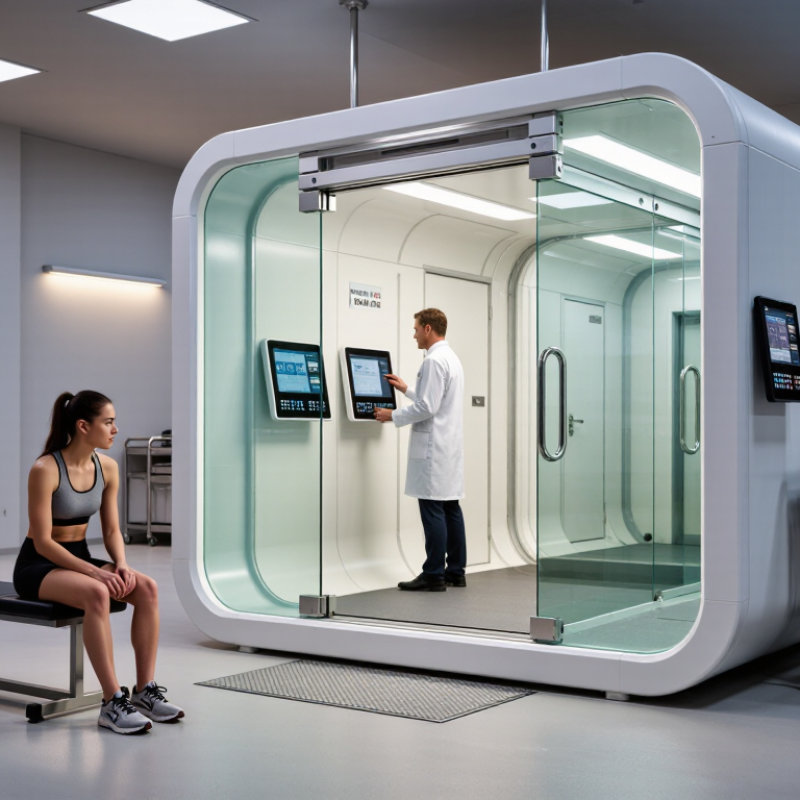
Look closely at the usable space, not just the advertised capacity. Picture the door opening in a crowded training room, or a technician reaching the controls during a session. Check the chamber’s operating range, oxygen monitoring, pressure controls, emergency procedures, and compatibility with your planned protocols. Ask the supplier for written specifications, maintenance requirements, staff training details, and references from comparable installations. Independent technical review can help clarify claims that sound impressive but lack test data.

The best choice is rarely the one with the most options. It is the one that fits the intended users, available space, budget, and support capacity. Confirm what installation and service include, and ask how faults are reported and resolved. If health conditions or clinical use are involved, consult qualified medical and technical professionals before selecting a system. No checklist removes every doubt. Some product information may also be incomplete, so verify important claims directly. A careful comparison makes the decision more transparent—and gives the team a realistic basis for safe, consistent use.
How to Choose an Altitude Chamber in 2026?

Define the Use Case and Target Altitude Using ISO 2533 Standard Atmosphere Data

Choosing an altitude chamber starts with defining what the test must prove. Is it equipment operation, packaging performance, or a controlled human exposure study? Each use case sets different requirements for pressure range, temperature control, humidity, ramp rate, and time at altitude. Write down the full profile, including transitions and recovery, before comparing chamber specifications. Small details matter.

Use ISO 2533 standard atmosphere data to translate target altitude into reference pressure and temperature. For example, 4,000 metres corresponds to roughly 61.6 kPa under the standard model. Treat this as a planning reference, not a promise about local weather or actual field conditions. That assumption can fail. If the chamber will reproduce a specific site, compare its measured conditions with the ISO profile and document any difference. Then check that the chamber can reach the required pressure with useful operating margin, rather than merely matching the peak value. A test lasting two hours at altitude may demand different control stability from a brief pressure cycle. Ask for calibration records and stated measurement uncertainty; a displayed setpoint alone is not enough. I would also revisit the target altitude after drafting the test protocol. It is easy to choose a familiar number before confirming that it represents the real exposure.

How to Choose an Altitude Chamber in 2026? — Define the Use Case and Target Altitude Using ISO 2533 Standard Atmosphere Data

Reference Altitude (m) Standard Temperature (°C) Standard Pressure (kPa, absolute) Approx. Air Density (kg/m³) Pressure vs. Sea Level (%) Example Chamber Use Case Selection Consideration
0 15.0 101.325 1.225 100.0 Baseline testing and pressure-reference checks Confirm whether the chamber must also operate near local ambient pressure.
1,000 8.5 89.875 1.112 88.7 Moderate-elevation equipment or packaging evaluation Specify absolute pressure rather than relying on an altitude label alone.
2,000 2.0 79.495 1.007 78.5 General high-elevation product screening Check that the required pressure can be maintained under the intended test load.
3,000 -4.5 70.109 0.909 69.2 Electronics, enclosures, and transport-related testing Define temperature and pressure requirements separately if both are controlled.
5,000 -17.5 54.019 0.736 53.3 High-altitude operating-condition simulation Review pump-down time, leakage limits, and the chamber’s usable internal volume.
8,000 -37.0 35.600 0.526 35.1 Low-pressure evaluation of products intended for elevated environments Confirm the lowest required absolute pressure and the measurement range of the sensors.
10,000 -50.0 26.500 0.414 26.2 High-altitude equipment and pressure-sensitive packaging tests Check whether the test requires temperature conditioning as well as reduced pressure.
12,000 -56.5 19.399 0.311 19.1 Low-pressure functional testing and altitude-profile validation Specify the target pressure, ramp rate, dwell time, and number of cycles.
15,000 -56.5 12.045 0.195 11.9 Very-low-pressure testing of components and assemblies Verify that fixtures, feedthroughs, and internal materials suit the intended conditions.
18,000 -56.5 7.506 0.122 7.4 Specialized high-altitude simulation Assess achievable pressure with the actual payload and expected outgassing.
20,000 -56.5 5.475 0.088 5.4 Very-high-altitude or near-space component testing Confirm ultimate pressure, control stability, instrumentation, and safety needs.
25,000 -51.6 2.511 0.040 2.5 Specialized near-space pressure simulation Determine whether the application needs a conventional altitude chamber or a more specialized vacuum system.
30,000 -46.6 1.172 0.018 1.2 Very-low-pressure research or specialized component testing Validate performance at the target pressure with the intended test setup before selection.

Reference: Approximate values from the ISO 2533 standard atmosphere, rounded for selection planning. Pressure is absolute; pressure percentage is relative to the sea-level standard pressure of 101.325 kPa. Example use cases are illustrative, not prescribed by ISO 2533. The standard atmosphere does not define a product-specific test profile, dwell time, temperature requirement, or chamber specification.
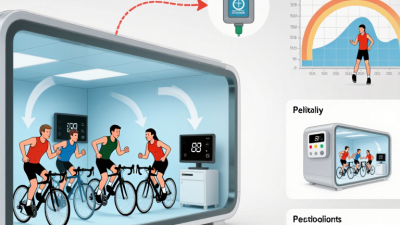
Compare Chamber Types by Pressure Range, Capacity, and Intended Workload

How to Choose an Altitude Chamber in 2026?

Compare Chamber Types by Pressure Range, Capacity, and Intended Workload

Choosing an altitude chamber in 2026 starts with the pressure profile, not the purchase price. A hypobaric chamber lowers air pressure with vacuum systems and suits altitude simulation. A pressure-controlled chamber offers steady, repeatable profiles for long test cycles. Some combined chambers add temperature and humidity, but complexity increases maintenance demands. Keep it practical.

Pressure range must match actual duty. Human studies may require rapid changes from sea level to high altitude. Product qualification often needs stable low pressure for hours, not dramatic cycling. Ask for verified minimum pressure, leak rate, recovery time, and sensor accuracy. A stated altitude alone can hide weak performance. It is an easy mistake.

Capacity changes the test itself. A single-person chamber supports focused trials and lower operating costs. Walk-in models handle equipment racks, several operators, or larger assemblies. However, unused volume can slow pressure changes and raise energy use. Measure the largest load, cable routing, fixtures, and emergency access. Intended workload should guide the controls and construction. Daily human testing needs oxygen monitoring, communication, viewing, and independent safety interlocks. Electronics testing may prioritize feedthroughs, thermal control, data logging, and repeatable ramp rates. During supplier reviews, inspect calibration records and maintenance procedures, not only brochures. Teams sometimes overestimate future capacity and underestimate operator training.

How to Choose an Altitude Chamber in 2026? Compare chamber types by pressure range, capacity, and intended workload.

Pressure ranges below are representative planning ranges, not universal product specifications. Human-rated chambers commonly simulate ambient pressure down to about 20 kPa; component-test systems may be designed for lower pressures. Capacity is application-specific: choose a chamber that fits the number of occupants or the size of the equipment, with room for required fixtures and airflow. Confirm usable volume, pressure limits, decompression rate, and applicable safety requirements with the manufacturer.

Verify Pressure Performance: 70 kPa at 3,000 m and 54 kPa at 5,000 m

A chamber’s altitude rating should be backed by measured pressure, not just a maximum-height claim. At 3,000 m, standard atmospheric pressure is about 70 kPa; at 5,000 m, it is roughly 54 kPa. These figures provide practical checkpoints when comparing equipment. Ask for test records showing that the chamber can reach and hold each pressure under its stated operating conditions.

Look beyond the lowest number on a specification sheet. Confirm how quickly pressure changes, how stable it remains, and whether readings come from calibrated sensors. A brief dip to 54 kPa is not the same as maintaining that level through a test. Check the chamber’s usable volume, too: adding equipment or a person can affect pressure recovery and airflow. Small details matter.

If possible, review a pressure log from a loaded test, not only an empty-chamber demonstration. Ask how often sensors are checked and what tolerance applies around the target pressure. The documentation may be imperfect; note gaps and request clarification. A clear answer is more useful than a polished claim.

Assess Controls, Monitoring, Safety Systems, and Applicable Industry Standards

How to Choose an Altitude Chamber in 2026?

A capable altitude chamber should make control decisions visible. Check pressure range, ramp rates, temperature stability, and humidity control. Ask how the system behaves during sensor failure. Does it stop safely, or continue with bad data? I prefer independent pressure and temperature sensors. One display is not enough. Review alarm history, access permissions, and calibration records. Operators should understand the interface after practical training, not after guessing.

Monitoring deserves close attention. Examine data sampling rates, audit trails, remote access controls, and report formats. Test the chamber under realistic workloads, including rapid pressure changes and power interruptions. Small delays can distort results. I have seen teams focus on chamber size while overlooking unstable readings near the target altitude. That mistake is expensive. Require traceable calibration for critical sensors, preferably through a competent laboratory operating under ISO/IEC 17025 principles.

Safety systems must work without software cooperation. Look for emergency venting, door interlocks, oxygen deficiency detection, overpressure protection, and backup power for essential alarms. Inspect the chamber physically. Weak seals and awkward emergency controls matter. Applicable standards depend on location and use. Review current electrical, machinery, pressure-equipment, and workplace-safety requirements. Aerospace, medical, and automotive testing may add sector-specific obligations. Do not accept a certificate without checking its scope, date, and test conditions. Standards change. Your assumptions may not.

Compare Installation, Service, Energy Use, and Total Cost of Ownership

How to Choose an Altitude Chamber in 2026?

Choosing an altitude chamber means looking beyond its purchase price. Start with installation. Measure doorways, ceiling height, and available floor space before requesting a site assessment. Check electrical capacity, ventilation, and any structural requirements. A chamber that fits on paper may still be difficult to move through a narrow hallway.

That happens.

Service needs deserve equal attention. Ask what routine inspections involve, which parts may need replacement, and how quickly technical support can respond. Clarify whether staff training and maintenance visits are included. Request written service terms, not just a reassuring conversation. Keep a record of expected maintenance hours, too.

Small tasks add up.

Energy use depends on operating hours, chamber size, insulation, and the temperature difference the system must manage. Ask for estimated consumption under your expected schedule, then compare it with local energy rates. Total cost of ownership should include installation, utilities, service, consumables, and likely downtime over the equipment’s useful life.

Use the same assumptions for every quotation. I would also leave room for uncertainty; actual usage can differ from a supplier’s estimate.

A simple spreadsheet can reveal which costs are fixed and which may rise with frequent use.