What Are the Top 10 Types of Altitude Test Chambers?
Altitude testing is becoming more demanding as aircraft, satellites, medical devices, and automotive systems operate across wider pressure ranges. Market reports from MarketsandMarkets and Grand View Research identify aerospace, electronics, and automotive validation as major drivers of environmental chamber demand. Their findings point to a practical reality: one chamber rarely suits every test objective.
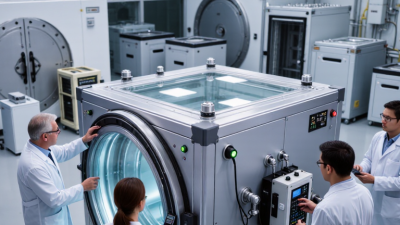
An Altitude Test Chamber reproduces reduced air pressure, controlled temperature, humidity, and sometimes rapid decompression. ISO 2533:1975 provides the standard atmosphere reference, while RTCA DO-160G Section 4 defines altitude-testing expectations for airborne equipment. These documents help engineers select suitable chamber capacity, pressure-control accuracy, safety interlocks, and data-logging performance. The details matter. A small seal leak can distort a pressure profile. A poorly positioned sensor can misread thermal behavior.
Physiologist Dr. John B. West wrote, “At altitude, the atmospheric pressure is reduced, and this reduces the partial pressure of oxygen.” That principle explains why test design must consider both equipment performance and human exposure risks. The ten chamber types discussed here separate applications by pressure range, temperature capability, test volume, and simulation method. Some support aerospace qualification. Others fit battery, packaging, biomedical, or electronics testing.
The categories overlap.
That is the difficult part.
Manufacturers often use different names for similar configurations, and published specifications are not always comparable. A careful buyer should verify actual working altitude, ramp rate, recovery time, uniformity, calibration traceability, and maintenance history. This overview offers a useful starting point, but it should not replace a documented test plan or qualified engineering review.
Altitude Chamber Fundamentals: 101.3 kPa Sea-Level Pressure to Near Vacuum
Altitude test chambers recreate pressure changes from 101.3 kPa at sea level to near vacuum. They help engineers observe how products behave when air becomes thin. Pressure is measured in absolute terms, not by guesswork. A chamber may descend gradually, hold a target altitude, or change pressure rapidly. Small differences matter. A door seal, battery enclosure, or sensor can respond badly within seconds.
The ten common types include altitude-only, hypobaric, thermal-altitude, climatic, thermal-vacuum, rapid-decompression, walk-in, drive-in, humidity-altitude, and specialized aerospace chambers. Altitude-only units focus on pressure control. Thermal-altitude chambers combine low pressure with cold or heat. Thermal-vacuum systems test equipment under extreme temperature swings. Rapid-decompression chambers examine sudden pressure loss, while humidity-altitude units expose materials to moisture and thin air. The categories overlap, so a simple ranking can be misleading.
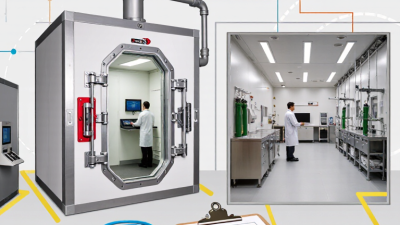
In practice, test selection depends on volume, pressure range, ramp speed, temperature control, and instrumentation. A small chamber may reach near-vacuum efficiently, but it cannot hold a large assembly. A walk-in chamber offers access, yet it usually demands more energy and longer stabilization. Experienced technicians verify sensors against calibrated references and inspect seals before each run. They also record pressure recovery after opening the chamber. Results can drift when fixtures block airflow. No chamber performs every task perfectly. That limitation deserves attention before testing begins.
Types 1–3: Hypobaric, Vacuum, and Thermal-Vacuum Chambers
What Are the Top 10 Types of Altitude Test Chambers?
Types 1–3 cover hypobaric, vacuum, and thermal-vacuum chambers. A hypobaric chamber reduces air pressure while retaining a controlled gas environment. It commonly simulates aircraft cabins, high-altitude electronics, and pressure-sensitive equipment. The U.S. Standard Atmosphere 1976 reports sea-level pressure near 101.3 kPa, falling to about 7.5 kPa at 18 kilometers. That difference is substantial. Engineers can observe cooling changes, seal leakage, arcing, and material deformation under reduced pressure.
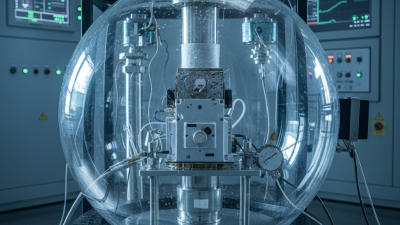
A vacuum chamber removes most gas molecules from the test space. It supports outgassing checks, insulation studies, and space-hardware screening. Thermal-vacuum chambers add controlled hot and cold cycles, making them more demanding. NASA’s General Environmental Verification Standard recommends thermal-vacuum exposure for qualifying many spacecraft assemblies. Actual limits depend on the mission, hardware, and test profile. Some plans remain too optimistic. A short chamber run may miss slow contamination or repeated thermal fatigue.
Tips: Define the target altitude, pressure, temperature, and dwell time before selecting equipment. Measure the specimen’s surface temperature, not only chamber air temperature. Use calibrated pressure gauges and independent temperature sensors. Record pump-down speed because rapid decompression can distort results. Leave margin between test limits and operating limits. Small details matter. Also, document every fixture material, since unsuitable materials can release vapors and contaminate the chamber.
What Are the Top 10 Types of Altitude Test Chambers? - Types 1–3: Hypobaric, Vacuum, and Thermal-Vacuum Chambers
| Type |
Primary Purpose |
Typical Pressure Range |
Typical Temperature Capability |
Environmental Conditions Simulated |
Common Test Applications |
Main Advantages |
Important Limitations |
Type 1
Hypobaric Chamber |
To reproduce reduced atmospheric pressure and altitude conditions while retaining a controlled gaseous atmosphere. |
Approximately 101 kPa to 20–30 kPa |
Usually near ambient; optional altitude-cold or altitude-hot conditioning |
Reduced air pressure, lower oxygen partial pressure, simulated aircraft or terrestrial altitude, and controlled decompression scenarios. |
Aerospace equipment qualification, aircraft cabin and oxygen-system testing, human factors studies, high-altitude vehicle testing, and product performance evaluation. |
Realistic for testing people and equipment together; supports controlled pressure-change rates; can use breathable air or other defined gas mixtures. |
It does not normally create a high-vacuum environment. Heat transfer remains substantially different from outer-space conditions because gas is still present. |
Type 2
Vacuum Chamber |
To remove most of the surrounding gas and evaluate equipment under low-pressure or vacuum conditions. |
From approximately 101 kPa down to 1 Pa or lower, depending on the chamber and pumping system |
Often ambient; temperature control may be added with shrouds, heaters, or cooling systems |
Low gas density, reduced convection, outgassing, pressure differential, and vacuum exposure. |
Leak testing, vacuum compatibility, outgassing assessment, electronics testing, materials research, altitude-related pressure testing, and process development. |
Provides a broad pressure range and can be configured for many test articles, fixtures, and vacuum processes. |
Pressure uniformity, thermal control, contamination, and pump-down time can affect results. A basic vacuum chamber does not automatically reproduce solar radiation or orbital thermal conditions. |
Type 3
Thermal-Vacuum Chamber |
To combine low-pressure or vacuum exposure with controlled hot and cold temperature cycles. |
Commonly from approximately 10−3 to 10−6 mbar, depending on the test standard and facility design |
Often about −70°C to +150°C; wider ranges are possible with specialized systems |
Vacuum, radiative heat transfer, extreme temperature cycling, thermal plateaus, and controlled pressure transitions. |
Spacecraft and satellite components, avionics, sensors, batteries, electronic assemblies, optical instruments, and other hardware intended for near-space or space environments. |
Combines two major space-environment stressors in one controlled test; supports thermal balance, thermal cycling, functional performance, and survivability testing. |
Testing is complex and costly. Results depend on fixture design, thermal contact, radiation shielding, contamination control, and accurate temperature measurement. |
Representative ranges are provided for comparison. Actual pressure, temperature, chamber volume, ramp rate, and test duration depend on the facility design, test article, and applicable test standard.
Types 7–8: Aerospace and Component Chambers Simulating up to 60,000 ft
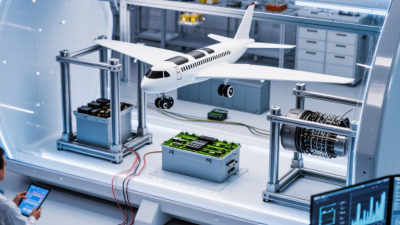
Type 7 aerospace altitude test chambers recreate thin-air conditions for aircraft assemblies, propulsion hardware, and cabin systems. They can simulate pressures corresponding to roughly 60,000 feet, depending on chamber design and test limits. Inside, engineers may combine low pressure with cold air, vibration, thermal cycling, or controlled humidity. A pressure drop should be gradual. Sudden changes can hide failure causes. During a witnessed test, technicians monitor pressure, temperature, leakage, electrical loads, and chamber-wall conditions. Small sensor drift matters. A reading error can distort an entire test record.
Type 8 component chambers are smaller and more focused. They evaluate valves, sensors, battery modules, displays, seals, and electronic assemblies before full-system testing. A component chamber may use feedthroughs to power a device and record its response under reduced pressure. For example, a connector can be inspected for arcing risk, while a seal is checked for deformation after repeated pressure cycles. Fixtures must not block heat flow or create artificial support. That detail is easy to miss. Engineers compare pre-test and post-test measurements, then document every anomaly.
Reliable work depends on calibrated instruments, traceable procedures, and independent review. Chamber altitude is not the same as actual flight. Aircraft motion, contamination, and rapidly changing loads are difficult to reproduce together. Repeated tests often expose assumptions overlooked during the first run. A well-designed protocol defines acceptance limits before testing begins. It also records pauses, adjustments, and unexpected noise. Some results remain ambiguous. They deserve investigation, not convenient interpretation.