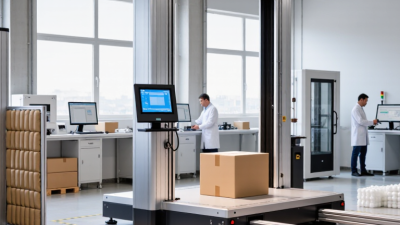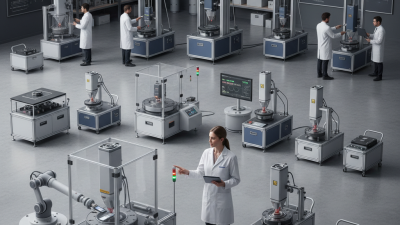
Global buyers need Drop Test Equipment because shipping conditions rarely resemble a controlled warehouse. A carton may leave a factory in Shenzhen, pass through several hubs, and arrive after repeated handling. During that journey, a 1.2-meter drop can crush a corner, loosen an internal component, or expose a hidden weakness in the packaging.
The issue is larger than visible damage. A product may look intact while its screen, seal, battery housing, or calibration has already suffered. Drop testing gives buyers measurable evidence before expensive international shipments begin. It helps engineers compare carton designs, cushioning materials, closures, and product orientations under repeatable conditions. ISTA and ASTM-based procedures can also support clearer communication between manufacturers, logistics providers, and purchasing teams.
Packaging authority Walter Soroka described packaging as “the science, art, and technology of enclosing and protecting products for distribution, storage, sale, and use.” His definition explains why Drop Test Equipment matters to global procurement. Protection is not simply a thicker box. It is a tested system.
Small details matter.
A reliable tester records drop height, impact surface, and test sequence. Engineers can then connect a dented corner with a specific failure point. However, a laboratory pass is not perfection. Real parcels face vibration, humidity, rushed handling, and unfamiliar warehouse practices. Buyers should treat drop results as evidence, not a guarantee. This article examines how professional Drop Test Equipment supports safer packaging decisions, fewer returns, and more dependable global delivery.
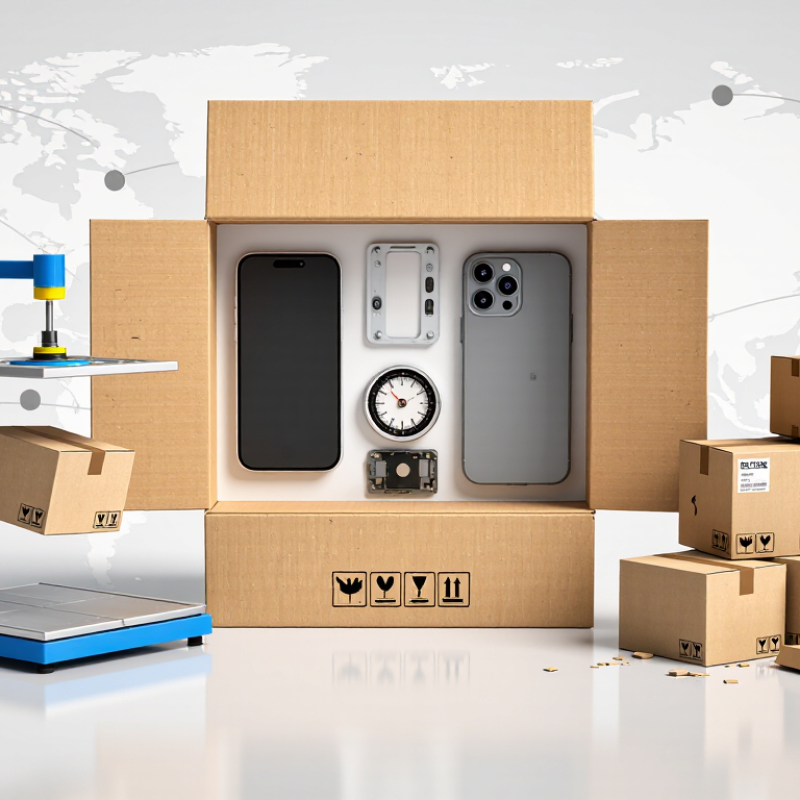
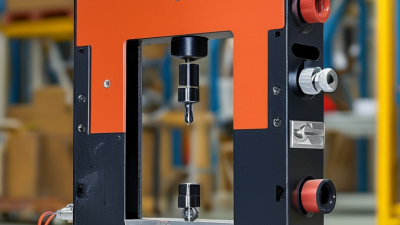
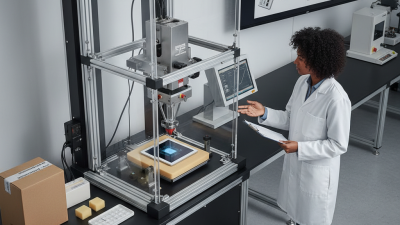
Drop test equipment is a controlled machine used to examine how products and packaging react to sudden impact. It usually includes a lifting platform, release mechanism, adjustable height controls, and a firm impact surface. A technician places a packed product on the platform, selects the required drop height, and releases it without pushing. The package may land on its base, edge, or corner. Small details matter.
The equipment helps global buyers compare packaging performance before products enter complex supply chains. A carton that survives one drop may still fail after vibration, humidity, or repeated handling. For reliable results, trained operators should follow a recognized test method, record package orientation, and inspect internal damage after each impact. Calibration is also essential. A machine can look accurate while producing inconsistent release heights. That weakness is easy to overlook.
Tips: Check the product’s weight, dimensions, and fragile points before testing. Use several samples when possible, because one carton cannot represent every shipment. Photograph crushed corners and shifted components. Do not judge success only by a clean outer surface. Internal cracks, loose parts, or damaged seals may appear later. Drop test equipment is useful, but it is not a perfect copy of real delivery conditions. The test setup itself may need review.
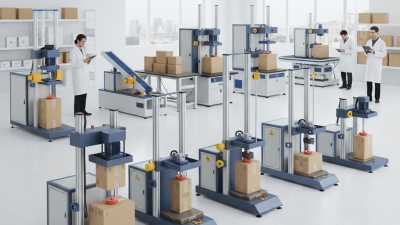
Global buyers face longer, less predictable delivery routes. A carton may move from a warehouse floor to a truck, airport, conveyor, or customer doorstep. Each transfer creates impact risks. Drop testing shows how products respond when packages fall from realistic handling heights. It can reveal crushed corners, cracked components, loose closures, or hidden internal damage before shipment.
In practical packaging evaluations, a single test rarely tells the whole story. Product weight, package orientation, cushioning, and humidity can change the result. A carton may survive one drop but fail after repeated impacts. That is why reliable buyers document test conditions, inspect internal parts, and compare results across samples. Records also support clearer discussions with suppliers and quality teams. Still, drop testing is not perfect. It cannot reproduce every warehouse habit or road condition. That limitation deserves attention.
Use production-ready packaging, not a special sample. Test several units when possible. Photograph each impact point. Check both the package and the product. Repeat tests after storage in warm or humid conditions. Small changes matter. A two-centimeter reduction in cushioning may create a costly failure. Buyers should also review handling instructions, pallet stability, and regional transport practices, because laboratory results need practical context.
Why Do Global Buyers Need Drop Test Equipment?
Key Risks Evaluated Through Drop Testing
A carton may look perfect before shipment. Inside, a glass container can still crack after a corner impact. Drop test equipment recreates these sudden events under controlled conditions. It evaluates shock, compression, vibration, and package orientation. These tests expose weak cushioning, loose components, poor sealing, and product movement. They also support repeatable decisions across factories, warehouses, and distribution routes.
The financial risk is substantial. The National Retail Federation reported approximately $743 billion in U.S. retail returns during 2023. Returns do not always result from shipping damage, but damaged packaging remains a preventable contributor. A failed drop test can reveal why a screen scratches, a cap loosens, or a protective insert collapses. ASTM D5276 and ISTA procedures provide recognized testing frameworks, yet real-world handling remains less predictable. That gap deserves attention. Laboratory results can be useful, but they are not perfect forecasts.
Tips: Test the highest-risk faces and corners first. Record drop height, package weight, temperature, and damage location. Inspect both the product and inner packaging after every sequence. Repeat the test when a design changes. Small changes matter. A heavier accessory may shift the center of gravity. A thinner carton may save material, but increase failure risk. Use photo records and failure notes to improve packaging decisions, not merely to pass a test.
Why Do Global Buyers Need Drop Test Equipment?
How to Choose Suitable Drop Test Equipment
Global parcel networks are under pressure. The 2023 Pitney Bowes Parcel Shipping Index reported 161.8 billion parcels worldwide in 2022. Each transfer adds handling risk, from conveyor drops to truck unloading. Drop testing helps buyers find weak packaging before customers discover it.
Choose equipment from the product’s real distribution conditions. Record the packed product’s weight, dimensions, center of gravity, and likely drop orientations. A small electronic device may need precise edge and corner impacts. A heavier appliance may require a stronger frame and safer lifting system. Do not select equipment by maximum drop height alone.
Standards matter. ASTM D5276 evaluates free-fall drops for shipping containers, while ISO 2248 addresses vertical impact testing. ISTA procedures can provide additional distribution simulations. The tester should support the required height, payload, impact surface, and repeatability. Check calibration records and emergency protections. Data logging is valuable for comparing damage across test cycles.
A common mistake is copying a competitor’s test settings. Packaging materials, routes, and product fragility differ. No laboratory test perfectly reproduces a warehouse floor. Review field failures, then adjust the test plan. Sometimes the “correct” equipment exposes an uncomfortable truth: the package design needs improvement, not only stronger testing.
A practical selection guide for evaluating packaging and product-impact testing requirements
| Evaluation Dimension | Why It Matters to Global Buyers | Recommended Equipment or Feature | Practical Reference Data | Selection Guidance |
|---|---|---|---|---|
| Primary test objective | International transportation exposes products to repeated handling, accidental drops, vibration, and changes in logistics conditions. | A free-fall drop tester with adjustable height and a rigid, level impact surface. | Common laboratory drop heights are approximately 300–1,800 mm, depending on the test method, package mass, and product category. | Select a machine that covers the highest required test height without sacrificing positioning accuracy or operator safety. |
| Applicable test standards | Recognized standards make test results easier to compare across suppliers, laboratories, and importing markets. | Equipment compatible with procedures such as ASTM D5276, ISO 2248, ISTA package-testing protocols, and IEC 60068-2-31 where applicable. | ASTM D5276 and ISO 2248 address free-fall impacts for packaged products; the exact sequence and drop height depend on the selected procedure. | Confirm the latest edition of the required standard before purchasing and verify that the controller can record the specified sequence. |
| Maximum test load | Packages differ greatly in mass, from small consumer items to heavy industrial components. | A load-rated lifting and release system with a suitable platform size and safety factor. | Typical commercial laboratory units may support approximately 60–100 kg, while heavy-duty systems can be designed for higher loads. | Choose capacity based on the heaviest complete package, including cushioning, accessories, and test fixtures—not only the product weight. |
| Package dimensions | Oversized cartons require adequate clearance to fall freely without contacting the frame or release mechanism. | A large release area, adjustable support arms, and a test surface that accommodates the package footprint. | Common platform or impact-area dimensions range from about 600 × 600 mm to 1,200 × 1,200 mm, depending on machine design. | Measure the largest package length, width, and height, then allow clearance for corner, edge, and face drops. |
| Drop orientation | Damage may occur at a corner, edge, or face; a single orientation cannot represent every handling event. | A release mechanism that supports controlled face, edge, and corner drops. | Many packaging procedures specify multiple orientations, often including the most vulnerable corner, selected edges, and broad faces. | Prioritize repeatable orientation control and easy repositioning when the test protocol requires a sequence of impacts. |
| Height accuracy and repeatability | Inconsistent release height can produce misleading pass or fail results and reduce confidence in supplier comparisons. | Motorized height adjustment, digital height display, calibrated sensors, and a quick-release mechanism. | A practical laboratory target is repeatability within approximately ±1% of the set height, subject to the applicable method and equipment specification. | Request calibration records and verify how height is measured: package bottom, center of gravity, or another method defined by the test procedure. |
| Impact surface | The surface must transfer impact consistently and remain stable during repeated testing. | A rigid steel impact plate installed on a stable base, with adequate thickness and levelness. | Impact plates are commonly manufactured from steel and may be approximately 10–20 mm thick, depending on the system design. | Check plate flatness, rigidity, anchoring, and whether the surface meets the selected standard or internal procedure. |
| Product sensitivity | Electronic devices, glass products, medical equipment, and precision parts may require stricter damage evaluation than robust goods. | A controlled tester with low release shock, stable alignment, and optional data-acquisition capability. | Accelerometers, high-speed cameras, and shock-data recorders can be added when impact acceleration or product response must be analyzed. | Use instrumented testing only when the customer specification or engineering objective requires measured shock data. |
| Testing frequency | High-volume quality control requires faster setup, shorter reset time, and dependable operation. | Motorized lifting, programmable test sequences, automatic reset, and durable release components. | Manual systems may be suitable for occasional validation; automated systems are more efficient for repeated production or laboratory testing. | Estimate tests per shift, operator time, and expected maintenance before selecting manual or automated operation. |
| Safety requirements | Falling packages and moving lifting mechanisms create risks for operators and nearby equipment. | Safety enclosure, interlocked doors, emergency stop, anti-drop protection, and guarded moving parts. | A complete safety system should prevent operation when the enclosure is open and stop motion during an emergency. | Review local workplace-safety requirements, risk assessments, electrical protection, and operator-access controls. |
| Environmental conditions | Laboratories and factories may operate in different temperature, humidity, dust, and floor-space conditions. | Corrosion-resistant construction, stable leveling feet, suitable electrical configuration, and a compact footprint when needed. | Many indoor laboratory systems are designed for ordinary ambient conditions, commonly around 5–35°C, unless otherwise specified. | Confirm installation temperature, humidity, floor loading, power supply, shipping route, and available maintenance space. |
| Data recording and traceability | Importers and suppliers often need documented evidence for quality audits, claims, and product improvement. | Digital test records, barcode or sample identification, date and operator fields, and exportable reports. | Basic drop testing records height, orientation, sequence, package condition, and post-test inspection results. | Choose software that exports commonly used formats and preserves calibration and test-history information. |
| Calibration and maintenance | Regular verification helps ensure that results remain reliable across different production sites and inspection periods. | Accessible height sensors, replaceable wear parts, calibration points, technical documentation, and service support. | Calibration intervals are normally determined by use, risk, internal quality procedures, and the applicable standard; annual verification is commonly adopted by laboratories. | Ask for calibration procedures, spare-parts availability, service response time, and the expected operating life of critical components. |
Note: The numerical ranges above are typical engineering references for equipment selection, not universal pass/fail requirements. The final test height, sequence, package mass, orientation, and acceptance criteria should always follow the applicable standard, customer specification, or validated internal procedure.
Global buyers face different transport routes, handling systems, climates, and regulatory expectations. A package may survive a warehouse move but fail after repeated drops during international delivery. Drop test equipment helps recreate these risks under controlled conditions. Teams can measure impact height, package orientation, product damage, and cushioning performance before shipment.
Reliable testing supports compliance with recognized packaging and transport protocols, including requirements used across different markets. It also creates traceable evidence for purchasing teams, auditors, and logistics partners. Testing should include realistic packaging conditions, such as filled cartons, internal movement, cold storage, and uneven handling. A clean laboratory result is useful, but real shipments are rarely clean.
One uncomfortable truth: a package can pass one drop test and still fail in the field. Test plans need regular review. Product weight, carton design, and delivery routes may change quietly. Experienced engineers compare test data with customer complaints and transit damage reports. That practical feedback often reveals weak corners, loose inserts, or excessive empty space.
Tips: Test every major packaging change. Record each impact. Inspect both product and carton. Avoid testing only the ideal shipment condition.