Leave Your Message

Why Use a Battery Test Chamber for Safety Testing?

Why Use a Battery Test Chamber for Safety Testing? The answer begins with controlled evidence, not assumptions. A Battery Test Chamber recreates harsh conditions inside a monitored enclosure. It can apply heat, cold, humidity, vibration, and controlled electrical stress. These conditions reveal weak cells, poor seals, thermal runaway risks, and unstable battery behavior.

Temperature changes can be very physical. A pouch cell may swell against its fixture. Frost may form around a connector. A damaged module may release gas before visible smoke appears. Sensors record these changes while cameras document the event. Engineers can then compare results across battery designs, charging profiles, and production batches. Dr. Michael Pecht, a respected battery reliability expert, often states, “There are no safe batteries, only safer batteries.” That principle explains the chamber’s value. Safety claims need repeatable testing.

A Battery Test Chamber also protects nearby personnel and equipment during controlled failure tests. Its ventilation, fire suppression, pressure relief, and remote monitoring systems help manage hazards. However, the chamber is not magic. Poor calibration can distort results. Incomplete test plans can miss dangerous interactions. Human judgment still matters. I would not treat one successful cycle as proof of safety. That conclusion feels convenient, but it is weak.

Reliable testing combines chamber data, battery chemistry knowledge, documented procedures, and experienced review. Engineers should inspect damaged cells after testing, not only study graphs. They should question unexpected results, even when performance looks acceptable. Used carefully, a Battery Test Chamber turns uncertain battery behavior into measurable evidence. That evidence supports safer design decisions, stronger quality control, and more responsible product development.
Why Use a Battery Test Chamber for Safety Testing?

What Is a Battery Test Chamber?

Why Use a Battery Test Chamber for Safety Testing?

What Is a Battery Test Chamber?

A battery test chamber is a controlled enclosure for evaluating cells, modules, and battery packs under demanding conditions. It regulates temperature, humidity, airflow, and sometimes pressure. This control helps engineers repeat the same test instead of relying on changing laboratory conditions.

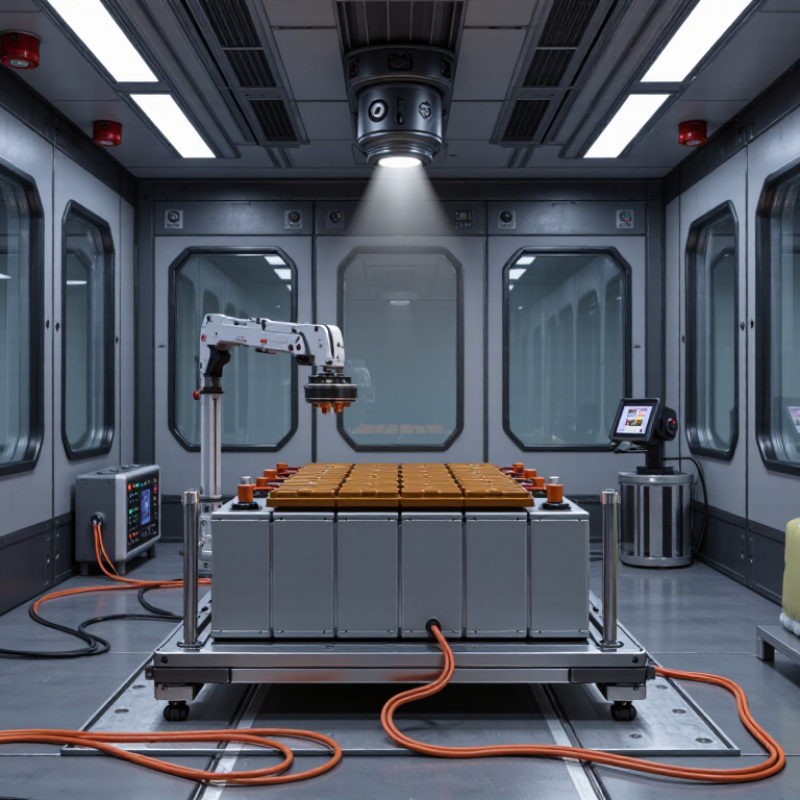
Inside the chamber, heaters and cooling systems create programmed temperature cycles. Sensors measure voltage, current, surface temperature, and internal pressure. A technician may watch a live data screen while a small test unit sits behind a protective barrier. Some chambers also include ventilation, fire detection, gas monitoring, and automatic shutdown functions. These features help contain hazards during abnormal events.

The chamber does not replace engineering judgment. A poorly positioned sensor can miss a hot spot. An incorrect cable connection can distort results. Even careful testing has blind spots. Trained technicians therefore check calibration records, inspect wiring, and document every test condition. They also compare chamber data with physical evidence, such as swelling, leakage, discoloration, or damaged terminals. Recognized safety procedures should guide the work, but practical experience still matters when the test behaves unexpectedly. A battery test chamber is valuable because it makes those observations safer, more controlled, and easier to verify.

How Battery Test Chambers Simulate Real-World Conditions

A battery test chamber recreates the unstable conditions batteries meet outside the laboratory. It can shift temperature rapidly, control humidity, and maintain precise exposure times. Engineers may begin at -20°C, then raise the chamber above 45°C while monitoring voltage, pressure, and surface temperature. Small details matter. A cold battery can deliver less power, while a hot cell may age faster.

The International Energy Agency reported that global electric-car battery demand exceeded 750 GWh in 2023, increasing by about 40% from 2022. That growth makes realistic validation more important. A chamber can repeat thermal cycles hundreds of times, helping engineers identify swelling, capacity loss, insulation failure, or unexpected heating. According to the United Nations Manual of Tests and Criteria, lithium batteries face eight transport-safety tests, including altitude simulation, thermal cycling, vibration, shock, external short circuit, and overcharge. Chambers support several of these conditions under controlled procedures.

Real roads add complexity. Vibration rigs, electrical loads, and humidity systems may need to operate with the chamber. Testing temperature alone is not enough. I have seen carefully controlled programs still miss brief heating events between cycles. That gap matters. Better protocols combine logged sensor data with realistic duty cycles, rather than relying on one severe exposure. Engineers should also question whether the selected profile reflects the battery’s actual climate, charging pattern, and storage duration.

Why Use a Battery Test Chamber for Safety Testing? - How Battery Test Chambers Simulate Real-World Conditions

Representative environmental and abuse-test conditions used to evaluate battery safety, reliability, and thermal behavior.

Real-World Condition Chamber or Test Control Representative Test Parameters Primary Safety Risk Evaluated Key Measurements Typical Acceptance Indicators
High-temperature exposure Programmable temperature chamber with uniform air circulation 55°C to 85°C exposure; controlled ramp rate; duration commonly 6 to 24 hours depending on the test plan Thermal instability, electrolyte degradation, seal failure, and accelerated aging Cell temperature, surface deformation, voltage, current, pressure, and visible leakage No venting, leakage, fire, or rupture
Low-temperature operation Temperature chamber with stabilized cold soak −20°C to −40°C soak; discharge or charge performed only within the product’s specified temperature limits Reduced power capability, lithium plating during charging, brittle materials, and loss of protection performance Available capacity, internal resistance, voltage response, charge acceptance, and physical condition No abnormal heating or permanent damage
Rapid temperature cycling Temperature cycling chamber with programmable transitions Alternating exposure between approximately −40°C and +85°C; multiple cycles with controlled dwell periods Thermal expansion stress, condensation effects, seal fatigue, and electrical connection failure Insulation resistance, voltage, capacity, enclosure integrity, and post-test functionality Stable electrical performance and intact enclosure
High-altitude simulation Low-pressure altitude chamber Pressure near 11.6 kPa, equivalent to approximately 15,000 m altitude, for a controlled hold period Internal pressure imbalance, electrolyte vaporization, swelling, and weakened insulation Case deformation, leakage, voltage, temperature, and pressure-related damage No leakage, rupture, fire, or hazardous venting
High-humidity environment Temperature-and-humidity chamber Up to 95% relative humidity at controlled temperatures; exposure duration defined by the application or standard Condensation, corrosion, insulation degradation, and moisture-related short circuits Insulation resistance, corrosion, leakage current, capacity, and operational status No unsafe electrical leakage or corrosion-related failure
External short circuit Short-circuit test fixture with temperature-controlled environment Low-resistance external connection; test temperature may be controlled near 55°C for specified procedures Rapid current rise, conductor overheating, venting, fire, and thermal propagation Peak current, surface temperature, voltage decay, venting, flame, and cell deformation No explosion; hazardous outcomes must remain within the applicable test limits
Overcharge and abnormal charging Safety test chamber combined with programmable battery cycler Controlled current and voltage above the normal charging profile; exact limits depend on cell chemistry and design Gas generation, internal short circuit, thermal runaway, and protection-system failure Voltage, current, temperature rise, pressure, venting, smoke, and flame Protection system limits the hazard without fire or explosion
Vibration during transport or use Electrodynamic shaker with environmental chamber control when required Sinusoidal or random vibration across application-specific frequency ranges; test duration based on the transportation profile Loose connections, weld fatigue, internal separator damage, and intermittent electrical faults Voltage interruptions, resistance change, connector condition, leakage, and post-test capacity No hazardous leakage, rupture, or loss of required function
Mechanical shock and impact Controlled impact or shock fixture with monitored temperature and electrical data Specified acceleration pulses or mechanical impact energy; severity depends on cell format and application Internal short circuits, casing damage, separator failure, and delayed thermal events Temperature rise, voltage change, deformation, leakage, smoke, and delayed reaction No immediate or delayed hazardous event during observation
Thermal propagation assessment Ventilated fire-rated chamber with independent temperature and gas monitoring Initiation of a controlled thermal event in one cell or module while neighboring units are monitored Heat transfer, cascading cell failure, fire spread, and pressure release Cell temperatures, heat flux, gas concentration, pressure, flame duration, and propagation time Propagation remains within the defined design and safety limits
Note: The values shown are representative engineering conditions rather than a substitute for a product-specific compliance procedure. Exact temperatures, pressures, currents, durations, fixture designs, and pass/fail criteria should be selected according to the battery chemistry, cell format, intended application, and applicable safety standard.

Which Safety Risks Can Battery Test Chambers Reveal?

Why Use a Battery Test Chamber for Safety Testing?

Battery test chambers reveal hazards that ordinary charging tests may miss. They expose cells and packs to controlled heat, cold, humidity, vibration, crush forces, and electrical abuse. Engineers can observe thermal runaway, internal short circuits, gas venting, swelling, electrolyte leakage, and fire propagation. Infrared cameras track hot spots, while pressure and gas sensors identify dangerous changes before visible flames appear. Small cracks matter. They can become major failures later.

The International Energy Agency reported in its Global EV Outlook 2024 that electric vehicle battery demand exceeded 750 GWh in 2023, rising by about 40 percent in one year. Higher production makes repeatable safety testing more important. A chamber can compare failure temperatures, measure heat release, and show whether neighboring cells ignite. It can also reveal weak battery management responses during overcharge or sudden temperature changes.

A clean test result can still mislead. Real roads create uneven impacts, contamination, aging, and unpredictable charging behavior. Test engineers should combine chamber data with field evidence and post-test inspection. That approach may feel slower, but it exposes hidden assumptions. No chamber predicts every failure. The most useful programs repeat tests, challenge the limits, and document even confusing results.

How Battery Test Chambers Protect Operators and Facilities

Why Use a Battery Test Chamber for Safety Testing?

How Battery Test Chambers Protect Operators and Facilities

A battery test chamber creates a controlled space for charging, discharging, and abuse testing. It separates the test article from nearby personnel and equipment. In practical laboratory work, this separation reduces exposure to heat, smoke, sparks, and flying fragments. The chamber’s insulated walls also limit heat transfer to surrounding rooms. That protection matters when a cell behaves differently than expected.

Reliable chambers combine temperature sensors, pressure monitoring, door interlocks, and emergency shutdown controls. Some systems also provide controlled exhaust and fire-response equipment suited to the test plan. These features can react faster than an operator standing several meters away. A locked door should prevent access during hazardous conditions. Remote monitoring adds another layer of distance.

Small details matter. A misplaced sensor may delay a warning. A blocked exhaust path may increase pressure. It is easy to trust automation too much. Operators still need documented procedures, suitable protective equipment, and regular inspection. Testing should match the battery design, energy level, and expected failure modes. Qualified engineers can verify whether the chamber’s containment, ventilation, and electrical controls fit the intended work.

No chamber removes every hazard. That limitation deserves honest attention. Facilities should review room layout, emergency access, drainage, alarms, and maintenance records. Clear training also protects people who do not operate the equipment daily. When engineering controls, human checks, and measured test plans work together, the chamber supports safer decisions without pretending risk has disappeared.

Why Use a Battery Test Chamber for Safety Testing?

Battery test chambers isolate cells and packs from operators and facilities while controlling temperature, monitoring abnormal events, and supporting safe exhaust and fire-response systems.

Representative thermal profile: The UN 38.3 T.2 thermal test uses a low-temperature exposure of −40°C and a high-temperature exposure of +72°C, with each extreme maintained for six hours. Actual test conditions depend on the applicable safety standard, battery design, and test plan.

Why Controlled Testing Improves Battery Safety and Reliability

Why Use a Battery Test Chamber for Safety Testing?

Why Controlled Testing Improves Battery Safety and Reliability

A battery test chamber creates a controlled setting for evaluating performance under heat, cold, humidity, and rapid temperature changes. Technicians can monitor voltage, current, pressure, and surface temperature with calibrated sensors. These details reveal early warning signs that ordinary laboratory testing may miss. A slight temperature rise can indicate internal resistance, poor cooling, or cell imbalance.

Controlled testing also improves reliability because every battery faces the same conditions. Engineers can repeat charge, discharge, vibration, and over-temperature tests using documented procedures. This makes results easier to compare across development stages. It also supports evidence-based decisions about materials, thermal controls, and protective systems. Small differences matter.

A chamber does not predict every real-world event. Field conditions are messier. Still, controlled results provide a dependable technical reference before wider use. Experienced teams inspect test data, review unexpected behavior, and adjust the test plan when needed. That process is not always perfect. A sensor may drift, or a fixture may affect airflow. Regular calibration, independent checks, and careful recordkeeping reduce these weaknesses. During a test, a battery may swell visibly, trigger an alarm, or show a sharp voltage drop. Those observations help engineers investigate failure causes instead of relying on assumptions.