2026 Top Battery Test Chamber Manufacturers?
The 2026 search for the top Battery Test Chamber manufacturers begins with one practical question: can their equipment reproduce real battery stress safely and consistently?
Demand is rising with electric vehicles, energy storage, and advanced portable electronics. The International Energy Agency reported that global electric car sales exceeded 17 million units in 2024. BloombergNEF also recorded continued battery-pack price reductions during the same period. More batteries mean more validation work.
Yet market growth does not automatically identify the best supplier.
A chamber may show excellent temperature control on paper. Its real value appears during repeated cycling, high-humidity exposure, vibration integration, or thermal-runaway testing. Buyers should inspect uniformity data, ramp rates, calibration records, safety interlocks, pressure relief systems, and after-sales response. Small details matter. A blocked exhaust path can change a test result.
Battery safety specialist Brian Barnett is widely associated with the warning, “There is no such thing as a safe battery, only safer batteries.” That principle explains why chamber selection requires engineering judgment, not only a manufacturer ranking.
Reports from MarketsandMarkets, Grand View Research, and the IEA provide useful market context. However, their forecasts use different definitions and sampling methods. Comparisons can therefore look more precise than they really are.
This guide evaluates leading 2026 manufacturers through chamber performance, customization, compliance support, service coverage, and application experience. It also considers weaknesses, because no supplier is perfect. A strong brand may still offer limited regional support or costly upgrades. Careful buyers should verify every claim against site conditions and test objectives.
Battery Test Chambers: Purpose, Types, and Core Performance Requirements
Battery Test Chambers: Purpose, Types, and Core Performance Requirements
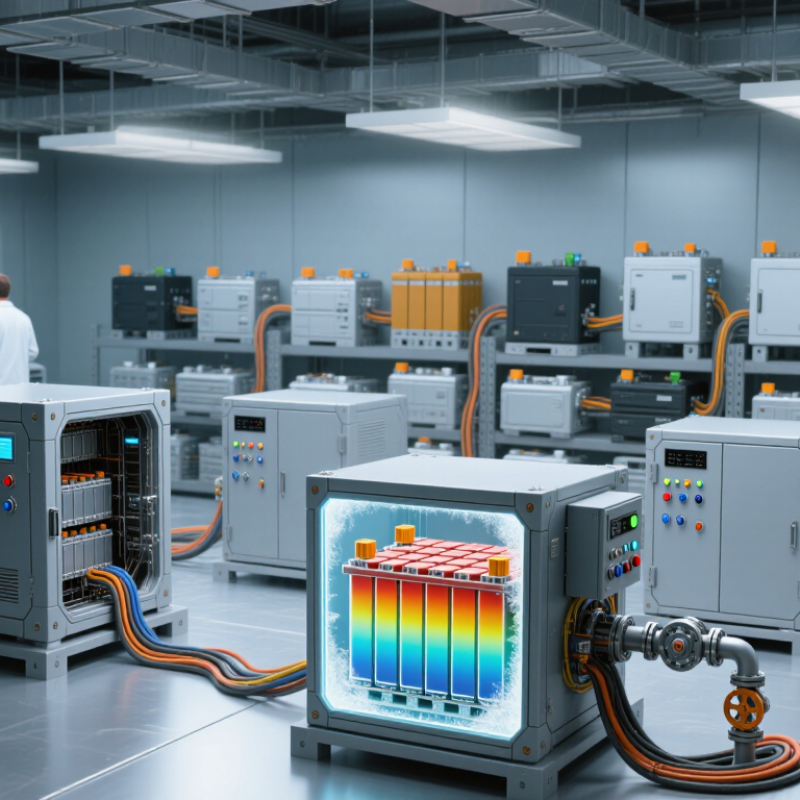
Battery test chambers recreate demanding conditions before cells, modules, and packs enter real vehicles or energy systems. The IEA’s Global EV Outlook 2024 reported that electric-vehicle battery demand exceeded 750 GWh in 2023, rising about 40% from 2022. That scale makes repeatable testing essential, not optional. Engineers use chambers to measure capacity, aging, thermal response, charging behavior, and safety under controlled temperatures and humidity.
Common systems include temperature chambers, humidity chambers, thermal-shock chambers, altitude chambers, and larger walk-in units. Some laboratories combine temperature cycling with electrical charge and discharge equipment. A chamber may hold a stable 25°C, then move rapidly toward extreme cold or heat. The details matter. Temperature uniformity, recovery time, humidity accuracy, airflow, and ramp rate directly influence test credibility. ISO 12405 and IEC 62660 provide widely used guidance for traction-battery testing.
Core performance requirements extend beyond the climate range. Reliable systems need calibrated sensors, continuous data logging, independent over-temperature protection, door interlocks, gas detection, and controlled exhaust. Pressure-relief design is also important during abnormal battery events. The IEA’s Global EV Outlook 2025 noted continued growth in battery manufacturing and deployment, increasing pressure for safer, higher-throughput validation.
Yet faster testing is not always better. Aggressive ramp rates can create artificial stress. This is where my practical concern remains: a chamber can meet its specification, while the test method still produces misleading results. Engineers should verify sensor placement, fixture heat loads, and repeatability with real battery hardware.
Key Technologies Shaping Battery Test Chambers in 2026
2026 Top Battery Test Chamber Manufacturers?
Key Technologies Shaping Battery Test Chambers in 2026
Battery test chambers are moving beyond simple temperature control. The IEA’s Global EV Outlook 2025 reports that electric-vehicle battery demand reached approximately 1 TWh in 2024. This scale is pushing laboratories toward faster, safer, and more repeatable testing equipment.
Thermal control is becoming more dynamic. Modern chambers can change temperature rapidly while maintaining tight uniformity around large battery modules. Liquid cooling loops, low-temperature operation, and regenerative refrigeration also reduce energy waste. The U.S. Department of Energy highlights thermal management as a major factor in battery performance, safety, and durability. That matters during rapid charging tests.
Safety systems are becoming smarter. Hydrogen, carbon monoxide, smoke, pressure, and electrolyte vapour sensors can trigger staged shutdowns before a failure escalates. Fire-resistant interiors and pressure-relief designs support abuse testing under controlled conditions. Live data logging now connects chamber readings with voltage, current, and cell temperature measurements. Useful, but not flawless.
In practical commissioning work, sensor placement often affects results more than advertised accuracy. A poorly positioned probe can miss a local hot spot. Chamber software may also produce impressive charts while hiding calibration drift. Manufacturers with strong traceability, independent validation, and responsive service deserve closer evaluation. The IEA also notes continuing pressure to improve battery durability and resource efficiency, so future chambers must test longer cycles without consuming excessive power.
How to Evaluate Top Battery Test Chamber Manufacturers
Evaluating top battery test chamber manufacturers in 2026 requires more than comparing catalog prices. A reliable supplier should explain temperature uniformity, humidity control, ramp rates, and safety interlocks with measured data. Ask for calibration records linked to recognized laboratory practices. Ask for evidence. A sample test report should show sensor locations, tolerances, recovery time, and alarm performance. Vague claims deserve careful questions.
Practical experience matters when chambers operate continuously beside charging equipment. Inspect door seals, cable ports, condensate handling, and emergency shutdown access before reviewing cosmetic design. Ask whether the manufacturer has supported similar cell formats and cycling loads. A factory visit can reveal assembly discipline, wiring quality, and maintenance access. Still, one visit proves little. Speak with users who have operated the equipment for at least one year. Their comments may expose unstable humidity, slow service, or difficult spare-part sourcing.
Technical authority should include documented risk analysis, validated control software, and clear compliance evidence for your region. Check how faults are logged and whether data exports remain readable during audits. Service capability deserves equal weight. Confirm response times, remote support limits, training, and planned replacement parts. I would also compare energy consumption under actual operating profiles, not empty-chamber brochures. Look beyond appearance. No evaluation is perfect; test conditions change, and supplier promises can age quickly. Record assumptions, challenge optimistic figures, and leave room for independent verification before approving a purchase.
2026 Top Battery Test Chamber Manufacturers: Evaluation Framework
This chart presents a transparent, standards-oriented weighting model for comparing battery test chamber suppliers. Safety and fault protection receive the highest weighting because battery testing can involve thermal runaway, overtemperature, overcurrent, and gas-related risks. Temperature and humidity performance, control and data capability, compliance documentation, and lifecycle support are also essential evaluation dimensions. The percentages are assessment weights, not company-specific performance results.
Comparison of Leading Manufacturers by Capabilities and Applications
Selecting a battery test chamber in 2026 requires more than comparing temperature ranges. Leading manufacturers differ in thermal uniformity, humidity control, ramp speed, and chamber volume. These details affect test repeatability. A chamber holding ±1°C may suit cell screening, while tighter control supports module validation and abuse-related research. Some manufacturers offer compact units for laboratory use. Others build walk-in systems for production-scale testing.
Application fit separates strong suppliers from average ones. Electric vehicle developers often need rapid cycling, precise data logging, and safety interlocks for large-format cells. Aerospace teams may prioritize low-pressure simulation, vibration integration, and stable operation during long campaigns. Portable chambers can help service engineers investigate field returns. However, portability can reduce capacity and thermal recovery speed. That trade-off is easy to overlook. In practical evaluations, I would inspect sensor placement, calibration records, alarm response, and after-sales training. A polished specification sheet cannot replace a witnessed acceptance test. No chamber is perfect.
Manufacturers with configurable software, remote monitoring, and replaceable components usually support longer laboratory life.
Still, customization may increase delivery time and maintenance complexity. Buyers should compare energy consumption, exhaust design, fire detection, and access to trained technicians. Independent test data and clear warranty terms also matter. My own preference would be a balanced system, not the fastest or largest model. Needs change. A careful trial run often reveals weaknesses that brochures hide.
Safety Standards, Certification, and Future Market Trends
In 2026, battery test chamber selection depends on verified safety practices, not catalog claims. A reliable chamber should support controlled temperature, humidity, pressure, and ventilation. It must also manage abnormal events, including cell swelling, venting, and thermal runaway. IEC 60068 environmental methods help define test conditions. Battery standards such as IEC 62133, UL 2580, and UN 38.3 may also apply.
Certification evidence needs careful review. Ask for calibration records, electrical safety reports, alarm testing, and documented factory acceptance tests. An ISO/IEC 17025 laboratory can strengthen measurement reliability, especially for temperature uniformity and recovery time. Local fire codes still matter. Requirements vary by region. That detail is easy to miss.
Future demand will favor chambers with remote monitoring, independent safety circuits, and lower energy consumption. Stronger systems may combine gas detection, high-speed data logging, and automatic emergency cooling. Modular designs could help manufacturers expand testing capacity without rebuilding entire laboratories. Recyclable insulation and low-impact refrigerants will receive more attention. No chamber is perfect. Even advanced software can produce misleading results when sensors drift or samples are positioned poorly. Experienced engineers should inspect airflow patterns, maintenance access, and failure-response procedures before purchase. A polished certificate cannot replace practical testing discipline.