Leave Your Message

How to Choose an Altitude Simulation Chamber?

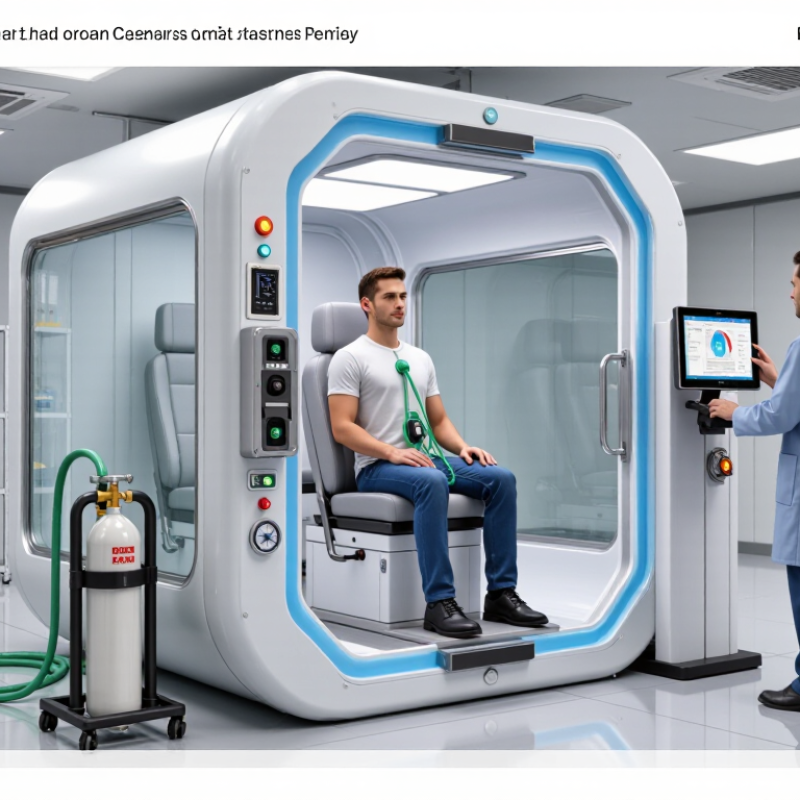
Choosing an Altitude Simulation Chamber requires more than comparing chamber size and purchase price. The right system must match your intended use, whether clinical assessment, athlete preparation, aerospace research, or controlled hypoxia studies. Each application creates different demands for oxygen regulation, airflow, humidity control, monitoring, and user capacity.

Dr. Randy Wilber, a respected altitude-training physiologist, has warned that “altitude training is not a magic bullet.” That caution should guide every purchasing decision. A chamber may produce a convincing low-oxygen environment, yet poor calibration can weaken the results. Ask how accurately the system controls oxygen concentration, how quickly it reaches the target altitude, and whether independent sensors verify the readings. Small errors matter.

Look closely at practical details. Can staff observe the occupant clearly? Does the system include emergency oxygen, alarms, pressure-release features, and documented maintenance procedures? Check the chamber’s internal dimensions, noise level, cleaning surfaces, access points, and compatibility with masks or exercise equipment. Request test reports, calibration records, warranty terms, and service-response times. Do not accept vague promises.

The cheapest option may become expensive after installation. Maybe.

A reliable Altitude Simulation Chamber should support repeatable conditions, safe operation, and credible data. Confirm that the supplier has experienced engineers and documented quality procedures. Review applicable local standards with qualified professionals before purchase. A useful selection process also includes a trial demonstration, because brochures rarely reveal vibration, condensation, or operator inconvenience. Choose the system you can monitor, maintain, and trust—not merely the one with the most impressive altitude rating.

How to Choose an Altitude Simulation Chamber?

Define the Purpose and Operating Requirements of the Chamber

Choosing an altitude simulation chamber starts with a clear purpose, not a preferred chamber size. Define the test article, test altitude, pressure range, temperature, humidity, and exposure time. A medical device may need stable low pressure for hours. An aerospace component may require rapid altitude changes and repeated cycles. These demands are not interchangeable.

Describe the operating profile in measurable terms. State the minimum and maximum pressure, ramp rate, temperature transition, and dwell period. Include the payload’s dimensions, mass, heat output, cable connections, and fixture materials. A chamber that fits the product may still lack enough internal volume for safe airflow. It may also struggle to remove heat during powered testing. Small details matter.

Safety and measurement requirements deserve equal attention. Specify pressure sensors, temperature probes, data recording intervals, alarm limits, and emergency venting. Ask whether the system can maintain stable conditions while the product operates. In practice, unstable pressure can distort results before anyone notices. A neat specification can still be wrong. Recheck the assumptions with real fixtures and a representative load. Consider maintenance access, calibration intervals, operator training, and the expected test frequency. If the chamber will support regulated work, align its records and control functions with recognized testing procedures. That choice improves traceability, although it may increase cost and setup time.

How to Choose an Altitude Simulation Chamber? - Define the Purpose and Operating Requirements of the Chamber

Decision Dimension Typical Requirement Recommended Chamber Capability Selection Considerations
Primary Test Purpose Product performance, environmental qualification, storage, transportation, or human-factor research A chamber configuration matched to the required pressure, temperature, humidity, and test duration Define the test objective before selecting chamber size or maximum altitude. A performance test may require operating power and data feedthroughs, while a storage test may require only environmental exposure.
Equivalent Altitude Sea level to approximately 30,000–70,000 ft equivalent altitude Pressure control from approximately 101.3 kPa down to about 5–20 kPa absolute, depending on the application Choose the lowest required absolute pressure with operating margin. Lower pressure may require stronger chamber construction, improved sealing, and more powerful vacuum equipment.
Pressure Accuracy and Stability Stable pressure during exposure and controlled ascent or descent Typical control stability of approximately ±0.5–1.0 kPa, with programmable ramp rates Verify the pressure-control response under the actual product load. Rapid pressure changes can affect seals, batteries, fluids, and enclosed components.
Temperature Range Cold-soak, hot-operating, or combined altitude and temperature testing Common range: approximately −70°C to +150°C; wider ranges may be available for specialized testing Confirm whether the chamber can reach the target temperature at the selected low pressure. Reduced air density can decrease convective heat transfer.
Humidity Control Dry-air exposure, moisture conditioning, or combined altitude and humidity testing Humidity control where technically feasible, commonly from approximately 10% to 95% relative humidity at moderate temperatures At low pressure and low temperature, humidity control becomes more difficult. Confirm the usable humidity envelope rather than relying only on the nominal range.
Test Article Size and Mass Small electronic assemblies, instruments, vehicle components, or large equipment Internal working volume selected with at least 20–30% clearance around the test article Include fixtures, cable routing, airflow space, service access, and thermal expansion. The internal working volume is more important than the external footprint.
Test Article Operation Powered operation, functional monitoring, charging, or inactive exposure Electrical, signal, fluid, and communication feedthroughs rated for the required voltage, current, frequency, and pressure differential List every connection before purchase. Additional feedthroughs are easier to specify initially than to retrofit later.
Heating and Cooling Load Heat generated by motors, electronics, batteries, lamps, or other active components Cooling and heating capacity calculated for both atmospheric pressure and the lowest test pressure Provide the maximum heat dissipation, surface area, mass, and operating duty cycle. Chamber performance can change significantly when convection is reduced.
Pressure Change Rate Controlled ascent and descent for transport simulation or qualification testing Programmable pressure ramps, commonly adjustable from slow conditioning rates to several kPa per minute Use the ramp profile required by the test procedure. The chamber should prevent overshoot and allow repeatable cycle programming.
Exposure Duration Short functional checks, 24-hour exposure, or multi-day endurance testing Continuous operation for the planned test duration plus a reasonable engineering margin Evaluate vacuum-pump duty cycle, refrigeration load, condensate management, data storage, and alarm behavior during extended operation.
Instrumentation and Data Pressure, temperature, humidity, voltage, current, vibration, or product-specific measurements Calibrated sensors, independent monitoring channels, alarms, and time-stamped data recording Separate chamber-control sensors from critical test measurements where possible. Confirm calibration intervals and data export formats.
Safety Requirements Protection against implosion, over-temperature, electrical faults, oxygen deficiency, and hazardous test articles Pressure-rated vessel, door interlock, emergency venting, over-temperature protection, vacuum isolation, and suitable fire or gas safeguards Conduct a documented risk assessment for the chamber, vacuum system, test article, batteries, flammable materials, and compressed gases.
Applicable Test Method Internal engineering procedure, customer specification, or an environmental test standard A documented operating envelope that meets the selected procedure and its required tolerances Identify the exact revision of the applicable method. Requirements can differ for altitude storage, operation, decompression, and combined environmental tests.
Calibration and Validation Repeatable results and traceable measurements Calibration certificates, uniformity mapping, pressure-leak testing, and periodic performance verification Request acceptance criteria for pressure accuracy, temperature uniformity, recovery time, and leak rate before commissioning.
Installation Conditions Laboratory, production floor, mobile laboratory, or outdoor test facility Utilities sized for electrical power, cooling water or condenser heat rejection, ventilation, vacuum exhaust, and floor loading Check door clearance, transport route, foundation strength, ambient temperature, noise limits, and required service access.
Control and Automation Manual operation, recipe-based testing, remote monitoring, or automated pass/fail sequences Programmable controller with recipe storage, event logging, alarm history, remote access, and data export Select automation based on test repeatability and operator workload. Ensure that safety functions remain independent of remote controls.
Future Expansion Additional test articles, lower pressure, more sensors, or combined environmental testing Modular feedthrough plates, spare control channels, expandable data acquisition, and sufficient cooling or vacuum capacity Allow practical capacity for future needs, but avoid paying for extreme specifications that are not supported by the test plan.
Selection Rule: Define the required pressure profile, temperature and humidity envelope, test article dimensions, operating load, exposure duration, instrumentation, and safety controls before comparing altitude simulation chamber configurations.

Compare Altitude, Pressure, Temperature, and Humidity Capabilities

How to Choose an Altitude Simulation Chamber?

Compare Altitude, Pressure, Temperature, and Humidity Capabilities

Choosing an altitude simulation chamber starts with the test question, not the chamber size. A useful evaluation compares four capabilities: altitude, pressure, temperature, and humidity. In practical work, altitude is often represented by chamber pressure. Yet the two are not identical. Altitude simulation depends on stable pressure control, while pressure testing may require rapid changes or repeated cycles. Ask how quickly the chamber reaches target conditions. Then check how evenly it holds them across the workspace. Small leaks matter.

Temperature capability should match the product’s real operating profile, including ramp rates, dwell times, and heat generated during operation. A chamber that reaches extreme temperatures may still perform poorly during fast transitions. Review sensor location, control accuracy, and recovery after door opening. Humidity adds another layer. Check the minimum and maximum relative humidity, condensation control, and stability near low temperatures. Wet surfaces can distort results. They can also damage sensitive equipment.

Look for documented calibration methods, traceable sensors, alarm functions, and maintenance records. Experienced technicians should explain how altitude, temperature, and humidity interact during combined testing. Request data from comparable cycles, not only headline specifications. A pressure range on paper is not enough. I would also examine noise, access, and emergency release behavior, because operators use the chamber daily. Some decisions remain uncertain. Real products rarely follow perfect laboratory profiles, so build a small margin for drift, loading, and human error.

Evaluate Chamber Size, Configuration, and Sample Handling Needs

Choosing an altitude simulation chamber starts with the samples, not the catalog dimensions. Define the largest test article, fixture, sensors, and operator clearance before selecting chamber volume. A chamber that barely fits may restrict airflow and complicate installation. Allow working space around the sample.

Configuration should match the test method. A thermal-vacuum system may need controlled temperature ramps, pressure regulation, and stable measurement ports. Identify required feedthroughs early. Electrical, optical, fluid, and mechanical connections can consume valuable wall space.

Include viewing windows only when they support a real observation need. Extra features can reduce usable volume and increase maintenance.

Sample handling deserves equal attention. Heavy assemblies may require carts, lifting points, or a removable internal table. Fragile specimens need gentle loading and vibration control. Repeated tests benefit from quick-access doors and repeatable fixture positioning. Plan cleaning access too.

Small chambers often offer faster conditioning, but they may limit future projects. Large chambers provide flexibility, yet they demand more power, floor space, and stabilization time.

The first design is rarely perfect. Test operators should review the layout before purchase. Their practical feedback can reveal awkward reach distances, blocked connectors, or unsafe handling steps.

Validate the pressure range, temperature uniformity, recovery time, and measurement accuracy against written test requirements. A detailed handling plan is often more valuable than another impressive specification.

Review Safety Systems, Controls, Calibration, and Maintenance

Choosing an altitude simulation chamber requires more than comparing maximum altitude figures. Safety systems deserve close attention. During a site evaluation, inspect pressure relief devices, door interlocks, emergency stops, and oxygen monitoring. These systems should remain active during normal operation and power failure. Test them under controlled conditions. A manual release should be accessible from inside the chamber.

Controls determine how safely operators manage pressure changes. Look for clear displays, adjustable ascent and descent rates, alarm histories, and secure user permissions. Ask whether the controller records pressure, temperature, oxygen levels, and operator actions. Calibration should be traceable to recognized standards, with certificates showing methods, dates, and uncertainty. Request calibration intervals for every critical sensor. Compare independent readings when possible. I once underestimated small sensor drift. It later affected test repeatability.

Maintenance planning often reveals the chamber’s real quality. Inspect door seals, viewing windows, valves, pumps, filters, and electrical connections on a defined schedule. Leak tests should include recorded pressure-decay results, not verbal assurances. Keep service logs with replaced parts and technician findings. Replacement seals and filters should be available without unusual delays. Do not assume low operating hours mean low maintenance needs. Dust, moisture, and repeated thermal changes still cause wear. Leave enough access around the chamber for inspection and emergency repair. A practical design may matter more than an impressive specification.

Assess Installation Requirements, Compliance, Costs, and Supplier Support

How to Choose an Altitude Simulation Chamber?

Assess the installation site before comparing chamber specifications. Measure doorways, ceiling height, floor loading, and service access. A large chamber may fit the room but block maintenance routes. Check electrical capacity, grounding, ventilation, cooling water, drainage, and noise limits. Vacuum pumps can create noticeable vibration. Keep sensitive instruments away from that area. Leave space for technicians to replace filters, seals, and sensors safely.

Compliance should be treated as a design requirement, not paperwork added later. Confirm applicable electrical, pressure, machinery, fire, and workplace safety requirements in the installation location. Request calibration certificates with traceable references and clear uncertainty values. Review alarm functions, emergency release systems, data records, and software access controls. Ask whether the chamber can support your required test profiles and reporting format. A spreadsheet can look precise, yet missing local approval fees can disrupt the project.

Compare total ownership cost, not only the purchase price. Include site preparation, delivery, installation, validation, calibration, energy use, consumables, training, and planned repairs. Supplier support matters when a test schedule is already full. Ask for commissioning procedures, response times, remote diagnostics, spare-part availability, and technician coverage. Request practical training for operators, including failure recovery. Poor training becomes expensive. Also, ask for references from facilities with similar temperature, pressure, and workload demands. Do not accept vague promises. Put service limits, warranty terms, and documentation responsibilities in writing. Some requirements may change after a pilot test, so keep a realistic contingency budget.