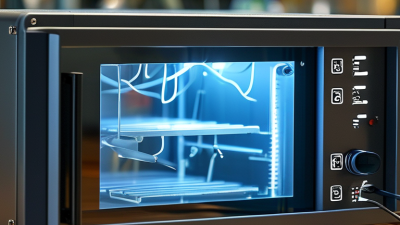
Buying a Climate Chamber is rarely a simple equipment decision. Global buyers must evaluate temperature range, humidity control, test volume, recovery speed, and long-term stability. A chamber may look impressive on a quotation sheet, yet perform poorly beside a loading door or under unstable site power.
This guide, “10 Climate Chamber Buying Tips What Global Buyers Need,” examines the practical questions buyers should ask before signing a purchase order. It considers product materials, sensor accuracy, calibration records, control software, maintenance access, energy use, installation support, and regional service capability. These details matter when testing batteries, electronics, pharmaceuticals, packaging, or automotive components.
Dr. Michael Pecht, a recognized reliability engineering researcher, has emphasized, “Reliability must be designed in, not inspected in later.” That principle applies directly to environmental testing. A chamber’s reliability depends on its compressor system, seals, sensors, software, and service response. One weak part can undermine months of testing.
The cheapest offer is not always the economical choice. Neither is the largest chamber.
Buyers should compare verified performance, not attractive specifications alone. Ask whether the supplier can demonstrate uniformity at the intended set points. Request calibration evidence and realistic recovery data. Check who will answer when an alarm appears at 2 a.m.
Some purchasing decisions remain imperfect. Site conditions change, test loads vary, and forecasts can be wrong. Still, careful questions reduce avoidable risk. These ten tips provide a practical starting point for selecting a Climate Chamber that supports repeatable results, responsible spending, and dependable global operations.
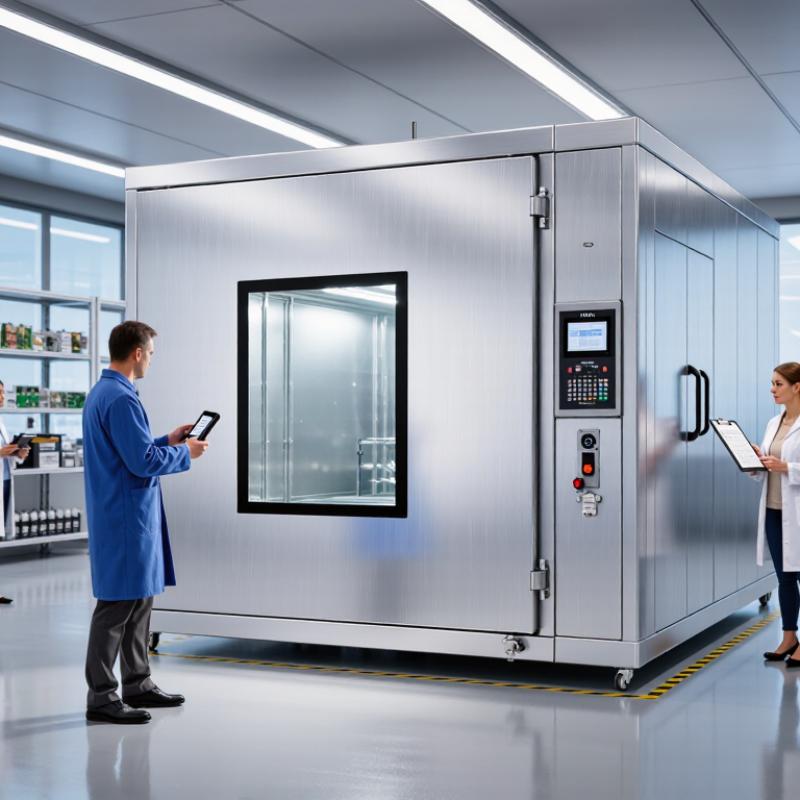
A climate chamber should match your test purpose, not just your available budget. Start by describing the product, exposure period, temperature range, humidity range, and cycling pattern. A battery pack may need repeated hot-cold transitions, while a medical package may require stable humidity for several weeks. Write these conditions before comparing equipment.
Consider the full test load. Measure the samples, fixtures, and internal airflow space. An overloaded chamber can create temperature gradients and misleading results. Define ramp rates carefully, because a chamber reaching 85°C in ten minutes performs differently from one taking an hour. Record acceptable tolerances for temperature, humidity, recovery time, and uniformity. These details support repeatable testing and clearer supplier discussions.
Data quality deserves equal attention. Specify sensor locations, calibration intervals, alarm functions, and data export needs. Check whether the chamber can maintain conditions after the door opens. That event is often ignored. It should not be. Ask for mapping data under a realistic load, not an empty chamber. Also review electrical requirements, drainage, ventilation, and installation space. I have seen teams focus on extreme temperature limits while forgetting room heat and maintenance access. That choice creates avoidable delays. Build requirements from actual test work, then challenge each assumption before purchase.
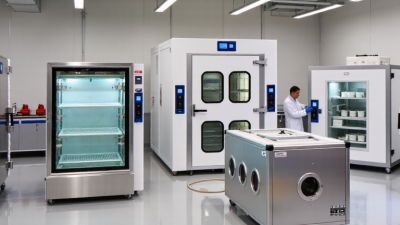
A climate chamber should be compared under load, not only by its empty-chamber specification. Check temperature range, stability, uniformity, ramp rate, and recovery time after door opening. IEC 60068-3-5 recommends defined methods for temperature performance testing, helping buyers compare results fairly. Ask for data at several setpoints, such as 10°C, 25°C, and 60°C. Small differences matter.
Humidity needs equal attention. Confirm the operating range, control tolerance, sensor location, and condensation protection. A chamber claiming 95% relative humidity may perform differently at 10°C and 40°C. The National Institute of Standards and Technology emphasizes traceable humidity measurement because sensor uncertainty can increase across temperature ranges. Request calibration records under actual working conditions. Do not trust one attractive graph.
Environmental performance includes energy use, refrigerant choice, noise, water consumption, and heat rejection. The IPCC Sixth Assessment Report lists high global-warming-potential refrigerants, including R-404A at about 3,922 times CO2 over 100 years. Ask suppliers to disclose refrigerant type and charge quantity. The International Energy Agency reported that global energy-efficiency progress reached about 2.2% in 2022, but laboratory equipment still needs measured operating data. Compare kilowatt-hours per test cycle, not marketing claims. My practical mistake was comparing idle power only. A loaded chamber told a different story.
The chart compares nominal conditions used in widely recognized environmental test profiles. Cold and dry-heat tests are primarily temperature-controlled, while damp-heat tests require stable humidity regulation. When evaluating a chamber, buyers should verify the usable temperature range, humidity range, recovery time, temperature uniformity, humidity uniformity, sensor accuracy, and compliance with the applicable IEC 60068 test method.
Reference profiles: IEC 60068-2-1 cold test, IEC 60068-2-2 dry-heat test, IEC 60068-2-78 damp-heat steady-state test, and IEC 60068-2-30 cyclic damp-heat test. Humidity is shown only where the referenced profile specifies controlled relative humidity.
A climate chamber should fit the test, not merely the available floor space. Measure product volume, fixture movement, cable access, and airflow clearance before choosing capacity. Oversizing wastes energy and can reduce temperature recovery speed. Undersizing creates crowded shelves and uneven exposure. The 2024 UNEP Global Status Report for Buildings and Construction states that buildings consume about 32% of global energy, so chamber efficiency deserves serious attention.
Materials influence stability and service life. Stainless steel interiors resist corrosion and simplify cleaning, while insulated panels reduce heat transfer. Check the insulation type, door gasket quality, viewing window, and drain design. Request mapping data from a qualified laboratory, preferably under ISO/IEC 17025 principles. A specification sheet alone cannot prove uniformity. It is easy to overlook this.
Controls should record temperature and humidity continuously, with password permissions, alarms, and exportable data. Look for sensor calibration records and independent over-temperature protection. IEC 60068-3-5 and IEC 60068-3-6 provide useful guidance for temperature and humidity testing methods. Safety should include door release, electrical protection, refrigerant safeguards, and alarm notifications. The 2024 WMO State of the Global Climate report highlights increasingly severe climate extremes, making reliable testing more valuable. Still, no chamber is maintenance-free. Ask how often sensors, seals, filters, and safety circuits require inspection. Some buying decisions fail because maintenance access was treated as an afterthought.
Climate chamber purchasing should begin with measurement confidence, not appearance or price. Ask for a current calibration certificate with traceability to an accredited laboratory. Check temperature and humidity mapping results across the usable chamber space. One sensor at the center is not enough.
Tips: Confirm the intended test standard before ordering. Depending on your application, relevant methods may include IEC 60068 or internal procedures based on ISO/IEC 17025 principles. Review ramp rates, stability, recovery time, and alarm accuracy. Request sample test records, not only technical promises. Small details matter when a test runs for several weeks.
Supplier service deserves equal attention. Ask how quickly engineers respond, where spare parts are stored, and whether annual calibration can be supported in your region. A reliable supplier should explain installation, operator training, preventive maintenance, and emergency repair procedures clearly. Speak with existing users if possible. Their experience may reveal delays that brochures never mention.
Do not treat certification as a complete guarantee. A valid document can still hide poor chamber uniformity or weak service communication. I would include acceptance testing after installation, even when the supplier seems highly experienced. That step costs time, but it creates useful evidence. A perfect buying checklist is impossible. Leave room to question assumptions, especially when environmental conditions, local standards, or production schedules change.
| No. | Buying Dimension | What to Check | Practical Requirement | Typical Target | Why It Matters |
|---|---|---|---|---|---|
| 1 | Temperature and Humidity Range | Confirm the required operating range, ramp rate, stability, uniformity, and humidity capability under the actual product load. | Compare chamber specifications at the intended setpoints, not only at no-load conditions. | Define from test protocol | A chamber that cannot maintain conditions with a real load may produce invalid or non-repeatable test results. |
| 2 | Calibration and Measurement Uncertainty | Request calibration certificates, sensor traceability, calibration points, acceptance criteria, and stated measurement uncertainty. | Use calibration performed by a competent laboratory with traceability to recognized national or international standards. | Annual review is common | Calibration evidence supports audit readiness and helps determine whether measured deviations affect product decisions. |
| 3 | Applicable Test Standards | Identify the standards, methods, and customer specifications the chamber must support, including required tolerances and exposure durations. | Ask for a compliance matrix showing how the proposed chamber meets each relevant test requirement. | Documented before purchase | Standards may define sensor placement, recovery time, uniformity, safety, and reporting requirements. |
| 4 | Chamber Size and Product Loading | Evaluate internal working volume, product dimensions, airflow clearance, shelf capacity, cable ports, and heat or moisture load. | Reserve sufficient space for airflow around specimens and avoid selecting a chamber solely by external dimensions. | Load-specific evaluation | Overloading can reduce uniformity, slow recovery, increase energy use, and compromise test validity. |
| 5 | Control, Data Logging, and Alarms | Check controller resolution, password levels, programmable profiles, data export, remote access, alarm history, and power-failure recovery. | Require secure time-stamped records and clear alarm notifications for regulated or quality-critical testing. | Defined by QA needs | Reliable records improve traceability, troubleshooting, and protection against unnoticed test interruptions. |
| 6 | Safety and Facility Compatibility | Review over-temperature protection, refrigerant considerations, electrical load, ventilation, drainage, noise, door safety, and emergency stop functions. | Verify voltage, frequency, ambient conditions, floor loading, access routes, and installation clearances before ordering. | Site survey required | Facility mismatches can delay commissioning, cause unsafe operation, or increase installation costs. |
| 7 | Energy Use and Operating Cost | Compare insulation, compressor or conditioning efficiency, standby modes, heat rejection, maintenance consumption, and expected duty cycle. | Request estimated power consumption under representative temperature and humidity programs. | Use-cycle based estimate | Purchase price is only part of total cost; energy and service expenses accumulate throughout the equipment life. |
| 8 | Service, Spare Parts, and Response | Confirm commissioning, preventive maintenance, troubleshooting, spare-parts availability, technical training, and escalation procedures. | Obtain written service levels covering response time, remote support, on-site support, and parts lead time. | Written SLA preferred | Fast, capable support reduces downtime and protects scheduled testing and production activities. |
| 9 | Supplier Reliability and Documentation | Assess relevant installations, technical capacity, quality procedures, delivery history, references, manuals, drawings, and change-control practices. | Use a documented supplier evaluation rather than comparing price alone. | Evidence-based assessment | Reliable documentation and delivery practices lower project, validation, and long-term support risks. |
| 10 | Acceptance Testing and Total Cost | Define factory acceptance, site acceptance, installation qualification, operational checks, warranty coverage, consumables, and lifecycle costs. | Include measurable acceptance criteria and payment milestones linked to successful commissioning. | Agreed before contract | Clear acceptance rules prevent disputes and confirm that the delivered chamber meets the intended application. |
10 Climate Chamber Buying Tips: What Global Buyers Need?
Calculate Total Ownership Costs Before Making a Purchase
Tip 1: Look beyond the quoted price. Include installation, shipping, site preparation, and commissioning. Tip 2: Estimate electricity use under real test conditions, not only rated power. A chamber running every day can quietly become a major expense. Tip 3: Check whether your facility needs voltage conversion, water treatment, or special ventilation. These details are often missed.
Tip 4: Price routine calibration and preventive maintenance before signing. Tip 5: Ask about sensor replacement, door seals, lamps, filters, and humidity components. Small parts can create repeated costs. Tip 6: Estimate downtime during service visits. A delayed test may cost more than a replacement component. Tip 7: Confirm local technical support and response times. Experience shows that remote advice cannot solve every fault.
Tip 8: Compare the expected service life, not just the warranty period. Tip 9: Review training requirements for operators. Poor setup can waste energy and produce unreliable results. Tip 10: Calculate the chamber’s resale, relocation, and disposal conditions. Global buyers should also check local electrical and environmental requirements.
Use a five-year spreadsheet. Include energy, labor, calibration, repairs, and lost test time. Keep assumptions visible. A neat spreadsheet can still mislead. I once underestimated humidity-water consumption because testing was seasonal. That mistake changed the final cost significantly. Leave a contingency allowance, but explain it clearly. Cheap equipment may be expensive when reliability matters.