Leave Your Message

What Are the Top Types of Climate Chambers?

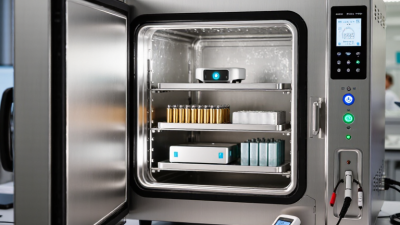
A product may look reliable on a workbench and behave differently after hours in heat, humidity, or rapid temperature changes. A Climate Chamber recreates controlled environmental conditions so engineers can observe how materials and products respond. These tests can reveal issues such as condensation inside an enclosure, a seal that stiffens in the cold, or a battery’s performance shifting with temperature.

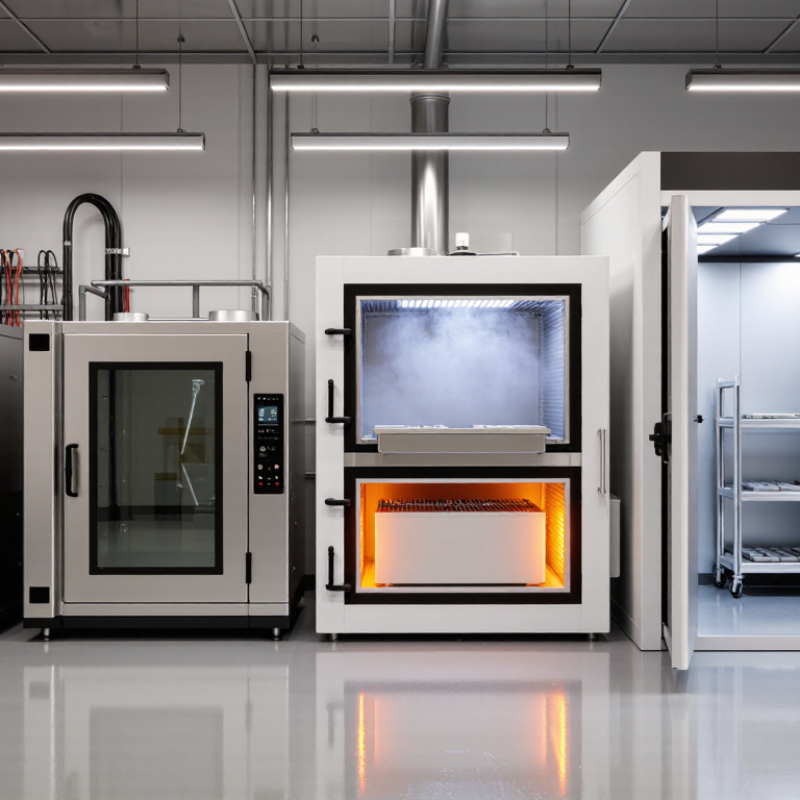
“Climate chamber” covers several designs, not one universal machine. Temperature-and-humidity chambers are common for testing combined exposure, while temperature chambers focus on heating and cooling. Thermal shock chambers move samples quickly between hot and cold zones. Specialized options can simulate altitude, light, or other conditions, and walk-in chambers accommodate larger products or multiple samples. Names and features vary by manufacturer, so the category label alone may not tell the whole story.

The right chamber depends on the test objective, sample size, required temperature and humidity range, and how precisely conditions must be controlled. A small component may need a different setup than a complete appliance. Test standards, sensor placement, recovery time, and data logging also deserve attention. Details matter.

This guide compares the top types of climate chambers and explains where each is useful. It also considers practical trade-offs, including capacity, control features, and operating demands. No chamber fits every test; choosing one without reviewing the actual test profile can lead to results that are difficult to interpret. Even a careful selection has limits, so testing assumptions should be reviewed.
What Are the Top Types of Climate Chambers?

How Are Climate Chambers Classified?

Climate chambers are best classified by the stresses they control, not cabinet size alone. Temperature-only chambers provide cold or heat; temperature-humidity chambers add moisture control. IEC 60068-2-1 and IEC 60068-2-2 describe cold and dry-heat test methods. IEC 60068-2-30 covers cyclic damp heat, including 24-hour cycles that can reach about 93% relative humidity. These conditions matter when testing a sensor, circuit board, or polymer housing.

Another classification follows the test profile: steady-state, cycling, or rapid temperature change. IEC 60068-2-14 specifies temperature-change tests, while IEC 60068-2-38 covers combined temperature and humidity cycling. The required ramp rate, specimen mass, and recovery period affect chamber selection. Small details count. A heavy metal fixture may respond more slowly than the chamber air, so air readings alone can misrepresent the specimen’s exposure.

Chambers are also grouped by installation and capability: benchtop, reach-in, walk-in, altitude, or solar simulation. IEC 60068-3-5 and IEC 60068-3-6 provide performance-confirmation guidance for temperature and temperature-humidity chambers. Classification labels are not perfectly consistent across suppliers. Compare usable volume, temperature uniformity, fluctuation, ramp rate, and sensor placement against the test method. A tidy specification sheet does not prove equivalent conditions.
What Are the Top Types of Climate Chambers?

How Are Climate Chambers Classified? By the environmental factors they control.

A value of 1 indicates a factor typically controlled by that chamber type; 0 indicates it is not a defining capability. Thermal shock chambers are distinguished by rapid transitions between hot and cold zones. Configurations vary by chamber, and combined chambers may offer additional capabilities.

What Do Temperature and Humidity Chambers Test?

Temperature and humidity chambers expose materials and products to controlled environmental conditions. They help engineers see whether heat, cold, and moisture alter performance, appearance, or dimensions. Common tests include steady-state exposure, temperature cycling, damp-heat aging, and humidity changes. Some chambers can also reproduce rapid transitions, depending on their design.

A test might place a circuit board inside a chamber while temperature and relative humidity follow a defined profile. Technicians monitor for corrosion, electrical drift, seal failure, or condensation on sensitive surfaces. Packaging, coatings, plastics, batteries, and medical-device components may also be checked for swelling, cracking, discoloration, or loss of adhesion. Small details matter. A loose cable or poorly placed sensor can distort results.

These tests do not prove that a product will survive every real-world climate. They show how it responds to selected conditions over a controlled period. Test duration, ramp rate, sample preparation, and recovery time should match the question being asked. Repeatability matters. Humidity can lag behind temperature, and samples may behave differently when loaded together. Recording chamber calibration, sensor locations, and observed failures makes results easier to interpret and repeat.

How Do Thermal Shock Chambers Simulate Rapid Changes?

Climate chambers include temperature, humidity, altitude, and thermal shock systems. Thermal shock chambers focus on abrupt temperature changes rather than slow, continuous ramps. In a two-zone design, a basket moves the test item between hot and cold compartments. Three-zone systems can move air around a stationary item, reducing mechanical movement. The sudden shift matters. It can expose weak solder joints, seals, and material interfaces that gradual testing may miss.

JEDEC’s JESD22-A104F temperature-cycling method includes example test conditions spanning −55°C to +125°C; the selected profile depends on the device and test purpose. This is a useful reference, not a universal thermal-shock requirement. IEC 60068-2-14 also describes rapid temperature-change testing and emphasizes controlled exposure conditions. In practice, engineers record transfer time, dwell time, sensor placement, and specimen temperature—not just the chamber’s set points. A chamber display can reach its target before the test item does. That detail is easy to overlook. Repeated hot-to-cold transfers reveal stress over multiple cycles, but test severity should reflect real service conditions. Otherwise, a harsh profile may produce failures that say little about field performance. A little judgment remains necessary.

What Are the Uses of Specialized and Walk-In Chambers?

Specialized climate chambers are built for particular environmental stresses. A humidity chamber can expose circuit boards, packaging, or materials to controlled moisture and temperature. Engineers use the results to spot corrosion, swelling, seal failure, or changes in electrical performance. Thermal shock chambers move samples rapidly between hot and cold zones. This helps reveal cracks or weak joints that gradual temperature changes may not show. The test must match the product’s real use. More severe conditions are not always more informative.

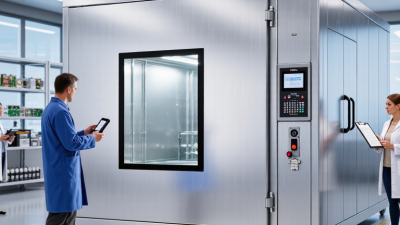
Walk-in chambers serve larger products and groups of test items. They can hold vehicle components, medical equipment, battery assemblies, or pallet-sized loads. Teams can enter the chamber to arrange sensors and inspect fixtures, while products experience steady temperature and humidity over extended periods. That makes them useful for storage studies, reliability testing, and checking how a whole assembly behaves. They need careful airflow and sensor placement; a warm corner can distort results.

A larger chamber is not automatically better. It takes more space, energy, and time to stabilize. Door openings can also disturb conditions. Test plans should record sample placement, recovery time, and calibration checks. Even a well-controlled chamber cannot reproduce every field condition, and that limitation deserves attention.

What Are the Top Types of Climate Chambers? - What Are the Uses of Specialized and Walk-In Chambers?
Chamber Type What It Controls or Does Common Uses Key Considerations
Temperature and humidity chamber Regulates temperature and relative humidity, either at steady conditions or through programmed cycles. Testing electronics, materials, packaging, and products for performance or durability under hot, cold, humid, or changing conditions. Choose a working volume and control range suited to the test load; product size and heat output can affect uniformity.
Temperature-only chamber Provides controlled heating and cooling without active humidity control. Thermal conditioning, storage studies, and temperature cycling of components, materials, and finished products. A practical option when moisture is not part of the test requirement; confirm temperature uniformity and recovery needs.
Thermal shock chamber Exposes test items to abrupt transitions between hot and cold environments, often using separate temperature zones. Finding failures caused by sudden temperature changes in electronic assemblies, automotive parts, and other components. Test severity depends on transition time, dwell time, and the temperature conditions specified by the test method.
Rapid temperature-cycling chamber Changes temperature at a controlled rate to repeat hot-to-cold or cold-to-hot cycles. Accelerated reliability testing and evaluation of fatigue, stress, or intermittent faults in components and materials. The achievable change rate depends on chamber capacity, test load, airflow, and the temperature range.
Altitude and low-pressure chamber Reduces chamber pressure to simulate lower air pressure, and may combine pressure changes with temperature control. Evaluating equipment and packages intended for aircraft, high-altitude environments, or transport conditions involving reduced pressure. Pressure limits, test-item outgassing, and any need for temperature or humidity control should be considered.
Plant growth chamber Controls environmental conditions such as temperature, humidity, and lighting; some systems also manage light cycles. Plant research, seedling growth, controlled-environment studies, and experiments requiring repeatable light and climate conditions. Lighting intensity, spectrum, photoperiod, airflow, and the number and size of plants affect chamber selection.
Corrosion and salt-spray chamber Creates a controlled corrosive exposure, commonly using salt spray or cyclic corrosion conditions. Comparing corrosion resistance of coatings, metal parts, fasteners, and finished products under defined test procedures. Use the conditions and evaluation criteria required by the applicable test method; salt-spray results do not directly predict service life.
Walk-in climate chamber Provides a room-sized controlled environment that users can enter, accommodating large products, multiple test items, or test setups. Testing vehicles, appliances, battery systems, furniture, packaged goods, and production-scale equipment. Plan for floor loading, access doors, internal airflow, heat load, safety systems, and the space needed for installation and maintenance.

How Do You Choose a Climate Chamber for a Test?

Choosing a climate chamber starts with the test profile, not the chamber’s maximum range. List the required temperature limits, humidity, ramp rate, dwell time, and cycle count. Then consider the specimen’s size, heat output, and cable access. A small sensor may need a compact temperature-and-humidity chamber; a powered battery module may need more working volume and careful airflow assessment. Fit matters.

Use recognized test methods to set realistic conditions. IEC 60068-2-30:2005 describes cyclic damp-heat testing at upper temperatures of 40°C or 55°C, with 93% relative humidity at that phase. IEC 60068-2-14:2023 covers temperature-change testing. These are test-method benchmarks, not universal product requirements. Compare them with your product specification before choosing a chamber. Ask the supplier for usable volume under load, temperature uniformity, humidity control limits, and recovery time after door openings. Check recovery. A chamber’s empty-space rating may not predict performance with shelves, fixtures, and a warm specimen installed.

Finally, match the equipment to how the test will run. Continuous cycling may require dependable logging and alarm handling; occasional qualification work may prioritize flexibility. Confirm calibration traceability and request mapping data at your intended setpoints. A modest chamber can be the better choice, though it is easy to overlook future fixture changes. Allow room for them.